
How Does an Industrial Borescope Work?
Category: News-
On: 2026-08-22
How Does an Industrial Borescope Work?
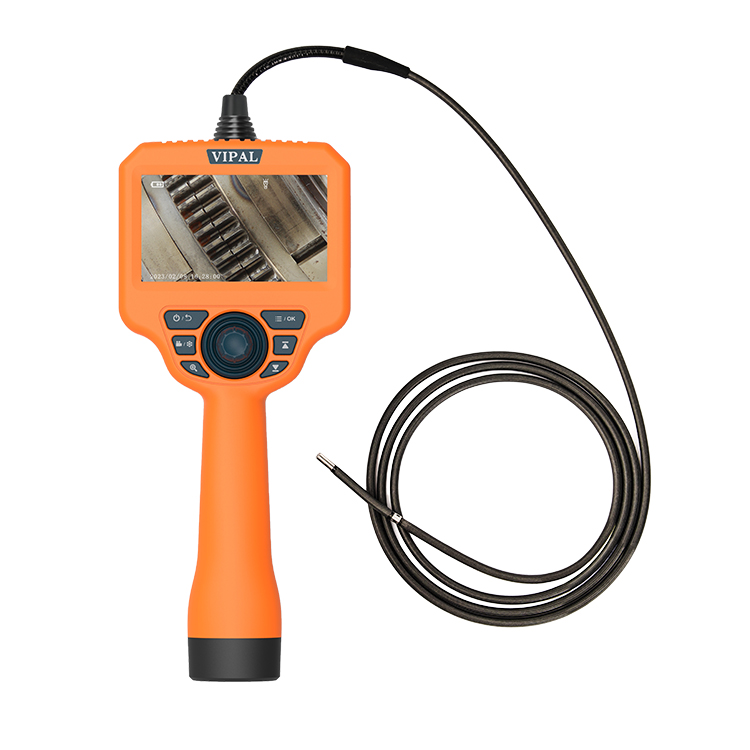
An industrial borescope is a remote visual inspection tool designed to help inspectors see inside areas that are narrow, deep, dark, or difficult to access directly.
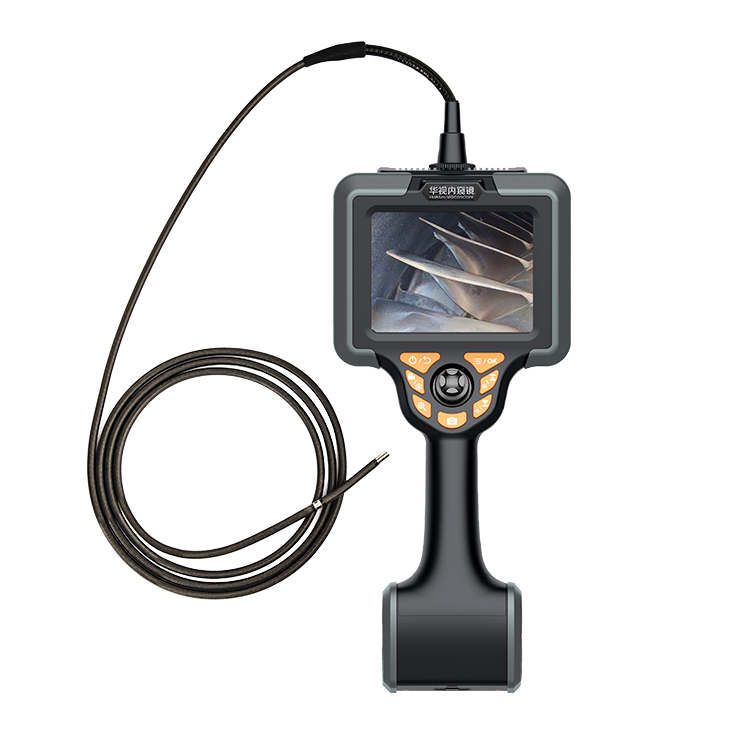
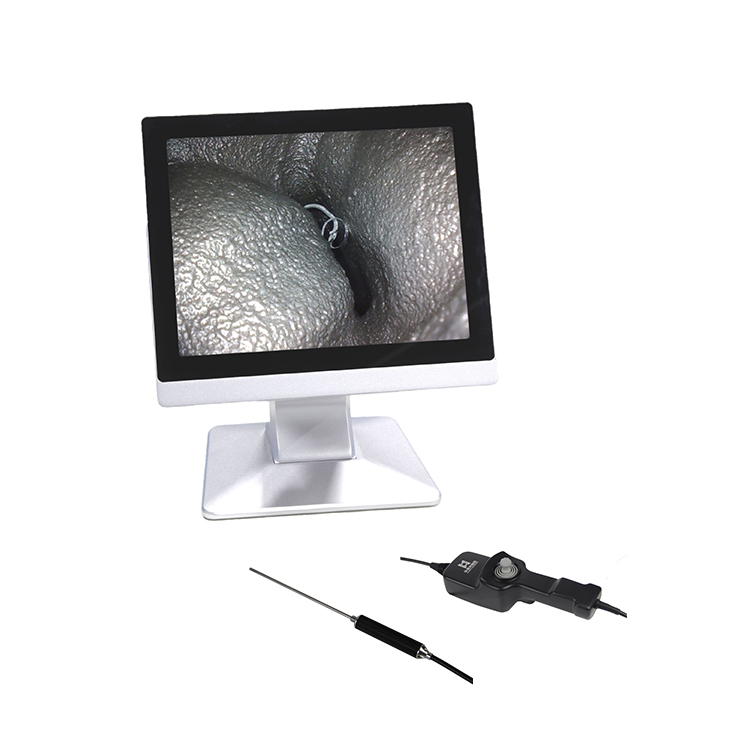
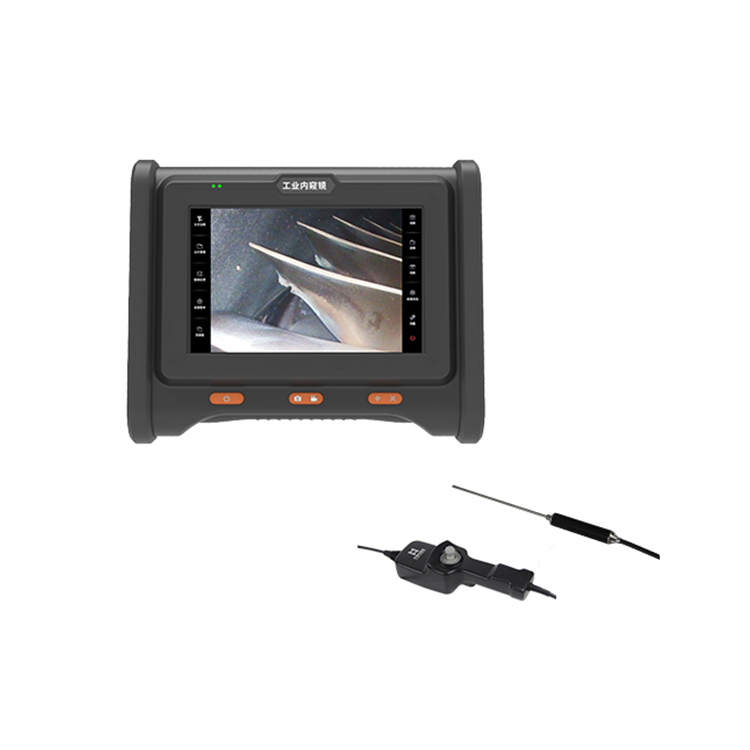
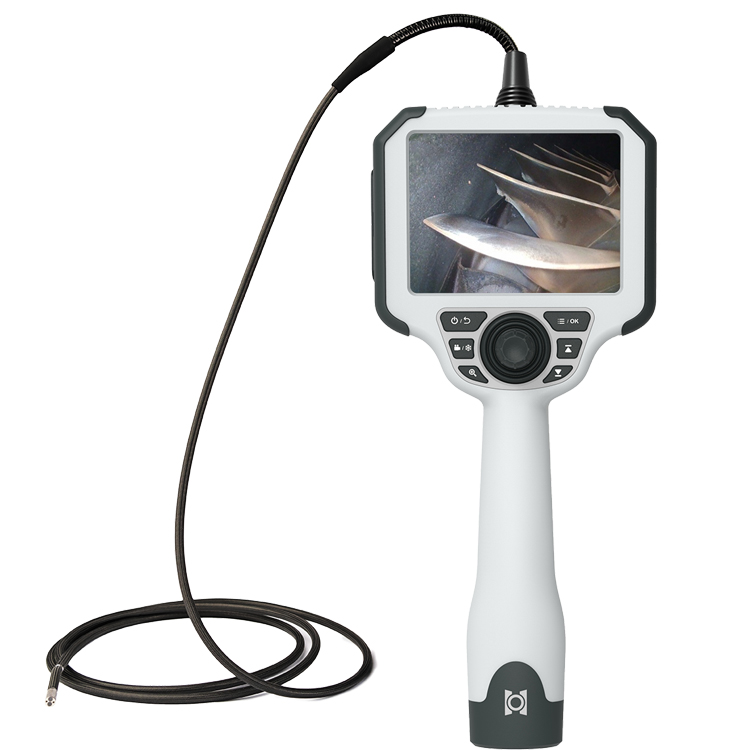
Instead of dismantling equipment to reach internal components, an industrial borescope uses a small camera, illumination system, flexible insertion probe, articulation mechanism, and display unit to provide a real-time view of the inspection area.
This makes industrial borescopes useful for inspecting engines, gearboxes, pipelines, castings, turbines, machinery, and other industrial equipment.
How Does an Industrial Borescope Capture Images?
At the tip of a video borescope is a miniature image sensor and optical system.
When the probe enters the inspection area, the camera captures the surface or component in front of the lens. The image is processed electronically and displayed on the handheld monitor.
Depending on the design, an industrial videoscope may provide high-definition imaging, digital zoom, image enhancement, photo recording, video recording, or measurement functions.
The quality of the final image depends on more than camera resolution. The image sensor, optics, illumination, field of view, working distance, and image processing all influence what the inspector can actually see.
How Does the Borescope Lighting System Work?
Most industrial inspection areas have little or no natural light.
For this reason, the camera is normally combined with an integrated LED illumination system.
The light source illuminates the internal surface while the camera captures the reflected light.
Good illumination is particularly important when inspecting metallic surfaces because excessive reflection or insufficient light can make small defects difficult to see.
A professional inspection system should therefore provide appropriate brightness and light distribution for the inspection environment.
What Is the Borescope Probe?
The probe is the part of the borescope that enters the equipment.
A typical flexible probe contains:
Camera and optics
Illumination components
Image transmission electronics
Articulation mechanism
Protective outer sheath
Probe diameter is one of the most important specifications because it determines the minimum access opening required for inspection.
Smaller probes can enter narrower spaces, while larger probes may allow more room for imaging, lighting, articulation, and mechanical protection.
How Does Borescope Articulation Work?
Flexible industrial borescopes may use a mechanical or motorized articulation system to control the direction of the distal tip.
A 2-way system generally controls movement in two directions.
A 4-way system allows movement in four directions, providing greater flexibility when navigating complex internal structures.
Advanced systems can also provide motorized articulation and other control functions.
Articulation is particularly useful when an inspector needs to look around corners, inspect multiple surfaces, or position the camera accurately inside a gearbox, engine, or pipe.
How Is the Image Displayed?
The camera signal is transmitted to the main control unit.
The display allows the operator to:
View the inspection area in real time
Adjust image settings
Control illumination
Capture photos
Record videos
Review inspection files
Perform measurements when supported
Modern videoscopes therefore combine imaging, illumination, navigation, recording, and inspection functions into one portable system.
How Is an Industrial Borescope Used for Inspection?
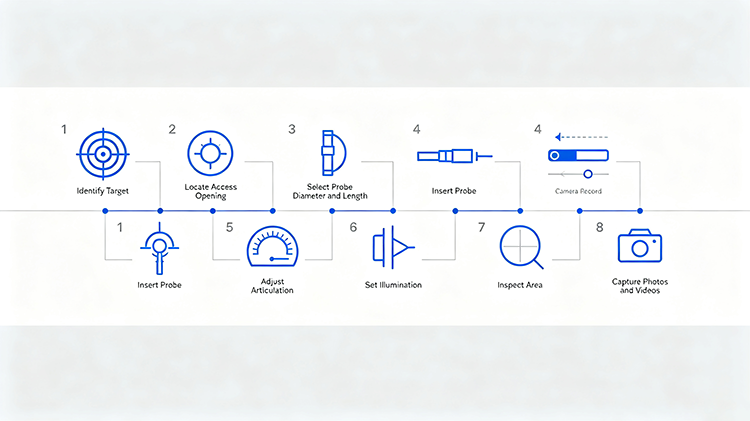
A typical inspection process is:
Identify the inspection target.
Locate an appropriate access opening.
Select a suitable probe diameter and length.
Insert the probe carefully.
Adjust the articulation.
Adjust illumination and image settings.
Inspect the target area.
Capture photos or videos.
Record and evaluate visible findings.
This process can reduce the need for unnecessary equipment disassembly.
What Can an Industrial Borescope Inspect?
Industrial borescopes can be used in many applications, including:
Aircraft engines
Automotive engines
Wind turbine gearboxes
Oil and gas pipelines
Power generation equipment
Castings
Machinery
Marine engines
Railway equipment
Molds and tooling
The appropriate borescope configuration depends on the access opening, inspection depth, internal geometry, environmental conditions, and required image quality.
Choosing the Right Industrial Borescope
When selecting a borescope, consider:
Probe Diameter
The probe must fit through the smallest access opening.
Probe Length
The probe should reach the inspection area without unnecessary excess length.
Articulation
Choose the articulation type according to the complexity of the inspection path.
Image Quality
Consider the complete imaging system rather than resolution alone.
Lighting
Good illumination is essential for dark internal surfaces and reflective components.
Environmental Protection
For applications involving water, oil, dust, or elevated temperatures, verify the equipment's environmental specifications before use.
Conclusion
An industrial borescope works by combining a miniature camera, illumination system, insertion probe, articulation mechanism, image processing, and display system.
The result is a practical remote visual inspection solution that allows inspectors to examine difficult-to-access internal areas without immediately dismantling the equipment.
For professional applications, the best borescope is not necessarily the one with the highest specification. It is the system that matches the actual inspection opening, depth, geometry, environment, and required inspection detail.