
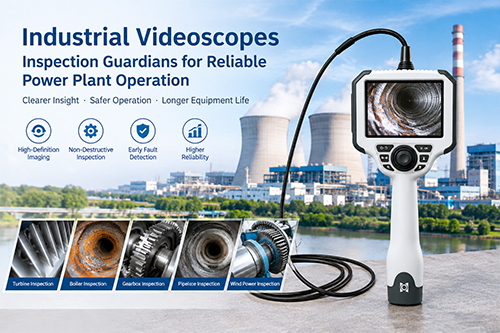
Industrial Videoscopes: Inspection Guardians for Reliable Power Plant Operation
Category: News-
On: 2026-10-12
Thermal, hydroelectric, and other types of power plants are essential to electricity generation and supply. Even minor equipment failures can lead to serious consequences. For example, a boiler tube rupture in a thermal power plant can cause an unplanned shutdown, disrupting the power supply and resulting in financial losses of hundreds of thousands or even millions of dollars.
To ensure continuous and reliable power plant operation, industrial videoscopes provide high-definition images of internal equipment conditions, making them essential tools for equipment maintenance, inspection, and fault diagnosis.
1. How Industrial Videoscopes Work in Power Plant Inspections
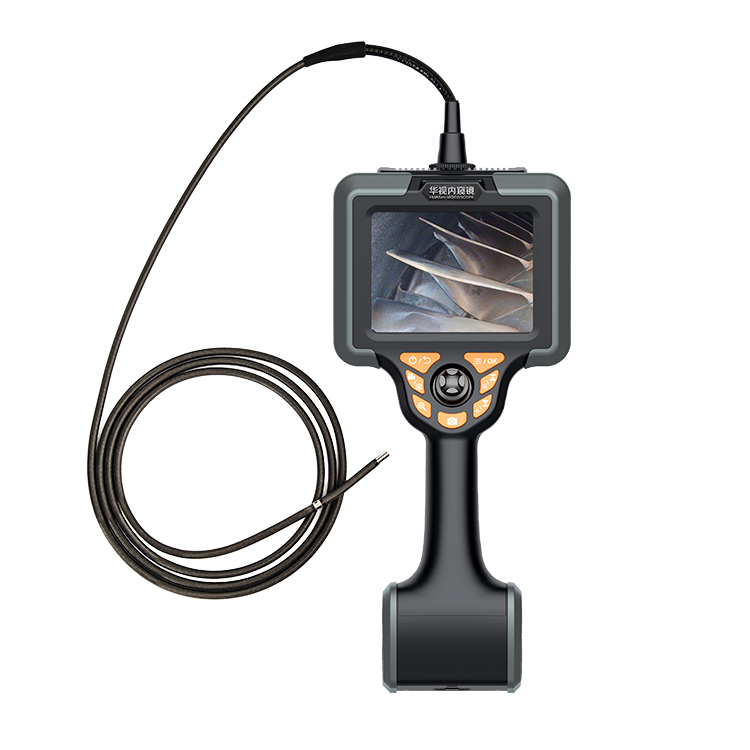
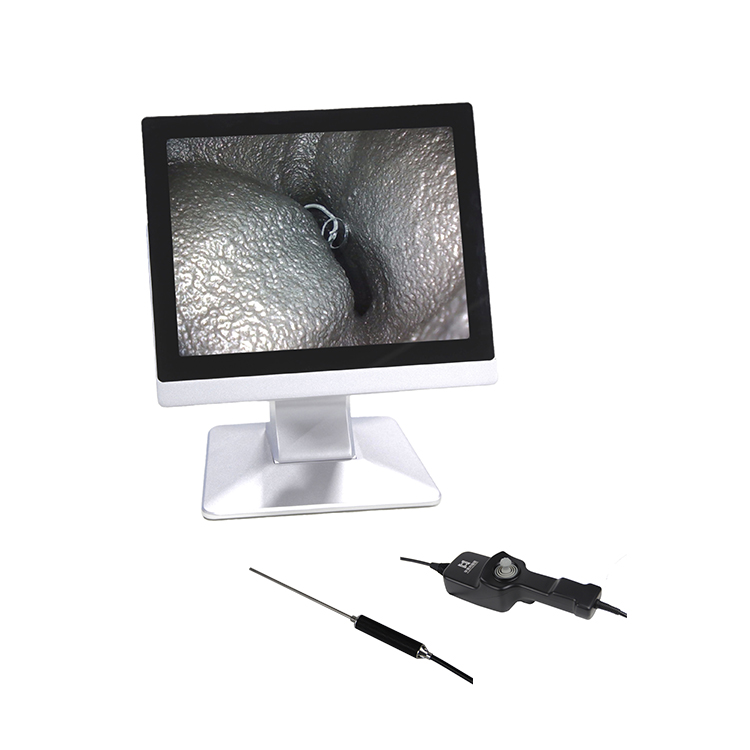
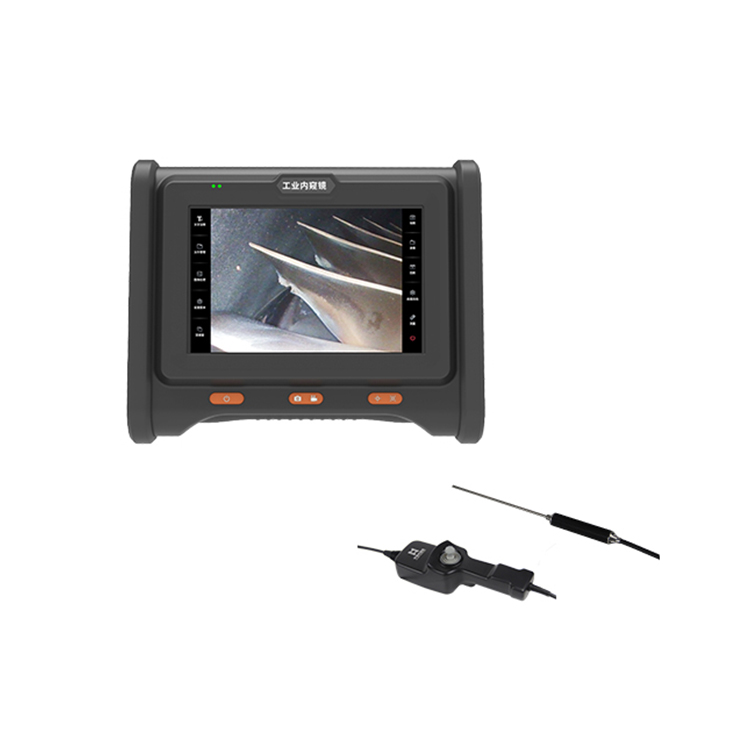
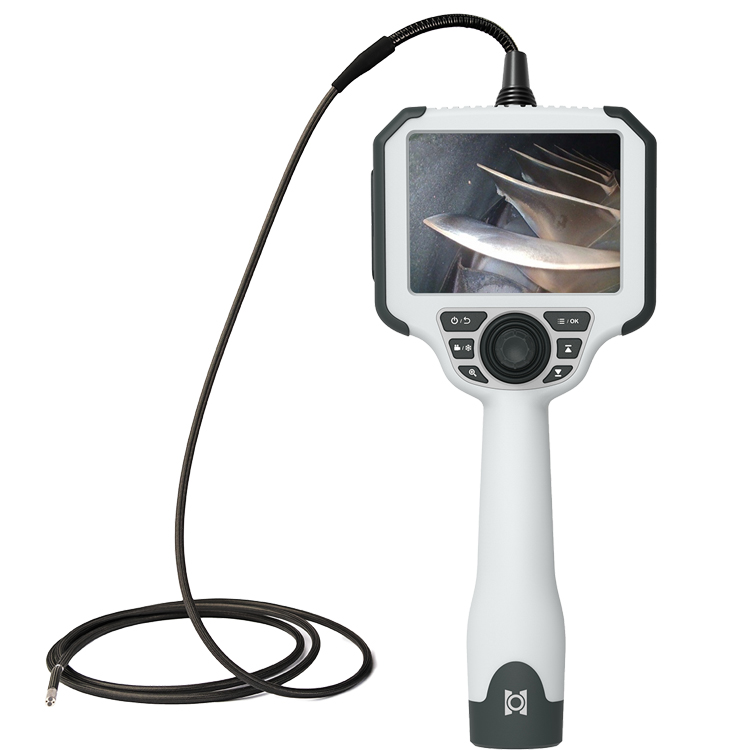
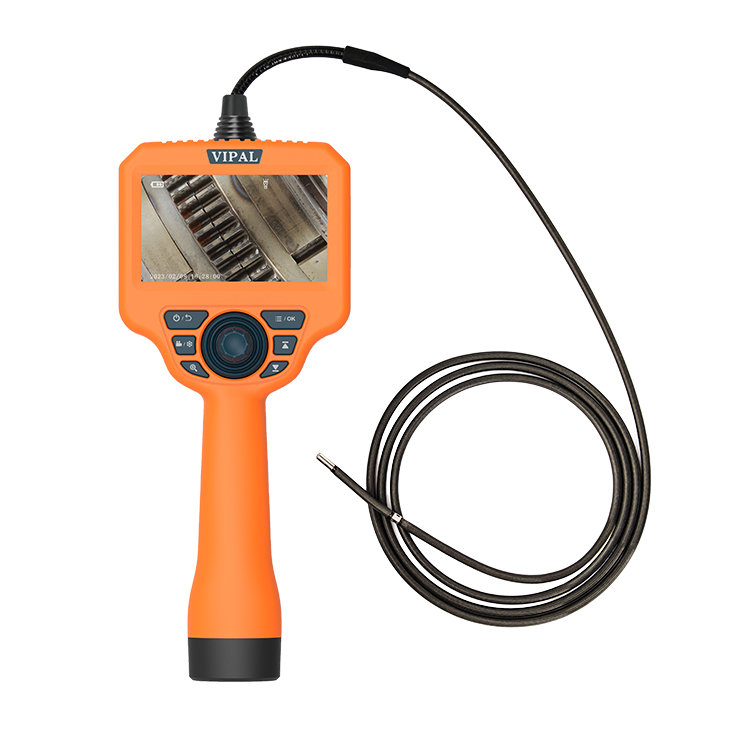
An industrial videoscope primarily consists of an insertion probe and a control unit. The distal end of the probe is equipped with an optical lens and an image sensor, while signal transmission lines run through the probe. The control unit integrates image processing electronics, a display screen, a battery, and other components.
During an inspection, the probe is inserted into the equipment being examined. The optical lens captures images of the internal surfaces and directs the light onto the image sensor, which converts the optical signals into electrical signals. These signals are transmitted to the control unit, where the images are processed and displayed in real time.
Using these clear internal images, inspectors can identify potential defects such as corrosion pits, deposits, cracks, and material loss. The inspection results help maintenance teams determine whether repairs or component replacements are necessary.
2. Key Advantages of Industrial Videoscopes for Power Plant Maintenance
Versatility: Power plants contain a wide variety of equipment, including hydraulic turbines, steam turbines, gas turbines, boilers, and piping systems. Flexible insertion probes with directional control can accommodate inspections in complex internal cavities and confined spaces.
Reduced Maintenance Costs: Videoscope inspections can often be performed without dismantling equipment, simplifying inspection procedures and reducing labor costs and maintenance downtime.
High Image Quality: Industrial videoscopes equipped with high-performance image sensors can produce clear images even in dark internal environments with limited or no ambient light, helping inspectors identify defects more efficiently.
Extended Inspection Reach: Probe lengths can extend to tens of meters, meeting the inspection requirements of large internal cavities and long pipelines.
Flexible Viewing Options: External displays and wireless screen mirroring can enable multiple personnel to view inspection images simultaneously, facilitating collaborative assessment and decision-making.
Quantitative Defect Assessment: In addition to visual inspection, videoscopes with measurement capabilities can quantify defect dimensions, supporting more informed maintenance decisions and helping avoid unnecessary repairs.
3. Applications of Industrial Videoscopes in Power Plant Maintenance
3.1 Condition Inspection of Hydroelectric Power Plant Equipment
Hydraulic turbines are large, complex machines that can benefit from videoscope inspections during both installation and routine maintenance. Inspectors can examine turbine blades for impact damage, assess wear and corrosion on bearings and oil seals, and identify cavitation or erosion pits on runner blades and turbine covers.
3.2 Defect Inspection of Steam Turbines in Thermal Power Plants
Industrial videoscopes can be used to inspect internal corrosion and abnormal conditions in steam turbine cavities and rotors. Specialized probes can access narrow oil passages to examine potential fine cracks and other defects. Probes equipped with a retrieval channel can also help recover foreign objects from internal cavities.
3.3 Gas Turbine Inspection in Gas-Fired Power Plants
Videoscope inspections help identify defects such as stress-related degradation, coating spallation, and cracking in turbine blades at an early stage. Equipment equipped with AI-assisted defect recognition can automatically identify potential defects and display their classifications and confidence scores in real time, improving inspection efficiency inside gas turbines.
3.4 Boiler Overhaul and Defect Inspection
Industrial videoscopes can inspect boiler interiors and associated piping systems, including the internal surfaces of water-wall tubes. They help identify corrosion pits, roughened tube surfaces, and sections with significant deposits, allowing maintenance teams to assess the need for cleaning, repair, or replacement before problems escalate into tube rupture incidents.
3.5 Wind Turbine Inspection
Industrial videoscopes with suitable sealing and environmental protection can be used in oily environments to inspect the internal components of wind turbine gearboxes. Inspectors can examine gears and bearings for wear and damage, assess their condition, and support remaining service life evaluations and proactive spare parts planning.
4. How to Select an Industrial Videoscope for Power Plant Maintenance
To identify equipment defects early and reduce the risk of unplanned shutdowns, power plants should prioritize industrial videoscopes equipped with CMOS imaging sensors for reliable, high-resolution imaging in complex internal environments.
Models with comprehensive 3D measurement capabilities are also worth considering, as they can help quantify parameters such as blade curl angles and grinding bevel radii, supporting more accurate defect evaluation.
In addition, videoscopes featuring AI-assisted defect recognition can offer significant advantages when inspecting critical equipment such as gas turbines. By helping inspectors identify and classify potential defects more efficiently, these technologies can improve inspection productivity and support more informed maintenance decisions.
Selecting an industrial videoscope with the appropriate imaging performance, probe configuration, measurement functions, and intelligent inspection features can help power plants improve maintenance efficiency, enhance equipment reliability, and maintain stable power generation.