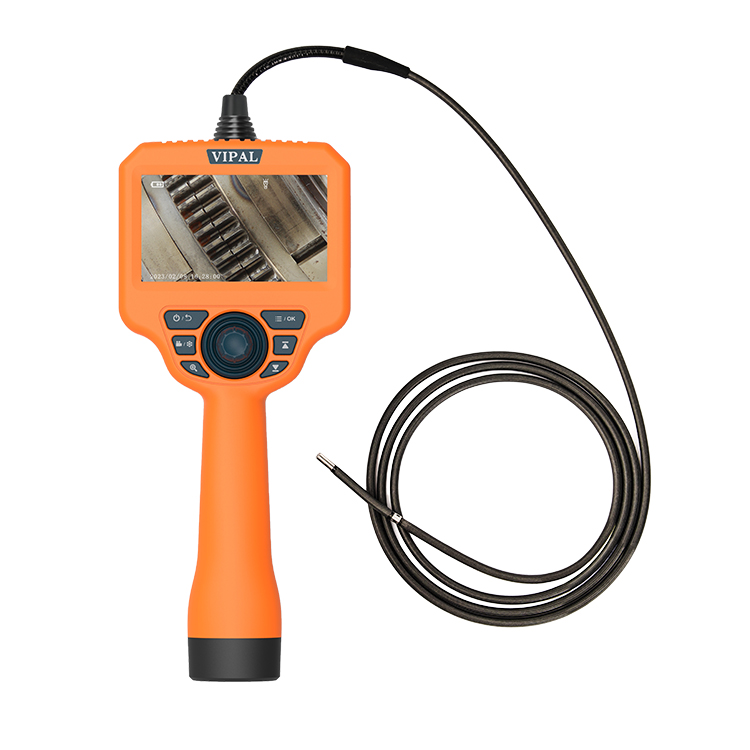

How to Choose the Right Industrial Borescope Probe Length
Category: News-
On: 2026-09-02
1. Why Industrial Borescope Probe Length Matters
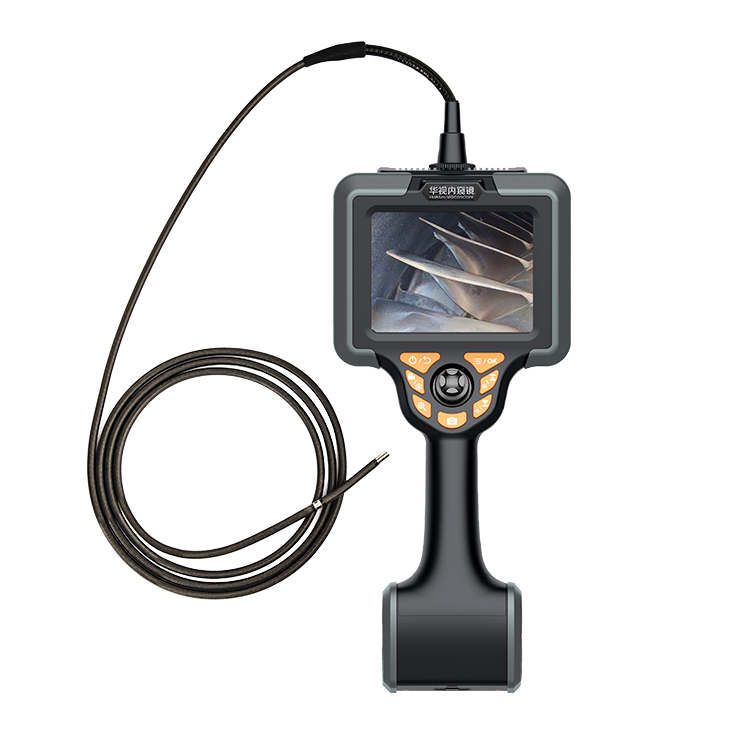
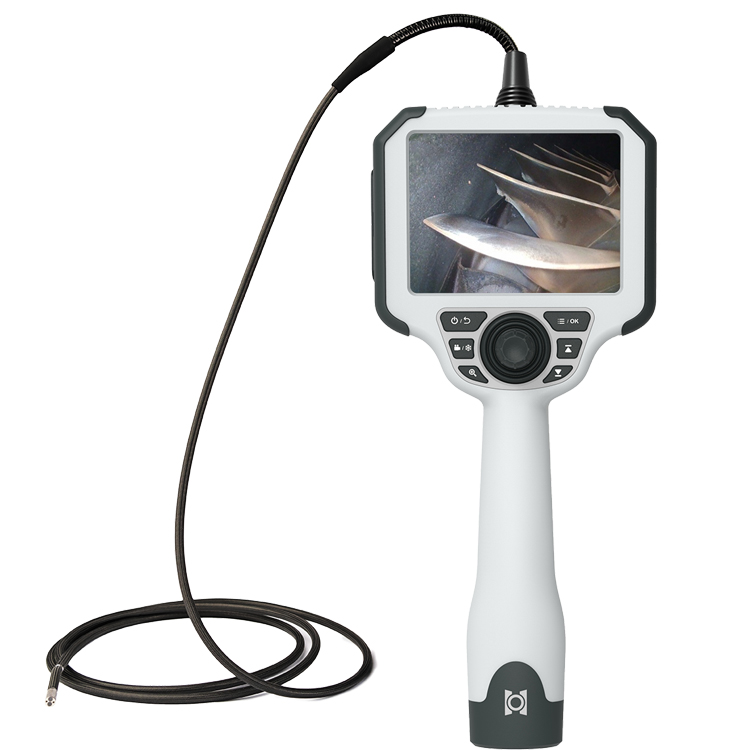
Probe length is one of the key parameters that determines how far an industrial borescope can reach inside equipment. It directly affects whether an inspection can be completed efficiently and effectively.
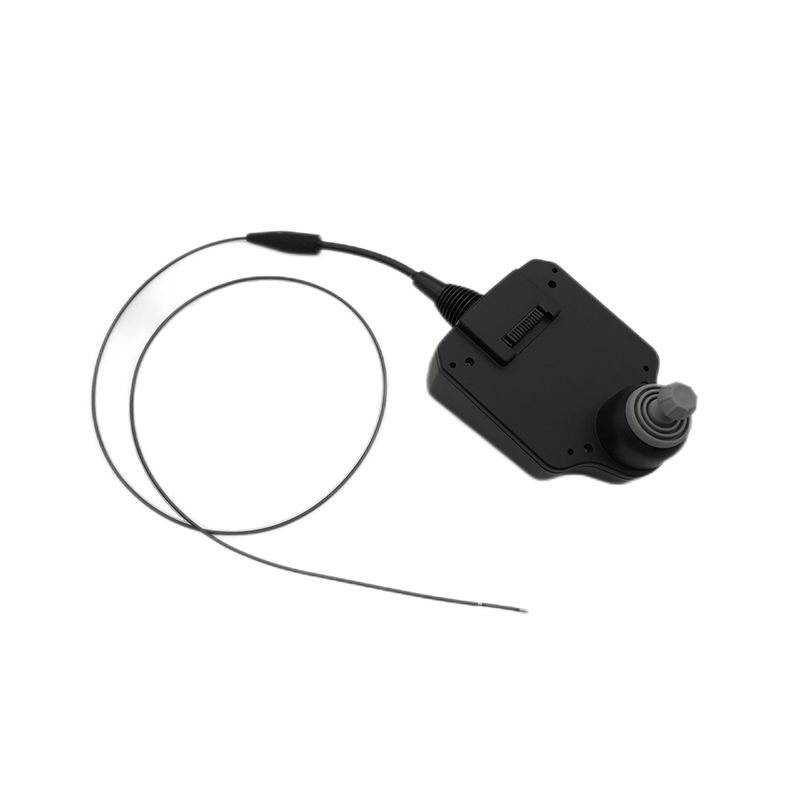
Choosing the right probe length is essential. A probe that is too short may not reach the target inspection area, making the inspection impossible. On the other hand, a probe that is too long can significantly increase handling difficulty and the risk of probe damage during operation.
The key selection principle is simple: do not automatically choose the longest probe available on the market. The optimal probe length should be determined according to the actual inspection path, internal equipment structure, and application requirements.
2. How to Determine the Required Borescope Probe Length
When selecting a suitable probe length, do not rely only on the straight-line distance between the access point and the inspection target. The actual internal inspection path must also be considered.
The basic measurement process includes:
Identify the exact access point for the inspection.
Measure or estimate the straight-line distance from the access point to the farthest inspection target.
Check whether the inspection path requires the probe to pass through curved pipes, enclosed cavities, gearboxes, engine passages, or other complex mechanical structures.
In complex equipment, the probe may need to bend, turn, or travel around internal components. As a result, the actual insertion distance can be significantly greater than the straight-line distance.
Therefore, the actual inspection path, rather than simply the linear distance, should be the key reference when determining probe length.
3. Common Applications for Different Borescope Probe Lengths
Industrial borescope probes can generally be selected in shorter or longer configurations depending on the inspection environment. Matching the probe length to the application helps achieve a balance between inspection coverage and ease of operation.
3.1 Short Probes
Short probes are designed for flexibility, easy handling, and short-distance inspection. They are suitable for small cavities and relatively compact equipment.
Typical applications include:
Automotive component inspection
Internal inspection of small machinery
Casting defect inspection
Inspection of small enclosed cavities
General maintenance and troubleshooting
For these applications, an unnecessarily long probe can make positioning and handling more difficult without providing any practical advantage.
3.2 Long Probes for Long-Distance Inspection
Long probes are designed for extended reach and deep internal inspection. They are suitable for large equipment and long or deep inspection channels.
Typical applications include:
Large industrial machinery
Industrial pipelines and process piping
Turbine inspection
Deep and long internal passages
Large gearboxes
Wind turbine inspection
Power generation equipment
Marine and ship equipment
For these applications, a longer probe can provide the reach required to inspect areas that cannot be accessed using conventional short probes.
4. Common Problems Caused by an Overly Long Probe
An industrial borescope probe is not necessarily better simply because it is longer. A probe that significantly exceeds the requirements of the inspection application can create several problems.
Common disadvantages include:
Increased difficulty during insertion and withdrawal
More difficult probe manipulation and positioning
Greater storage and transportation requirements
Increased risk of probe bending, abrasion, or mechanical damage
Reduced positioning accuracy when trying to align the camera with the inspection target
The ideal selection standard is to choose a probe that is long enough to reach all required inspection areas while maintaining good handling, positioning accuracy, and image stability.
5. Key Factors That Should Be Matched with Probe Length
5.1 Match the Probe Length with Articulation and Steering Capability
Probe length should be considered together with the probe's articulation and steering capability.
If the inspection target is not located directly in front of the access point, a long probe needs effective directional control to navigate the internal inspection path.
For applications involving multiple bends, turns, or complex internal channels, a flexible long probe with good articulation performance can significantly improve maneuverability and make it easier to reach difficult-to-access areas.
Therefore, when selecting a long-distance borescope, probe length and articulation capability should be evaluated together, rather than independently.
5.2 Match Probe Length with Probe Diameter
Probe diameter and practical probe length are closely related.
Smaller-diameter probes are generally more delicate and may have limitations in terms of mechanical strength, flexibility, and maximum practical length. In many applications, their usable length may therefore be more limited than that of larger-diameter probes.
When selecting an industrial borescope, always check the combination of:
Probe Diameter + Probe Length
Both parameters must be suitable for the actual inspection application.
Selecting a probe based on length alone may result in a configuration that cannot provide the required reach, flexibility, or durability.
6. Step-by-Step Guide to Selecting the Right Borescope Probe Length
Following a standardized selection process can help minimize errors and ensure that the borescope is properly matched to the inspection environment.
Step 1: Identify the Access Point
Determine the exact location where the borescope probe will enter the equipment.
Step 2: Measure the Distance
Measure or estimate the distance from the access point to the farthest inspection target.
Step 3: Map the Inspection Path
Analyze the internal inspection route and identify any:
Bends
Turns
Narrow passages
Obstacles
Internal components that require the probe to travel around
Step 4: Allow for a Reasonable Length Margin
Reserve an appropriate amount of additional probe length according to the complexity of the inspection path.
This allows the camera tip to be positioned more flexibly and makes multi-angle inspection easier.
Step 5: Match the Required Performance
Select a probe with appropriate flexibility, articulation, and steering performance according to the complexity of the inspection path.
More complex inspection environments generally require better directional control and maneuverability.
Step 6: Select the Most Suitable Specification
Once the entire inspection area can be reached, choose the shortest practical probe length that fully meets the inspection requirements.
This approach can provide better handling, positioning accuracy, durability, and overall inspection efficiency.
7. Conclusion
The core principle for selecting an industrial borescope probe length is to match the probe to the actual inspection depth and internal geometry of the equipment, rather than simply choosing the longest available option.
The right probe length should provide sufficient reach to cover all required inspection areas while maintaining good maneuverability and positioning accuracy.
By considering inspection depth, access points, internal geometry, probe diameter, articulation capability, and application requirements, users can select a more suitable industrial borescope configuration.
A properly matched probe length can help achieve complete inspection coverage, easier operation, more accurate positioning, and longer probe service life, ultimately improving the efficiency and reliability of industrial visual inspection.