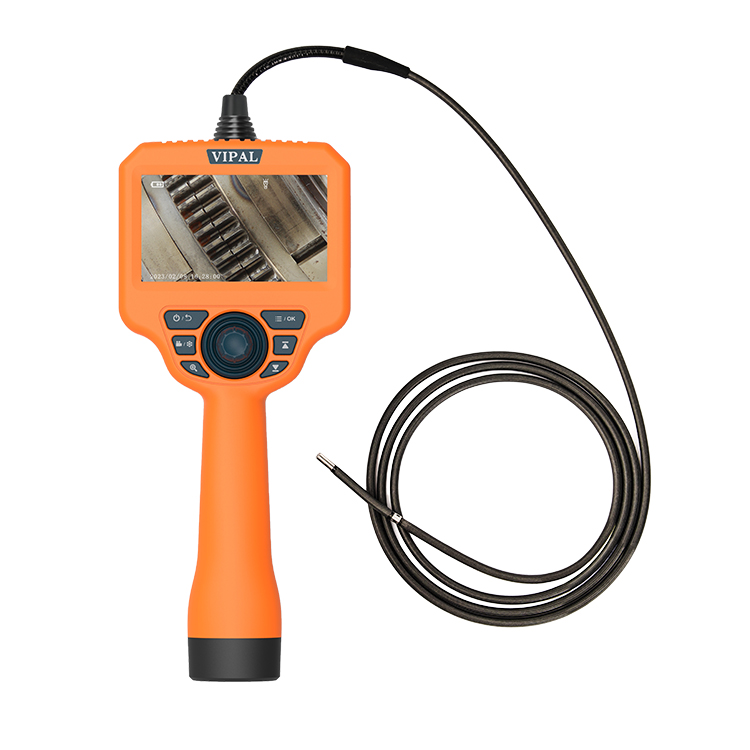

Long-Distance Industrial Borescope: How to Inspect Deep and Hard-to-Reach Areas
Category: News-
On: 2026-09-04
1. Overview of Long-Distance Borescope Inspection
Standard short industrial borescopes are generally designed for shallow and relatively accessible inspection areas. In large industrial environments, however, critical inspection points may be located several meters—or even tens of meters—from the access point.
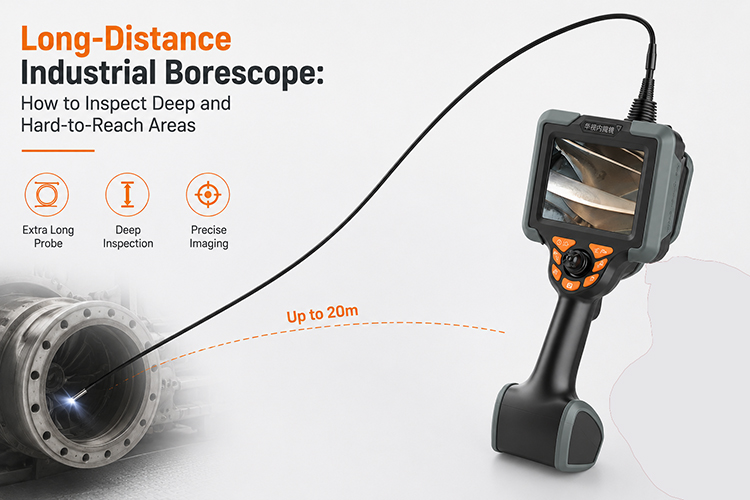
Examples include long pipelines, large pressure vessels, heavy machinery, ship structures, power generation equipment, and other large industrial systems.
A long-distance industrial borescope uses an extended flexible insertion probe to reach deep and difficult-to-access areas through an existing inspection opening. Where the equipment design and safety procedures permit, this can reduce the need for extensive disassembly and provide a practical method for remote visual inspection.
Long-probe borescopes are particularly useful when the inspection target is located deep inside a large or complex structure and cannot be reached with a conventional short probe.
2. What Is a Long-Distance Industrial Borescope?
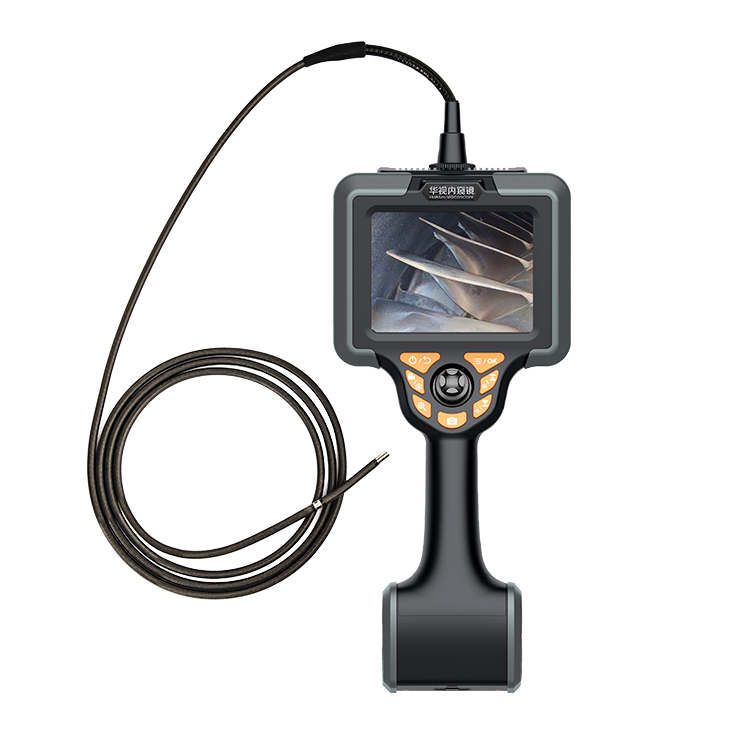
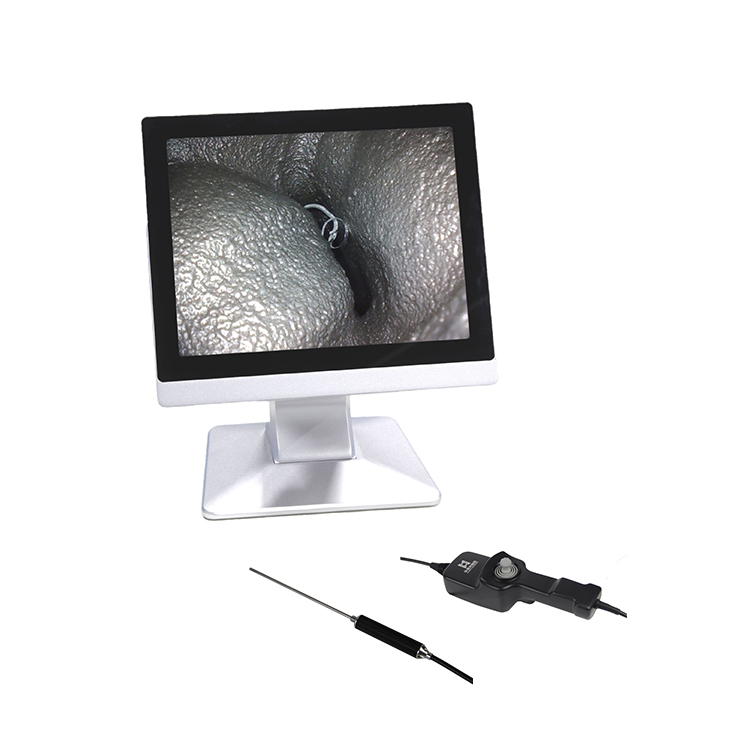
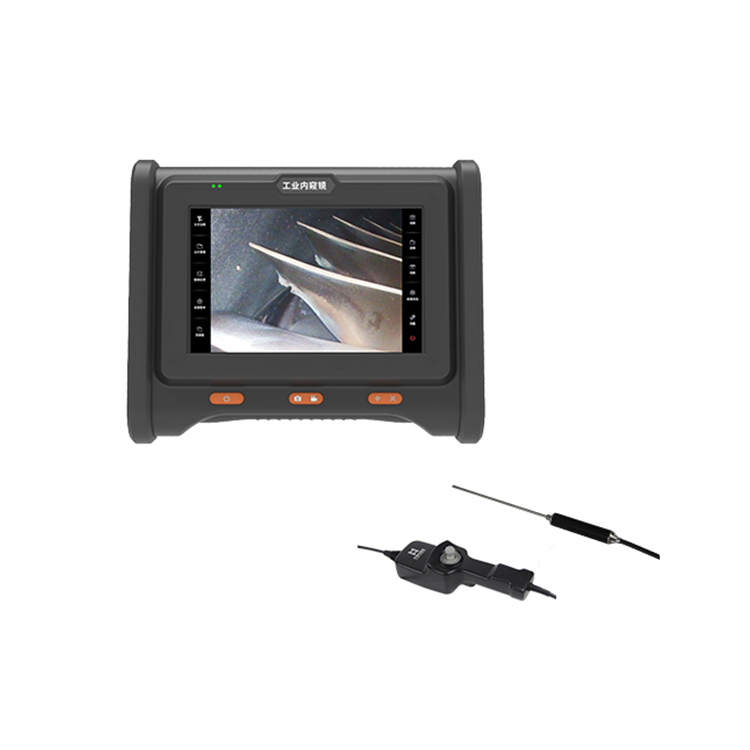
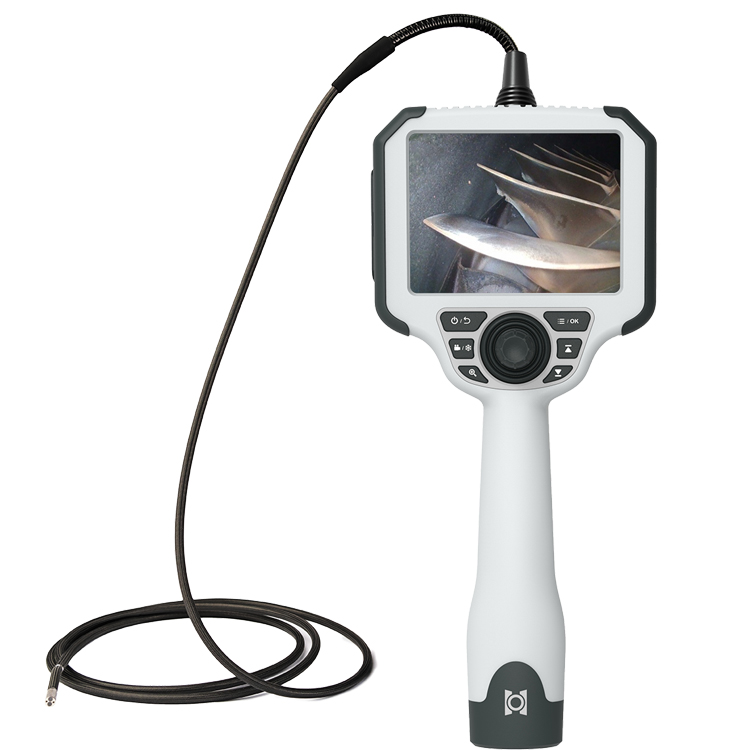
A long-distance industrial borescope is an inspection system designed for deep internal inspection and extended inspection paths.
Its defining feature is a long flexible probe that can be configured in different lengths according to the application. Depending on the system, long probes may be available in configurations such as 10 m, 20 m, or other customized lengths.
Typical applications include:
Deep internal inspection of large industrial machinery
Inspection of long industrial pipelines
Internal inspection of large tanks and pressure vessels
Inspection of complex industrial assemblies
Deep inspection of large gearboxes and heavy-duty transmission systems
Inspection of large production-line equipment
Internal inspection of power generation equipment
The appropriate probe length depends on the actual inspection path, probe diameter, internal geometry, articulation requirements, and operating conditions.
3. How to Choose the Right Probe Length
Probe length is the basic requirement for deep inspection.
If the probe is too short, it cannot reach the target. However, choosing the longest possible probe is not always the best solution.
As a flexible probe becomes longer, handling characteristics can become more challenging. Depending on probe construction and inspection conditions, an excessively long probe may experience greater flexibility, movement, or positioning difficulty.
For this reason, a practical selection principle is:
Choose the shortest probe that can reliably reach the inspection target.
This approach helps balance inspection depth with handling, positioning, and articulation performance.
Before selecting the probe length, consider the actual path from the access point to the furthest inspection target—not simply the overall size of the equipment.
4. Common Long-Distance Borescope Configurations
1. 10 m Industrial Borescope
A 10 m industrial borescope is a practical option for medium- to long-distance inspection applications.
It can provide a useful balance between reach and probe handling for many industrial inspection tasks.
Typical applications include:
Internal inspection of medium- and large-sized pipelines
Deep inspection of industrial machinery
Tanks and vessel inspection
Complex equipment structures
General long-distance visual inspection
For applications where the inspection target is several meters inside the equipment, a 10 m probe may provide sufficient reach without introducing unnecessary probe length.
2. 20 m Industrial Borescope
A 20 m industrial borescope is designed for applications requiring significantly greater inspection reach.
It can be useful for large industrial structures, extended pipelines, and deep inspection paths where shorter probes cannot reach the target.
However, the actual effectiveness of a 20 m borescope depends on more than probe length.
Important factors include:
Probe diameter
Probe flexibility and overall stiffness
Articulation capability
Number and sharpness of bends
Internal passage geometry
Access opening configuration
Friction and resistance along the inspection path
A 20 m probe may provide greater reach, but a longer probe does not automatically make navigation easier.
5. Long-Distance Inspection Requires More Than a Long Probe
Probe length only answers one basic question:
Can the probe reach the inspection area?
High-quality deep inspection also depends on imaging, illumination, articulation, handling, and data recording.
1. Precise Articulation and Steering
Long inspection paths may contain bends, corners, obstructions, and changes in direction.
A controllable articulation system allows the operator to adjust the probe tip and viewing direction when navigating complex internal structures.
Depending on the system, articulation can help inspect:
Internal corners
Side walls
Bends
Recessed areas
Areas behind structural components
For complex paths, articulation performance can be as important as probe length.
2. Stable, High-Resolution Imaging
At the end of a long probe, even small movements can affect the image.
A suitable camera and imaging system should provide sufficient detail for identifying relevant surface conditions such as:
Cracks
Wear
Corrosion
Deposits
Porosity openings
Foreign objects
Surface damage
Image quality depends on the complete optical and imaging design, not probe length alone.
3. Effective Illumination
Deep pipelines, vessels, and enclosed cavities often have little or no ambient light.
Long-distance inspection therefore requires effective illumination at the probe tip.
A well-designed lighting system should provide sufficient and reasonably uniform illumination of the inspection area, helping the operator observe internal surfaces without excessive dark areas or glare.
4. Stable Probe Handling
Long probes require controlled insertion, withdrawal, steering, and positioning.
A practical long-distance inspection system should provide predictable probe handling and, where available, features such as articulation control and angle locking.
The actual handling experience depends on probe construction, length, diameter, stiffness, and the geometry of the inspection path.
5. Complete Image and Video Recording
Deep inspection is often part of preventive maintenance, quality control, acceptance inspection, or periodic equipment assessment.
Photo and video recording can provide useful documentation for:
Inspection reports
Maintenance records
Defect documentation
Remote technical review
Condition comparison
Inspection traceability
Digital records are particularly valuable when inspection results need to be reviewed or compared later.
6. Main Applications of Long-Distance Borescopes
1. Industrial Pipeline Inspection
Long-distance borescopes can be used to inspect long straight pipes, curved pipes, and other extended internal passages from an existing access point.
Depending on the application, visual inspection may help identify conditions such as:
Corrosion
Cracks
Deposits
Foreign objects
Blockages
Accessible weld areas
Surface damage
The actual inspection range depends on probe length, internal pipe diameter, geometry, and probe handling characteristics.
For applications requiring detection of subsurface or volumetric defects, other NDT methods such as ultrasonic testing or radiographic testing may also be required.
2. Power Generation Equipment Inspection
Large power generation equipment can contain complex internal structures, deep cavities, and restricted access areas.
A long-distance borescope can support visual inspection of accessible internal components for conditions such as wear, corrosion, deposits, contamination, and visible structural abnormalities.
It can be useful for turbines, generators, gearboxes, pumps, valves, and other large equipment, subject to the equipment manufacturer's inspection and safety procedures.
3. Shipbuilding and Marine Inspection
Large vessels contain extensive internal structures, tanks, compartments, and restricted spaces.
Long-probe borescopes can provide visual access to extended or difficult-to-reach areas where conventional short probes may not provide sufficient reach.
They can support inspection of accessible surfaces while reducing the need for unnecessary dismantling where the inspection configuration permits.
4. Large Industrial Manufacturing Equipment
Heavy machine tools, automated production equipment, and large industrial systems often contain deep cavities and long internal passages.
A long-distance industrial borescope can provide remote visual access to these areas for maintenance and condition assessment.
This can be particularly useful when opening or dismantling the equipment would be time-consuming or impractical.
7. Long-Distance Borescope Probe Length Selection Guide
Do not select a long probe simply because the equipment itself is large.
Instead, evaluate the actual inspection path step by step.
Step 1: Measure the Inspection Distance
Determine the distance from the access point to the furthest target that needs to be inspected.
Where the path is curved, consider the actual path length rather than simply measuring a straight-line distance.
Step 2: Analyze the Internal Path
Check whether the probe needs to pass through:
Bends
Elbows
Narrow passages
Changes in direction
Internal obstructions
Multiple inspection sections
A complicated path may require more probe length than a straight path.
Step 3: Confirm the Access Opening
Measure the actual inspection opening and select a probe with a compatible outside diameter.
Probe diameter, tip construction, bending configuration, and entry geometry should all be considered.
Step 4: Determine Articulation Requirements
If the inspection target is not directly in front of the probe, determine whether you need:
2-way articulation
4-way articulation
Side-view capability
Dual-view capability
Switchable viewing direction
Step 5: Consider Handling
Finally, balance reach against handling characteristics.
A longer probe may provide greater access but can also be more demanding to control. The optimal configuration is the one that can reach the required inspection areas while remaining practical to operate.
The Key Principle
Select probe length according to the actual inspection path—not the overall physical size of the equipment.
Too short, and the probe cannot reach the target. Too long, and unnecessary length may make handling more difficult.
8. Long-Distance Borescope vs. Standard Borescope
| Feature | Standard Borescope | Long-Distance Borescope |
|---|---|---|
| Typical inspection depth | Short to medium | Medium to very deep |
| Probe length | Shorter | Extended |
| Large equipment | Limited | More suitable |
| Long pipelines | Limited | Suitable for selected applications |
| Deep cavities | Limited | Better suited |
| Probe handling | Generally easier | Requires more control |
| Complex internal paths | Depends on articulation | Requires careful probe and articulation selection |
| Typical applications | Engines, machinery, castings | Pipelines, vessels, large machinery, power equipment |
A long-distance borescope is not necessarily better than a standard borescope for every application. The correct choice depends on the distance, access conditions, internal geometry, and inspection requirements.
9. Quick Checklist for Long-Distance Borescope Selection
Before purchasing a long-distance industrial borescope, check:
Inspection Distance: How far is the furthest target from the access point?
Actual Path Length: Is the inspection path straight or curved?
Probe Diameter: Can the probe pass through the smallest opening?
Probe Length: Is there enough reach without excessive unused length?
Articulation: Is steering required to navigate bends and inspect side areas?
Viewing Direction: Is forward view sufficient, or is side/dual view needed?
Image Quality: Can the camera clearly show the relevant surface conditions?
Illumination: Is there sufficient light at the far end of the probe?
Handling: Can the operator control the probe reliably throughout the inspection?
Recording: Are photos and videos required for documentation?
Environment: Are temperature, moisture, pressure, chemicals, and other conditions within the system's specifications?
A long-distance industrial borescope extends the reach of remote visual inspection into deep, enclosed, and difficult-to-access areas.
It can be particularly useful for long pipelines, large vessels, power generation equipment, heavy machinery, ship structures, and other large industrial systems where conventional short probes cannot reach the inspection target.
However, probe length is only one part of the solution.
The best long-distance borescope configuration should balance probe length, diameter, flexibility, articulation, image quality, illumination, and handling performance according to the actual inspection path.
The practical principle is simple:
Choose the shortest probe that can reliably reach the required inspection areas, then select the imaging, articulation, and lighting capabilities needed for the actual inspection task.
This approach provides a better balance between inspection reach, operational control, and visual inspection quality.