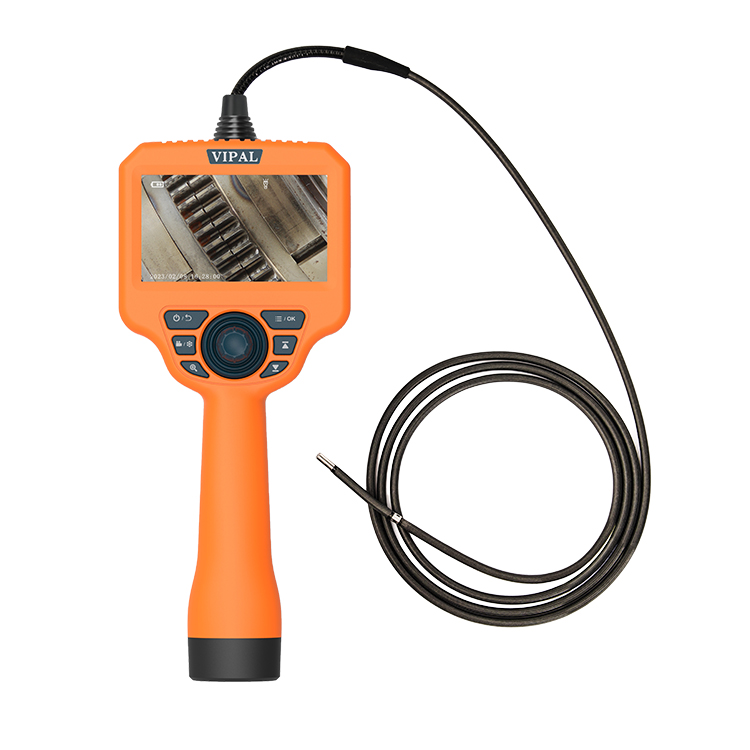

UV Borescope Inspection: Applications and Advantages in Industrial Inspection
Category: News-
On: 2026-09-05
1. What Is UV Borescope Inspection?
Standard industrial borescopes use visible-light illumination to inspect internal surfaces and identify physical defects such as cracks, wear, corrosion, deposits, and foreign objects.
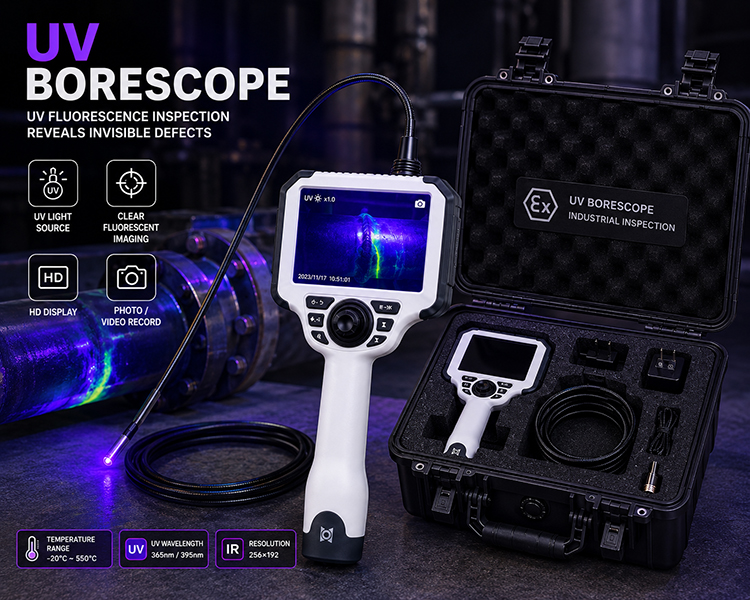
However, some specialized inspection processes rely on fluorescence rather than visible-light contrast. Fine cracks, surface-breaking defects, fluorescent penetrant indications, coating-related conditions, and trace residues may be difficult to identify using conventional white-light inspection alone.
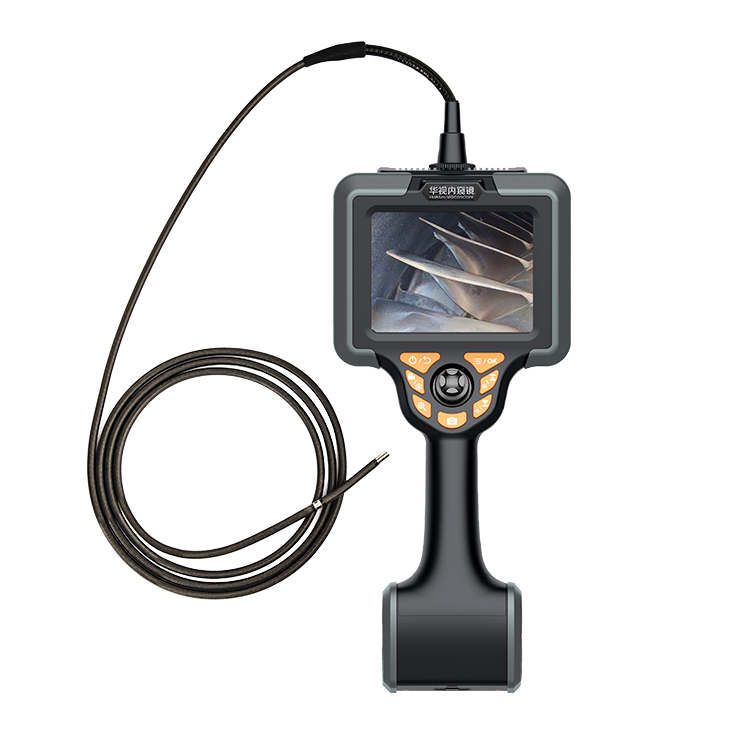
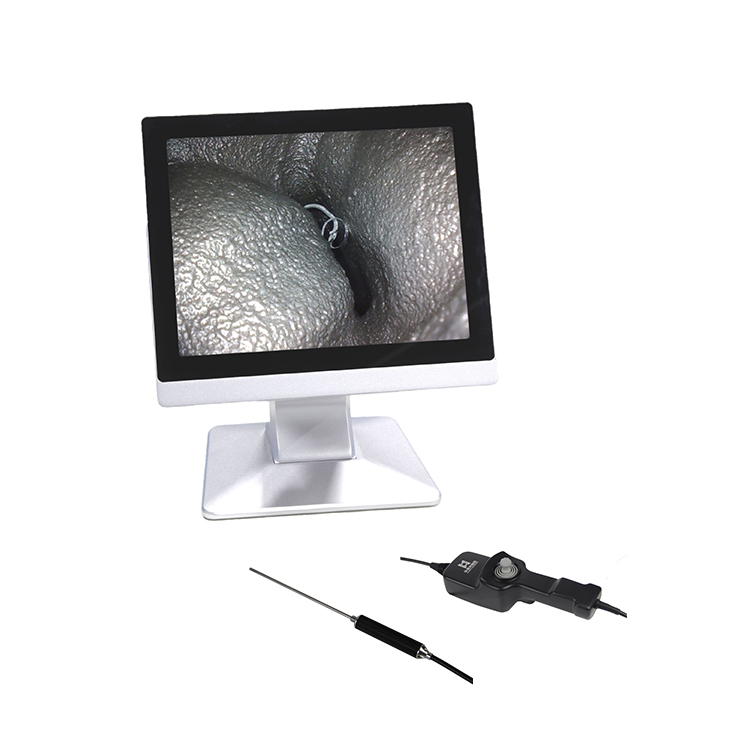
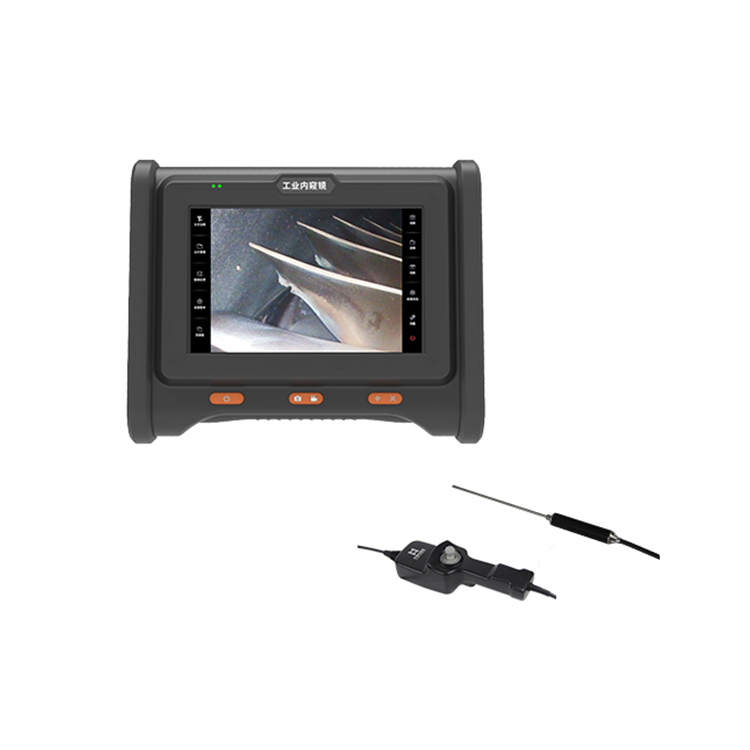
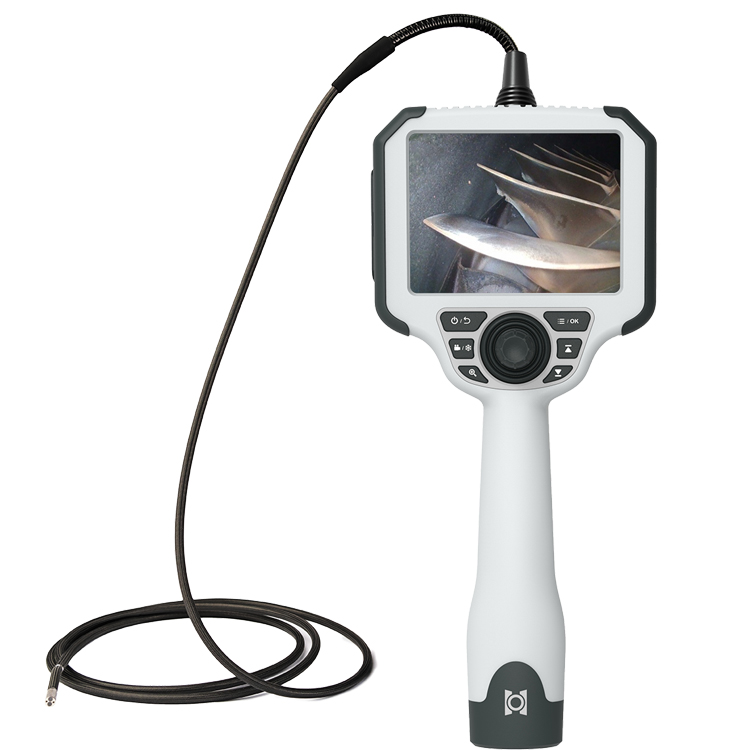
A UV borescope, also known as a UV videoscope or ultraviolet inspection camera, combines a borescope inspection system with ultraviolet illumination and, depending on the system, imaging optimized for fluorescent indications.
When a suitable fluorescent material or penetrant is present, UV illumination can excite the material and produce a visible fluorescent response. This can make otherwise difficult-to-see indications much easier to locate.
For this reason, UV borescopes are particularly useful as a specialized supplement to conventional visual inspection and fluorescent penetrant testing (FPI/PT).
2. What Is a UV Borescope?
A UV borescope is an industrial visual inspection system equipped with a dedicated ultraviolet illumination source and an imaging system designed or configured to capture UV-induced fluorescent indications.
Unlike a conventional white-light borescope, which primarily relies on visible illumination and reflected visible light, a UV inspection system uses a selected ultraviolet wavelength to stimulate fluorescent materials.
Depending on the inspection process, this can help reveal:
Fluorescent penetrant indications
Fine surface-breaking cracks
Small defects associated with fluorescent inspection processes
Fluorescent residues
Certain UV-sensitive coatings or markings
Contamination or process residues that fluoresce under UV illumination
The actual inspection capability depends on several factors, including:
UV wavelength
UV irradiance at the target
Sensor sensitivity
Optical design
Fluorescent material characteristics
Surface condition
Inspection distance
Image-processing performance
Therefore, not every camera marketed as “UV capable” is suitable for professional fluorescent inspection.
3. Key Advantages of UV Borescope Inspection
Compared with conventional white-light visual inspection, UV inspection provides a different information channel.
Its main value lies in improving the visibility of fluorescent indications, supporting specialized defect detection, and helping verify specific inspection processes.
3.1 Enhanced Detection of Fluorescent Indications
UV illumination is widely associated with fluorescent penetrant inspection.
After a suitable fluorescent penetrant is applied and processed according to the inspection procedure, discontinuities that retain penetrant can produce fluorescent indications under appropriate UV illumination.
A UV borescope can make these indications visible in confined areas that are difficult to inspect directly.
This is particularly useful for:
Fine surface-breaking cracks
Small discontinuities
Complex internal surfaces
Restricted cavities
Difficult-to-access components
3.2 Specialized Surface Defect Inspection
Some small surface indications may have limited contrast under conventional white light.
When the inspection process uses a fluorescent material, UV illumination can significantly improve the contrast between the indication and surrounding surface.
This can support inspection of:
Fine cracks
Surface discontinuities
Small scratches
Coating-related indications
Localized surface damage
However, UV inspection should not be considered inherently superior to visible-light inspection for every type of defect. If a defect does not produce a suitable fluorescent response, a high-quality visible-light borescope may provide better information.
3.3 Detection of Fluorescent Residues and Contamination
Certain oils, process residues, cleaning agents, and other substances can fluoresce under UV illumination.
A UV borescope can therefore be useful for identifying localized fluorescent residues inside:
Mechanical cavities
Precision components
Tubes and channels
Sealing areas
Equipment interiors
The exact meaning of a fluorescent indication depends on the material and inspection process. A fluorescent response should not automatically be interpreted as a defect.
3.4 Inspection of UV-Responsive Materials
UV illumination can also be useful for inspecting certain:
Fluorescent coatings
UV-sensitive markings
Identification materials
Special process materials
Fluorescent inspection media
This makes UV borescopes useful not only for defect detection but also for process verification and quality control where UV response is part of the inspection method.
3.5 Additional Inspection Information
A conventional borescope provides detailed visible-light information about surface appearance.
A UV borescope can add another layer of information based on fluorescent response.
In applications where both types of information are important, a visible-light + UV inspection system can be particularly practical.
The visible channel can be used for general surface inspection, while the UV channel can be used to identify fluorescent indications.
4. Industrial Applications of UV Borescopes
4.1 Aerospace Inspection
Aerospace components require strict inspection procedures because even small surface-breaking defects can be important.
Components such as:
Turbine components
Engine structures
Combustion-related components
Precision holes
Internal passages
Complex machined parts
may contain areas that are difficult to inspect directly.
When a fluorescent penetrant inspection process is specified, a UV borescope can help inspectors observe fluorescent indications inside confined areas.
This can support the inspection of difficult-to-access surfaces while reducing the need for extensive disassembly.
The exact inspection procedure, acceptance criteria, and equipment requirements should always follow the applicable aerospace standard and manufacturer's procedures.
4.2 Precision Manufacturing
Precision-machined components, castings, molds, hydraulic components, and other high-value parts can contain small surface discontinuities.
Examples include:
Fine cracks
Small pores
Surface-breaking defects
Machining-related damage
Fluorescent inspection indications
When fluorescent inspection media are used, UV illumination can improve the visibility of relevant indications.
This makes UV borescopes useful for specialized quality-control and inspection workflows, particularly where conventional white-light inspection alone provides insufficient contrast.
4.3 Surface and Cleanliness Inspection
Some industrial processes require inspection for trace residues or contamination inside confined areas.
UV illumination can help identify substances that produce a fluorescent response, making it useful for certain:
Cleaning verification processes
Manufacturing quality checks
Internal cavity inspections
Precision component inspections
Process-control applications
The fluorescence response must be correlated with the material being inspected and the defined acceptance criteria. UV fluorescence by itself does not prove contamination or failure.
4.4 Fluorescent Penetrant Testing and Specialized NDT
One of the most important applications for UV inspection is fluorescent penetrant testing (FPI).
In an FPI process, fluorescent penetrant is applied to a suitably prepared surface. After the specified processing steps, penetrant retained in relevant surface discontinuities produces fluorescent indications under suitable UV illumination.
A UV borescope can help inspectors observe these indications in locations that are difficult to access with conventional inspection equipment.
This makes UV inspection particularly valuable for:
Internal cavities
Complex components
Narrow passages
Engine components
Precision-machined structures
Difficult-to-access surfaces
However, a UV borescope does not replace the complete penetrant testing process. Penetrant application, dwell time, removal, inspection conditions, acceptance criteria, and other process requirements must be controlled according to the applicable procedure or standard.
5. UV Borescope vs. Standard White-Light Borescope
UV and white-light borescopes serve different inspection purposes.
They should generally be considered complementary technologies rather than direct replacements.
Standard White-Light Borescope
A standard visible-light borescope is designed for general industrial visual inspection.
It is particularly effective for observing:
Wear
Corrosion
Deposits
Carbon buildup
Blockages
Foreign objects
Surface damage
Visible cracks
General surface condition
It offers broad applicability and is suitable for most routine RVI applications.
UV Borescope
A UV borescope is a more specialized inspection tool.
It is most useful when the inspection involves:
Fluorescent penetrants
Fluorescent indications
UV-responsive materials
Fluorescent residues
Specialized NDT procedures
If the target does not have an appropriate fluorescent response, UV imaging may provide little additional information.
The selection principle is therefore:
Use visible light for general surface inspection and UV illumination when the inspection process relies on fluorescence.
6. How to Choose a UV Borescope
UV inspection is highly application-specific. Simply selecting a product with a “UV mode” is not enough.
The following parameters should be evaluated before purchasing.
6.1 UV Wavelength
UV wavelength is one of the most important parameters.
Common UV wavelengths include 365 nm and 395 nm, but the correct wavelength depends on the fluorescent penetrant, material, inspection procedure, and applicable requirements.
For professional fluorescent inspection, always select the wavelength based on the actual inspection process rather than choosing a wavelength simply because it is commonly available.
6.2 UV Illumination Intensity
UV wavelength alone does not determine inspection performance.
The intensity or irradiance reaching the inspection target is also important.
Consider:
UV output
Irradiance at the working distance
Illumination uniformity
Working distance
Optical design
Insufficient UV illumination can reduce fluorescent contrast and make small indications difficult to identify.
6.3 UV-Compatible Imaging System
A conventional camera is not automatically optimized for UV-based inspection.
Depending on the design, a professional UV inspection system may require:
UV-compatible optics
Appropriate sensor sensitivity
Optical filtering
Suitable image processing
Controlled visible-light rejection
These factors influence how clearly fluorescent indications can be captured.
6.4 Probe Diameter and Length
The probe must match the physical access requirements of the component.
Before purchasing, evaluate:
Probe diameter
Probe length
Minimum access opening
Internal passage geometry
Required inspection depth
Probe flexibility
Articulation range
A smaller-diameter probe may be necessary for narrow passages, while a longer probe may be required for deep internal inspection.
6.5 Visible + UV Dual-Light Capability
For many industrial applications, a dual-light borescope supporting both visible white light and UV illumination can be more practical than a UV-only system.
This configuration allows inspectors to:
Perform general visible-light inspection.
Switch to UV illumination for fluorescent indications.
Compare visible and UV images.
Document both types of inspection information.
One system can therefore support both routine RVI and specialized fluorescent inspection workflows.
6.6 UV Safety
UV radiation requires appropriate safety controls.
Before operating a UV borescope, follow the manufacturer's instructions and applicable workplace safety requirements.
Depending on the UV wavelength and exposure conditions, appropriate controls may include:
Avoiding direct eye exposure
Preventing unnecessary skin exposure
Using appropriate protective equipment
Controlling exposure duration
Maintaining suitable working distances
Restricting access to the inspection area when required
Safety requirements should be determined according to the actual UV source, wavelength, irradiance, and operating environment.
6.7 Image Recording and Inspection Traceability
Professional inspection systems should provide reliable image and video documentation.
Useful functions may include:
UV image capture
Visible-light image capture
Video recording
Image comparison
Defect marking
Data storage
File export
Inspection report support
Documenting fluorescent indications can improve inspection traceability, quality records, and maintenance documentation.
7. Important Limitations of UV Borescope Inspection
UV inspection is powerful in the right application, but it is not a universal defect detection method.
A UV borescope requires an appropriate fluorescent response to provide its main advantage.
For example:
A non-fluorescent crack may not become visible under UV illumination.
A physical defect without penetrant or fluorescent material may remain difficult to detect.
A fluorescent response does not automatically indicate a defect.
Different materials and inspection chemicals can produce different fluorescence characteristics.
Therefore, UV inspection should always be interpreted within the context of the applicable inspection procedure.
For fluorescent penetrant testing, the borescope is only one part of the inspection system. Proper surface preparation, penetrant application, processing, UV illumination, viewing conditions, and acceptance criteria all remain important.
8. UV Borescope Inspection: Final Selection Guide
A standard industrial borescope is the preferred choice for general-purpose visual inspection and conventional surface-defect identification.
A UV borescope is a specialized tool for applications where fluorescent indications or UV-responsive materials provide useful inspection information.
The selection logic is straightforward:
For general surface inspection, choose a standard white-light industrial borescope.
For fluorescent penetrant inspection and UV-responsive materials, choose a UV borescope with the appropriate wavelength and illumination performance.
For applications requiring both conventional visual inspection and fluorescent indication detection, consider a visible-light + UV dual-mode borescope.
Before purchasing a UV inspection system, clearly define the inspection material, fluorescent penetrant or process, target defect, required UV wavelength, probe dimensions, illumination requirements, and documentation needs.
Choosing the system based on the actual inspection procedure—not simply the presence of a UV function—will provide more reliable and useful inspection results.