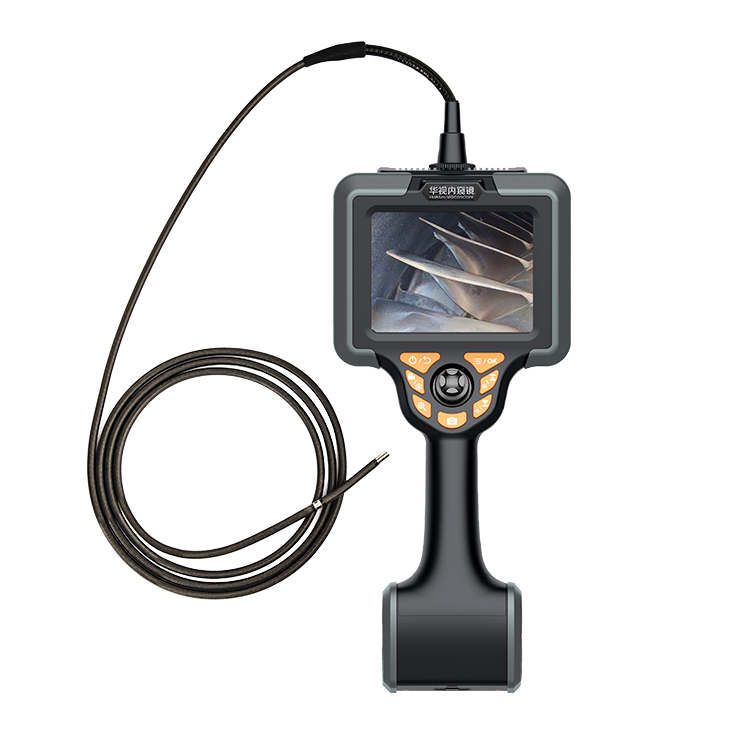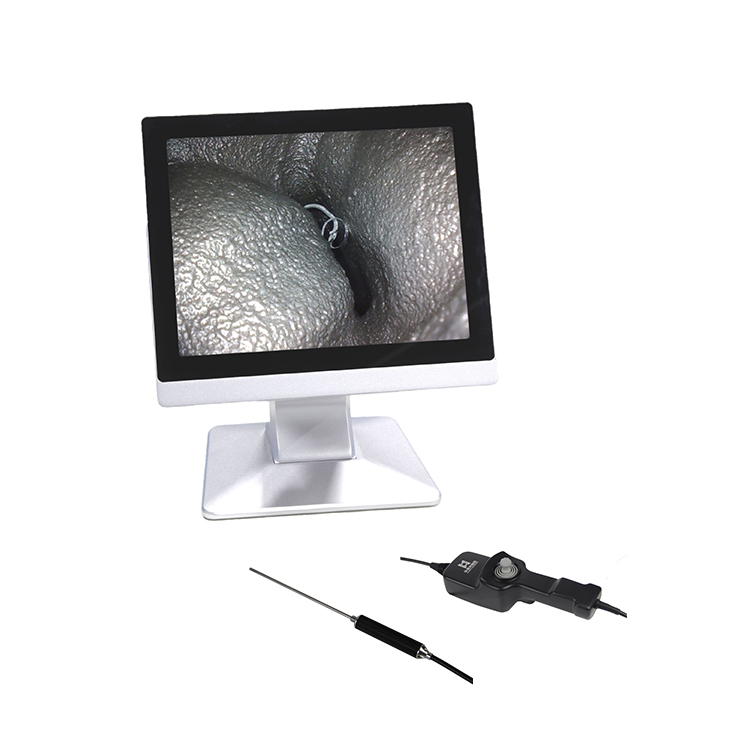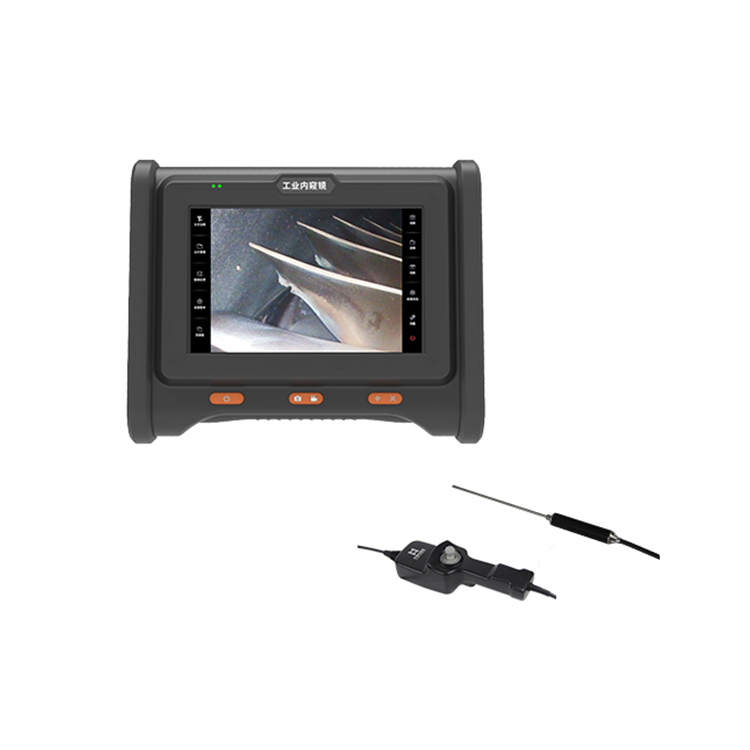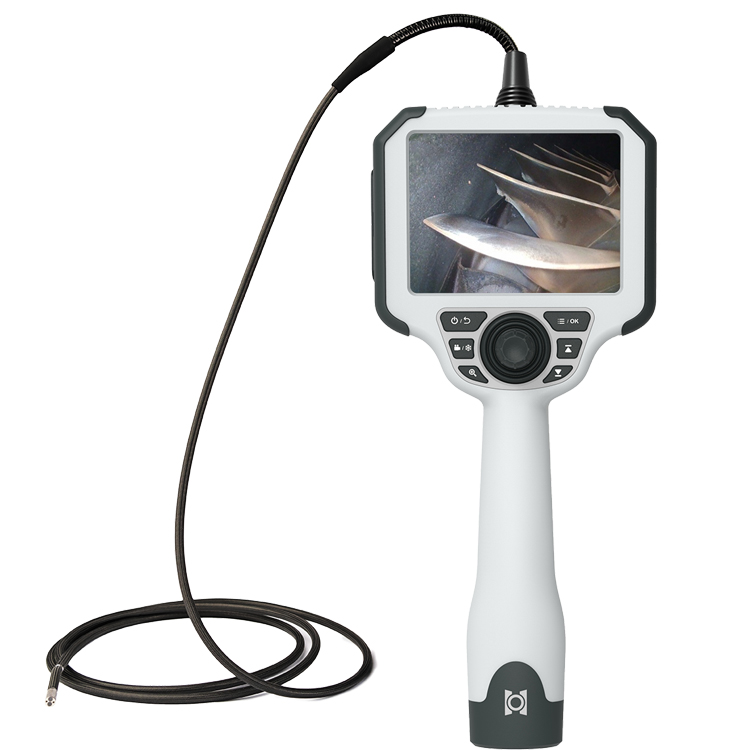

Industrial Borescope Probe Length: How Long Should Your Inspection Probe Be?
Category: News-
On: 2026-09-05
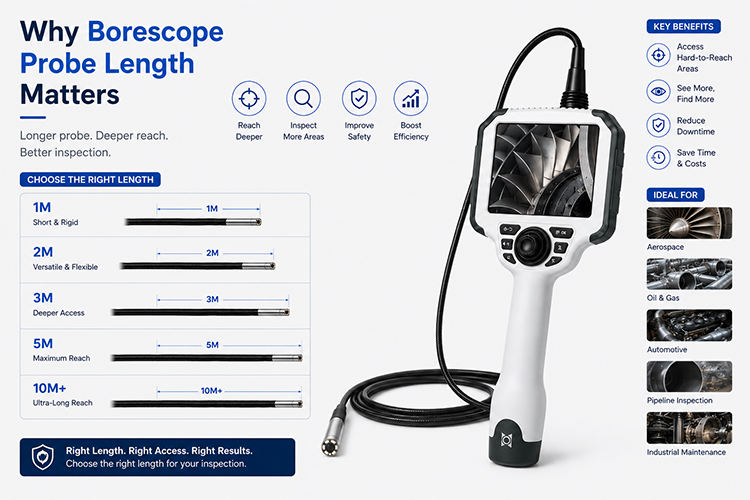
1. Why Borescope Probe Length Matters
Borescope probe length is one of the most important specifications when selecting an industrial borescope. The correct length determines whether the probe can reach the inspection target while remaining easy to control.
Choosing a probe that is too short creates an obvious problem: the camera simply cannot reach the required inspection area.
However, choosing a probe that is unnecessarily long can also reduce inspection efficiency. Excess probe length may make the system harder to maneuver, increase insertion resistance, introduce more movement at the distal tip, and make transportation and storage less convenient.
The practical selection principle is:
Choose the shortest practical probe that can safely and reliably reach the entire inspection area.
This provides a better balance between inspection depth, maneuverability, image stability, and portability.
2. What Is Borescope Probe Length?
Borescope probe length refers to the effective length of the flexible insertion tube that can be inserted into a component, machine, vessel, pipeline, or other inspection area.
This is the portion of the borescope that actually travels through the inspection path to reach the target.
There is no single standard probe length suitable for every industrial application.
The appropriate length depends on several factors, including:
Probe diameter
Probe construction
Flexibility and stiffness
Articulation capability
Internal geometry
Inspection target location
Equipment design
Required working distance
For this reason, probe length should always be selected together with probe diameter and articulation capability.
3. Common Borescope Probe Lengths and Their Applications
Industrial borescopes are available with a wide range of probe lengths. Among commonly used configurations, 1 m, 2 m, 10 m, and 20 m represent very different inspection requirements.
1. 1 m Borescope Probe — Compact Inspection
A 1 m borescope probe is a compact option for relatively shallow inspection areas.
Its shorter insertion tube is generally easier to control and store, making it suitable for small components and inspection points located relatively close to the access opening.
Typical applications include:
Automotive components
Small precision machinery
Small and medium-sized castings
Compact enclosed equipment
Precision-machined components
Shallow internal passages
When the target is close to the access point, a 1 m probe can provide excellent maneuverability without the unnecessary length of a long probe.
2. 2 m Borescope Probe — General-Purpose Industrial Inspection
A 2 m borescope probe is a practical general-purpose configuration for many industrial inspection applications.
It provides additional inspection depth while remaining relatively easy to transport and maneuver.
Typical applications include:
Engine inspection
Gearbox inspection
Industrial machinery
Manufacturing equipment
Casting inspection
Equipment maintenance
General remote visual inspection (RVI)
For many routine industrial applications, a 2 m probe provides a useful balance between reach, flexibility, maneuverability, and portability.
However, the statement that 2 m is sufficient for most applications should always be evaluated against the actual inspection path.
3. 10 m and 20 m Borescope Probes — Long-Distance Inspection
For large industrial equipment, long pipelines, deep vessels, and other structures where the inspection target is far from the access point, a 10 m or 20 m long-distance borescope may be required.
These long-probe configurations are designed to reach areas that conventional short probes cannot access.
Typical applications include:
Large industrial machinery
Long pipelines
Large tanks and vessels
Deep equipment cavities
Large industrial gearboxes
Complex industrial structures
Long internal passages
Long-distance probes can significantly extend inspection reach, but their increased length also creates additional requirements for probe handling, flexibility, stiffness, and articulation.
4. How to Determine the Correct Borescope Probe Length
One of the most common mistakes when selecting a borescope is choosing probe length based only on the overall size of the equipment.
Equipment size does not directly determine the required probe length.
The more accurate method is to determine the actual inspection path.
Step 1: Identify the Access Point
Determine exactly where the borescope will enter the equipment.
This may be:
An inspection port
A maintenance opening
A small access hole
A removed component opening
A pipeline access point
Step 2: Identify the Farthest Inspection Target
Determine the distance from the entry point to the furthest location that must be inspected.
This is more important than the overall external dimensions of the machine.
Step 3: Map the Actual Inspection Path
Do not assume the probe will travel in a straight line.
Consider obstacles such as:
Internal corners
Shafts
Gears
Bearings
Partitions
Pipe elbows
Curved passages
Narrow channels
A curved inspection route can require substantially more probe length than the direct distance between two points.
Step 4: Add a Reasonable Working Margin
The probe should have enough additional length to allow positioning and manipulation at the inspection target.
However, excessive additional length should be avoided.
The objective is not to select the longest possible probe, but the shortest practical probe that provides reliable access.
5. Why You Should Not Automatically Choose the Longest Probe
It may seem logical to choose the longest available probe so that it can cover more applications.
In practice, this is not always the best approach.
Reduced Maneuverability
As the insertion tube becomes longer, controlling the distal tip can become more difficult.
Additional flexibility can result in:
More movement
Increased tip deflection
More difficult positioning
Greater image movement
This can make it harder to precisely position the camera.
More Difficult Navigation
Long probes traveling through complex internal structures may require more careful navigation.
When the inspection path contains multiple bends, elbows, or obstacles, pushing a long flexible probe through the structure can become more challenging.
Higher Insertion Resistance
A longer insertion tube may have greater contact with the internal surface of the inspection path.
This can increase resistance during:
Insertion
Advancement
Retraction
Direction changes
The actual effect depends on the probe's diameter, stiffness, surface construction, and the geometry of the inspection path.
Less Convenient Storage
A 10 m or 20 m probe naturally requires more storage space than a compact 1 m or 2 m probe.
For field inspection teams that frequently transport equipment between locations, unnecessary probe length can reduce portability and increase setup time.
Therefore, longer does not automatically mean better.
6. Probe Length, Diameter, and Articulation Must Be Matched
Probe length should not be selected independently.
The three important mechanical factors are:
Probe Diameter + Probe Length + Articulation
These parameters directly affect the way a borescope behaves inside an inspection area.
Small-Diameter Probes
Very small probes such as 0.85 mm, 0.95 mm, 1.2 mm, and 2 mm are designed primarily for restricted access.
Because of their small physical structure, some small-diameter probes may have limitations in stiffness, durability, articulation, or maximum practical length.
A very small probe that is excessively long may become more difficult to control.
General-Purpose Probes
Larger probes such as 2.4 mm, 2.8 mm, and 3.9 mm can generally accommodate a more robust internal construction.
Depending on the design, they may provide better mechanical stability and more options for longer probe configurations.
Articulation
As inspection paths become longer and more complex, articulation becomes increasingly important.
A straight inspection path may require little steering.
A long path containing multiple bends may benefit from 2-way or 4-way articulation, allowing the operator to direct the camera around internal obstacles.
For demanding industrial applications, features such as motorized articulation can further improve positioning and control, depending on the borescope design.
7. Long-Distance Borescope Applications
Long-probe borescopes are particularly useful when the inspection target is deep inside large or complex structures.
1. Pipeline Inspection
Long pipelines, curved pipes, and complex process lines can contain inspection targets located many meters from the access point.
A 10 m or 20 m borescope may allow inspectors to reach deeper sections from a single access point, depending on the pipe geometry and probe configuration.
Potential inspection targets include:
Internal corrosion
Deposits
Blockages
Cracks
Surface damage
Weld areas
For pipeline applications, probe diameter, flexibility, articulation, and the internal geometry of the pipe should be evaluated together with length.
2. Large Gearbox Inspection
Heavy industrial gearboxes may contain gears, shafts, bearings, and other components located deep inside the housing.
A long probe can provide access to areas that are difficult to reach through conventional inspection openings.
Inspectors can examine:
Gear tooth surfaces
Pitting
Wear
Corrosion
Lubricant conditions
Bearing areas
Foreign objects
The required length depends on the actual gearbox geometry and access point.
3. Power Generation Equipment
Large power-generation equipment, heat exchangers, turbines, and enclosed machinery can contain deep internal areas with limited access.
A long-distance industrial borescope can help inspectors reach remote inspection points while reducing the need for extensive disassembly where equipment design and safety procedures permit.
Potential applications include:
Turbine inspection
Generator inspection
Heat exchanger inspection
Boiler inspection
Large machinery inspection
Internal cavity inspection
For these applications, probe length must be considered together with temperature rating, probe diameter, articulation, lighting, and environmental protection.
4. Marine and Offshore Equipment
Ships and offshore equipment can contain large enclosed structures, tanks, compartments, and extended internal passages.
Long probes can be useful for inspecting restricted areas where access is limited and the inspection path is relatively long.
Typical applications include:
Marine machinery
Tanks and vessels
Internal structural spaces
Pipes and passages
Enclosed mechanical systems
The appropriate probe length depends on the access configuration and actual inspection route.
8. Information to Provide When Purchasing a Borescope
To help a supplier recommend the right probe configuration, provide as much information about the inspection environment as possible.
Recommended information includes:
Minimum access opening: Determines the maximum allowable probe diameter.
Farthest inspection distance: Helps determine the required probe length.
Actual inspection path: Indicates whether the probe must travel through straight or curved passages.
Number and severity of bends: Helps determine articulation requirements.
Target location: Identifies how deep the camera must travel.
Inspection objective: Determines image quality and other functional requirements.
Environmental conditions: Temperature, moisture, oil, chemicals, and other factors may affect probe selection.
If available, provide photos, drawings, or a simple sketch of the inspection path.
This allows the supplier to evaluate the complete configuration rather than recommending a probe based only on the equipment name.
9. Borescope Probe Length Selection Guide
| Inspection Requirement | Typical Probe Length | Main Advantage |
|---|---|---|
| Shallow inspection | 1 m | Compact and easy to control |
| General industrial inspection | 2 m | Good balance of reach and maneuverability |
| Deep machinery inspection | 3–5 m | Extended inspection depth |
| Large equipment / long passages | 10 m | Long-distance access |
| Very deep or extended inspection paths | 20 m | Maximum inspection reach |
These are practical reference ranges rather than universal standards. The appropriate length should always be determined by the actual inspection path and the manufacturer's available configurations.
10. Key Takeaway: Choose the Shortest Practical Probe
The most important principle when selecting borescope probe length is:
Choose the shortest probe that can reliably reach the entire inspection area.
A 1 m borescope is suitable for compact and relatively shallow inspections.
A 2 m borescope provides a strong balance for many general industrial applications.
A 10 m or 20 m borescope is intended for deep inspection areas, long pipelines, large vessels, and other applications where conventional probes cannot reach the target.
But length alone does not determine inspection performance.
The final configuration should match:
Probe Length + Probe Diameter + Articulation + Flexibility/Stiffness + Imaging Performance + Inspection Environment
When these parameters are properly matched, the borescope can reach the target efficiently while remaining controllable, stable, and practical for field use.
For industrial borescope selection, do not choose based on equipment size alone and do not simply choose the longest probe available. Measure the actual inspection route, identify the farthest target, evaluate the bends and obstacles, and then select the shortest practical probe that can complete the inspection.