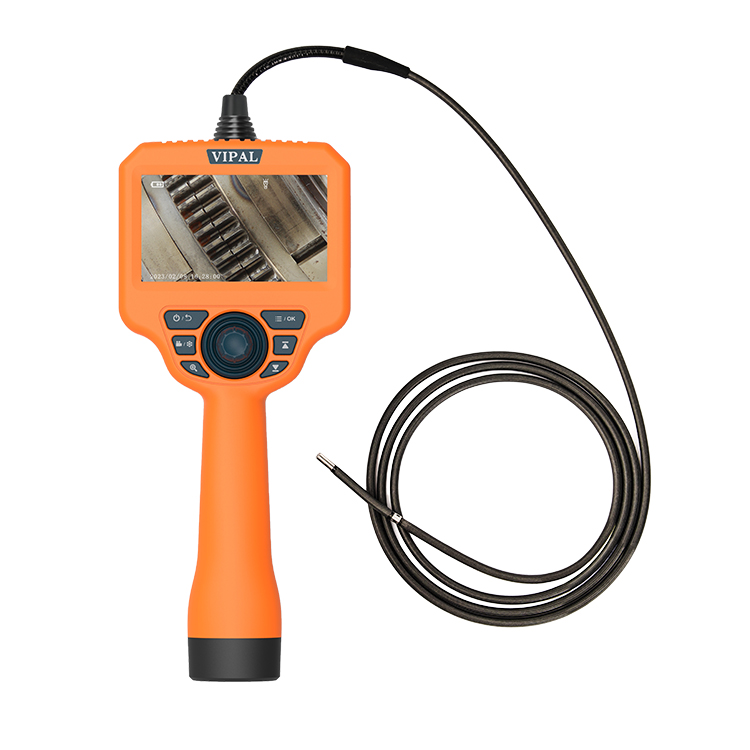

Dual-View Borescope: Forward-View vs. Side-View Inspection Comparison
Category: News-
On: 2026-09-07
1. Introduction
Industrial Remote Visual Inspection (RVI) involves a wide range of inspection environments. Some applications require the inspector to look straight ahead into a cavity, while others require detailed examination of side walls, circumferential surfaces, welds, or internal holes.
This creates a limitation for conventional single-view borescopes.
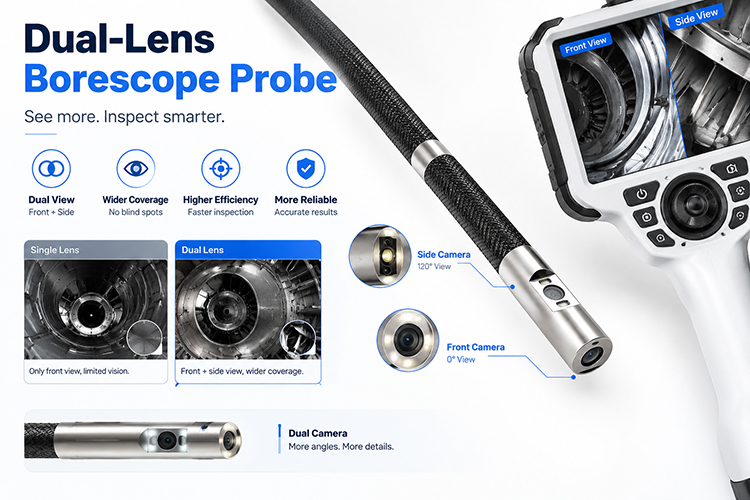
A forward-view borescope is well suited for navigating into deep cavities and examining targets directly ahead of the probe. However, inspecting a side wall may require repositioning or rotating the probe.
A side-view borescope, on the other hand, is designed to observe surfaces perpendicular to the insertion direction, but it may be less convenient for navigating deep or complex inspection paths.
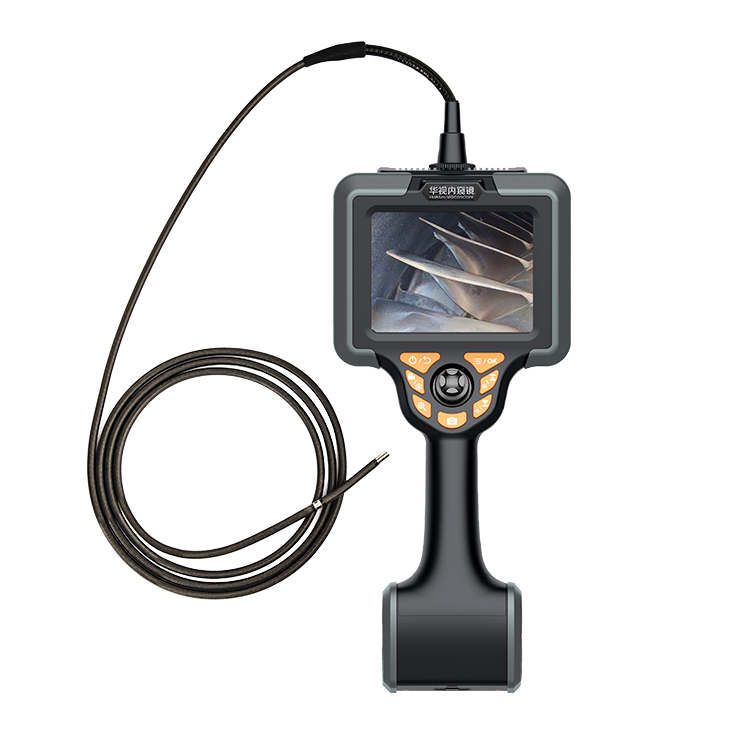
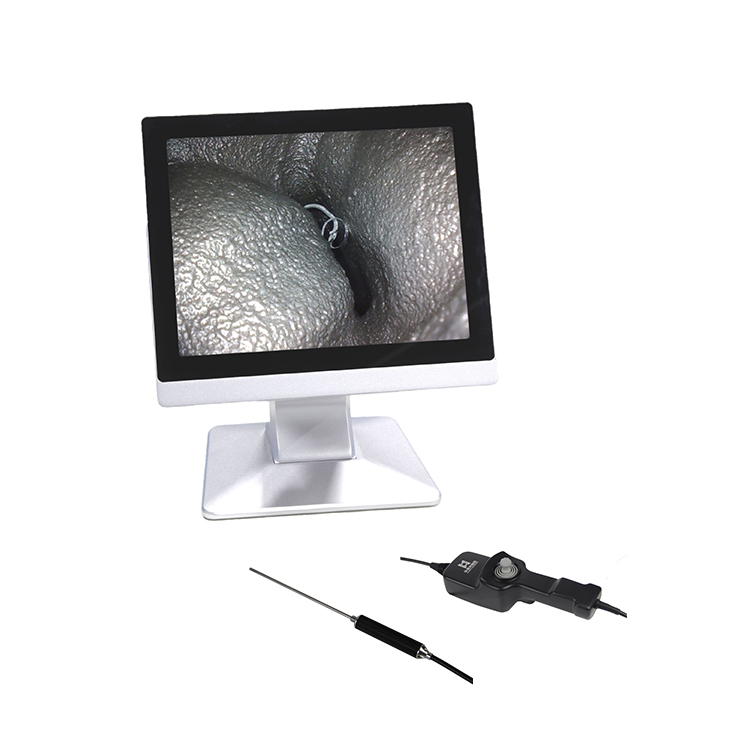
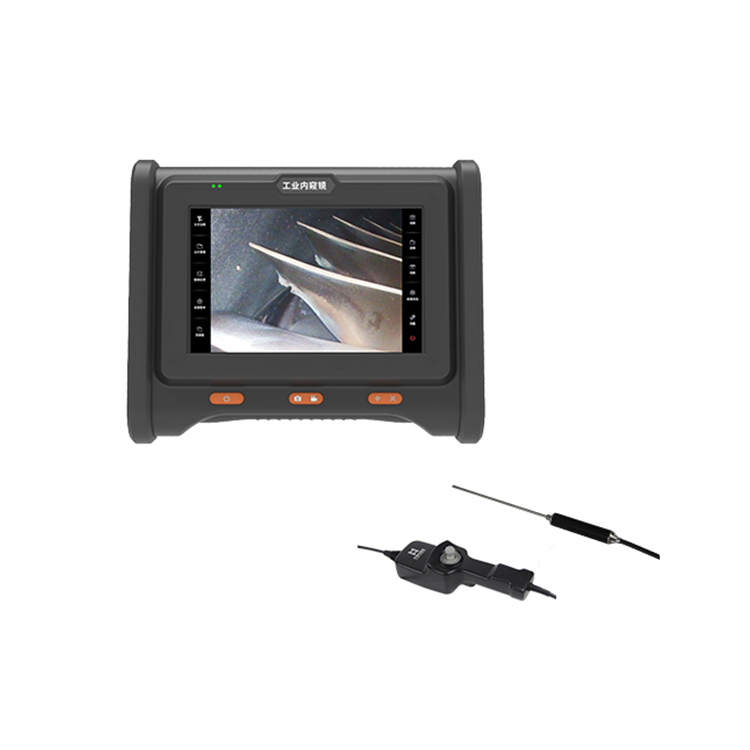
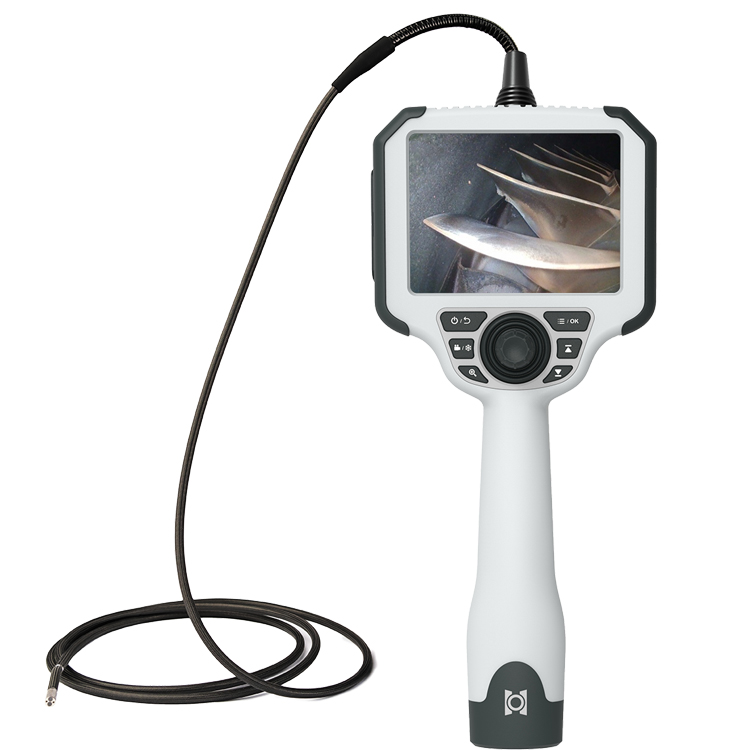
A dual-view borescope combines forward-view and side-view capabilities in one inspection system. Depending on the product design, the operator can switch between the two viewing directions to perform both deep-area navigation and detailed side-wall inspection.
This makes dual-view videoscopes particularly useful for applications such as pipe inspection, engine inspection, gearbox inspection, turbine inspection, weld inspection, and precision casting inspection.
2. What Is a Dual-View Borescope?
A dual-view borescope is an industrial videoscope that provides two different viewing directions, typically:
Forward View
Side View
The forward-view camera looks toward the direction of probe insertion, while the side-view camera or optical system looks toward the side of the probe.
Forward View
Viewing Direction: 0°
The camera looks toward the front of the probe.
It is primarily used for:
Deep-cavity navigation
Forward inspection
Locating internal components
General visual inspection
Side View
Viewing Direction: 90°
The camera looks toward the side of the probe.
It is particularly useful for:
Pipe walls
Internal welds
Cylindrical surfaces
Bore surfaces
Side walls
Turbine and engine components
The exact viewing direction and optical configuration may vary between manufacturers, so buyers should always check the product's technical specifications.
3. How Is a Dual-View Borescope Designed?
Dual-view inspection systems can be implemented in different ways.
3.1 Dual-Camera Design
A probe may contain two independent camera modules or image sensors.
One camera provides forward viewing, while the other provides side viewing.
This approach allows each optical path to be optimized for its intended viewing direction.
3.2 Optical or Mechanical Switching
Some systems use a specialized optical or mechanical structure to change the viewing direction.
The operator may switch between forward and side views through a control mechanism.
The exact implementation depends on the manufacturer and product architecture.
Dual-View Does Not Necessarily Mean Dual-Camera
This distinction is important when comparing products.
Dual-camera borescope describes the hardware configuration.
Dual-view borescope describes the inspection function.
A dual-view system may use two independent cameras, optical switching, or another specialized design.
Therefore, buyers should verify:
Number of cameras
Number of image sensors
Viewing directions
Switching mechanism
Image resolution of each view
Optical configuration
rather than relying solely on the product name.
4. Forward View vs. Side View: What Is the Difference?
4.1 Forward-View Borescope
Forward view is the most common viewing direction for general industrial borescope inspection.
The camera faces the direction in which the probe is being inserted.
Typical Applications
Engine cylinders
Combustion chambers
Gearboxes
Deep cavities
Casting cavities
Machinery interiors
General RVI inspection
Main Function
The main advantage of forward view is deep-area navigation and direct inspection.
It helps the operator move the probe through the inspection path and locate the target area.
4.2 Side-View Borescope
A side-view borescope observes the area perpendicular or approximately perpendicular to the probe insertion direction.
This makes it particularly useful for cylindrical or elongated structures.
Typical Applications
Pipe walls
Internal welds
Cylinder walls
Bores
Circular cavities
Turbine components
Side surfaces of internal structures
Main Function
The primary advantage of side view is side-wall inspection.
For example, when inspecting a long pipe, a forward-view camera primarily observes the area ahead of the probe.
If the objective is to inspect corrosion or a weld around the pipe wall, a side-view camera can provide a more direct viewing direction.
5. Why Choose a Dual-View Borescope?
5.1 One Probe for Multiple Inspection Tasks
A dual-view system can combine forward and side viewing in a single probe.
This can reduce the need to keep separate forward-view and side-view probes for applications that require both inspection modes.
It can also simplify equipment management for inspection teams handling multiple types of jobs.
5.2 More Efficient Inspection Workflow
A typical inspection workflow can be:
Forward View → Navigate into the equipment → Locate the target → Switch to Side View → Inspect the side surface
The operator does not necessarily need to remove the probe and install another viewing configuration.
This can make inspections more efficient when both viewing directions are required.
5.3 Well Suited to Cylindrical Components
Many industrial components have cylindrical or tubular structures.
Examples include:
Pipes
Tubes
Cylinders
Engine bores
Bores and holes
Shafts
Pressure vessel passages
Forward view helps with navigation, while side view can be used to examine the surrounding internal surface.
5.4 Reduced Equipment Changes
When the inspection requires multiple viewing directions, using a dual-view probe can reduce the need to repeatedly change probes or inspection equipment.
This can simplify field operations and reduce interruptions during inspection.
5.5 Better Accessibility Through a Single Inspection Opening
In applications where a single access point leads to multiple inspection targets, a dual-view system can provide more viewing options without requiring a second access opening.
Actual inspection coverage depends on the probe diameter, length, articulation range, viewing direction, optical characteristics, and internal geometry.
6. Major Industrial Applications
6.1 Pipe Inspection
Pipe inspection is one of the most suitable applications for dual-view borescopes.
The forward view can be used to navigate through the pipe, while the side view can be used to examine the internal wall.
Potential inspection targets include:
Corrosion
Surface wear
Deposits
Foreign objects
Blockages
Internal weld areas
Surface damage
For long or complex pipelines, specialized pipe inspection equipment may be more appropriate depending on the required inspection distance and procedure.
6.2 Internal Weld Inspection
Side-view inspection can be useful for examining weld areas inside pipes, vessels, and other enclosed structures.
The operator can position the side-view camera toward the weld and visually inspect the accessible surface.
Potential indications include:
Visible cracks
Surface porosity
Surface contamination
Weld surface irregularities
Visible incomplete penetration or fusion indications
A borescope is a visual inspection tool and does not replace volumetric or surface NDT methods when those methods are required.
Depending on the application, UT, RT, PT, or MT may be used alongside visual inspection.
6.3 Engine Inspection
Engines contain numerous confined areas that may be difficult to access directly.
A dual-view borescope can provide:
Forward View:
Navigation through the internal cavity and inspection of areas ahead of the probe.
Side View:
Inspection of cylinder walls, internal surfaces, and side-facing components.
Typical applications include:
Cylinder inspection
Combustion chamber inspection
Valve inspection
Piston inspection
Turbine component inspection
Internal engine surface inspection
Aircraft engine inspection must follow applicable maintenance procedures and manufacturer requirements.
6.4 Gearbox Inspection
Gearboxes contain multiple gears, shafts, bearings, housings, and lubrication components.
Internal structures can obstruct the camera's line of sight.
Forward viewing can help the inspector navigate toward the target area, while side viewing can provide additional access to surfaces that are difficult to observe directly from the probe axis.
Potential inspection targets include:
Gear teeth
Bearing surfaces
Shafts
Housing walls
Wear
Surface damage
Corrosion
Lubrication contamination
For complex gearbox structures, dual-view capability can be especially useful when combined with probe articulation.
6.5 Turbine Inspection
Turbines contain blades, blade roots, nozzles, housings, and other components with complex geometries.
A single viewing direction may not be sufficient for every inspection task.
A dual-view videoscope can allow the inspector to use forward viewing for navigation and side viewing for selected component surfaces.
Potential inspection targets include:
Blade surfaces
Blade roots
Corrosion
Erosion
Cracks
Wear
Foreign object damage
The actual inspection capability depends on the probe geometry, articulation, optical system, and access conditions.
6.6 Precision Casting Inspection
Complex castings may contain enclosed cavities, narrow passages, and irregular internal structures.
A small-diameter dual-view probe can provide visual access through an available inspection opening.
Forward view can help navigate the internal passage, while side view can examine cavity walls and other surfaces.
Potential inspection targets include:
Surface cracks
Visible porosity
Visible inclusions
Machining defects
Surface contamination
Internal cavity condition
For defects that cannot be visually accessed, additional NDT methods may be required.
7. Dual-View vs. Single Forward-View Borescope
| Inspection Feature | Single Forward-View Borescope | Dual-View Borescope |
|---|---|---|
| Forward inspection | Excellent | Excellent |
| Deep-area navigation | Excellent | Excellent |
| Side-wall inspection | Limited | Stronger suitability |
| Viewing directions | 1 | 2 |
| Pipe-wall inspection | May require repositioning | More convenient |
| Complex inspection tasks | Basic to moderate | More flexible |
| Equipment versatility | Standard | Higher |
| Need to change viewing configuration | May be required | Reduced in dual-view applications |
Which Should You Choose?
For simple inspections where the target is directly ahead of the probe, a conventional forward-view borescope may be sufficient.
If the inspection requires both deep navigation and side-wall observation, a dual-view system can provide greater flexibility.
8. Dual-View vs. Single Side-View Borescope
A side-view borescope is highly effective when the primary inspection target is located on the internal side wall.
However, navigating a deep or complex cavity can be less convenient when only side viewing is available.
A dual-view borescope combines:
Forward View for Navigation + Side View for Detailed Surface Inspection
This makes it more versatile for inspection tasks that require both viewing directions.
9. Articulation + Dual View: A Powerful Combination
Articulation and dual-view capability address different inspection challenges.
Articulation controls where the probe tip points.
Viewing direction determines where the camera looks.
When combined, they can provide greater flexibility in complex internal spaces.
A practical inspection workflow may look like this:
Articulation → Position the probe → Forward View → Navigate → Switch to Side View → Inspect the target
This combination can be particularly useful for:
Gearboxes
Engines
Turbines
Complex castings
Curved pipes
Machinery with multiple internal obstacles
However, articulation and dual-view capability should be evaluated according to the actual inspection geometry rather than simply selecting the maximum available specifications.
10. Key Parameters When Choosing a Dual-View Borescope
10.1 Probe Diameter and Length
Probe diameter must be compatible with the smallest inspection opening.
Probe length must be sufficient to reach the inspection target.
Common industrial probe lengths may include:
1 m
2 m
3 m
5 m
10 m
20 m
The correct configuration should be based on the actual inspection path rather than selecting the longest available probe.
10.2 Image Quality of Both Views
A dual-view system should provide useful image quality in both viewing modes.
Check:
Camera resolution
Sensor performance
Optical quality
Focus range
Image processing
Low-light performance
Display resolution
Do not assume that the forward and side cameras have identical specifications.
For dual-camera systems, verify the resolution and optical characteristics of each camera independently.
10.3 Illumination
Side-wall inspection can present challenging lighting conditions.
Metallic surfaces may produce reflections, while deep cavities may create shadows.
Therefore, check the illumination system for:
Brightness
Light distribution
Reflection control
Low-light performance
Compatibility with probe diameter
Good illumination is essential for detecting surface conditions such as cracks, corrosion, wear, and contamination.
10.4 Viewing Direction and Switching
Confirm exactly how the viewing direction is specified.
Typical configurations include:
Viewing Direction: 0° — Forward View
Viewing Direction: 90° — Side View
Viewing Direction: 0° / 90° — Dual View
Also check how quickly and conveniently the operator can switch between views.
10.5 Articulation Capability
If the inspection path is curved or contains multiple obstacles, articulation can significantly improve probe positioning.
Check:
2-way or 4-way articulation
Actual articulation angle
Steering mechanism
Tip response
Minimum bending radius
A dual-view probe without sufficient articulation may still have difficulty reaching certain inspection targets.
10.6 Measurement Capability
If the inspection requires quantitative evaluation of defects, determine whether the videoscope supports measurement functions.
Depending on the system, measurement may be available for parameters such as:
Length
Width
Depth
Area
Distance
Measurement capability varies by technology and product, so the actual accuracy and measurement conditions should be verified before purchase.
10.7 Environmental Protection
Industrial inspection environments may involve:
Water
Oil
Dust
Humidity
Temperature variations
Chemical contamination
Check the applicable:
IP rating
Probe temperature range
Main unit temperature range
Water resistance
Oil resistance
Chemical compatibility
For specialized environments such as high-temperature or hazardous areas, additional requirements may apply.
11. When Should You Choose a Dual-View Borescope?
A dual-view borescope is worth considering when:
Both forward and side inspection are required.
Pipes or cylindrical components are inspected regularly.
Internal welds need visual inspection.
The inspection opening is limited.
One access point must reach multiple target areas.
Changing probes during inspection is inefficient.
The equipment contains complex internal structures.
A combination of navigation and side-wall inspection is required.
For a simple straight inspection path with only forward-facing targets, a conventional forward-view borescope may be more cost-effective.
12. Eight Questions to Ask Before Purchasing
Before purchasing a dual-view videoscope, verify the following:
1. Is it a true dual-camera system or an optical/mechanical switching system?
Understand the actual hardware architecture.
2. Does it provide both forward and side views?
Confirm the exact viewing directions and switching method.
3. Can the probe articulate?
If the inspection path is complex, determine whether 2-way, 4-way, or another articulation configuration is required.
4. Is the probe diameter suitable?
Measure the smallest inspection opening before selecting the probe.
5. Is the probe long enough?
Measure the actual inspection path and target depth.
6. Are both views sufficiently clear?
Check the resolution and optical performance of both viewing modes.
7. Does the lighting work well for side-wall inspection?
Pay particular attention to reflections, shadows, and illumination uniformity.
8. Is the system suitable for the operating environment?
Verify temperature, water resistance, dust protection, oil exposure, and other environmental requirements.
13. WorldNDT Dual-View Borescope Solutions
WorldNDT provides industrial visual inspection solutions for applications that require both forward and side viewing.
Dual-view videoscope configurations can be selected according to the specific inspection requirements, including:
Forward View
Side View
Dual View
Small-diameter probes
Flexible articulating probes
Different probe lengths
High-resolution imaging
Measurement functions
Industrial protective configurations
Potential applications include:
Pipe inspection
Weld inspection
Engine inspection
Gearbox inspection
Turbine inspection
Precision casting inspection
Machinery inspection
For complex inspection environments, WorldNDT can help match the probe diameter, probe length, articulation, viewing direction, imaging performance, illumination, and other functions to the actual inspection geometry.
The objective is not simply to provide more functions, but to build a videoscope configuration that is practical for the intended inspection task.
14. Frequently Asked Questions
Q1: What is a dual-view borescope?
A dual-view borescope is an industrial videoscope that provides two viewing directions, typically forward view and side view, allowing inspectors to perform both deep-area navigation and side-wall inspection with one system.
Q2: What is the difference between forward view and side view?
Forward view looks toward the direction of probe insertion and is useful for navigation and deep-cavity inspection.
Side view looks toward the side of the probe and is useful for examining pipe walls, welds, bores, and other side-facing surfaces.
Q3: Is a dual-view borescope better than a standard borescope?
It depends on the inspection task.
For simple forward-view inspection, a standard forward-view borescope may be sufficient.
For applications requiring both forward navigation and side-wall inspection, a dual-view borescope provides greater versatility.
Q4: Is a dual-view borescope suitable for pipe inspection?
Yes.
Forward view can help navigate through the pipe, while side view can be used to examine the internal wall, weld areas, corrosion, deposits, and other surface conditions.
The probe diameter, length, articulation, and environmental protection must match the pipe and inspection requirements.
Q5: Does a dual-view borescope always use two cameras?
No.
Dual-view describes the inspection capability rather than necessarily the hardware architecture.
Some systems use two independent cameras, while others may use optical or mechanical switching mechanisms.
Q6: Does a dual-view borescope need articulation?
Not necessarily.
Articulation is an additional function that controls the direction of the probe tip.
However, combining articulation + dual view can provide greater flexibility when inspecting curved or highly obstructed internal structures.
Q7: Is side view better than forward view for pipe inspection?
Neither is universally better.
Forward view is useful for navigating through the pipe and examining areas ahead of the probe.
Side view is generally more suitable for examining the internal pipe wall and circumferential surfaces.
For inspections requiring both functions, dual view can be advantageous.
Q8: Can a dual-view borescope replace other NDT methods?
No.
A borescope is primarily a visual inspection tool. It can identify visible surface conditions but cannot replace NDT methods required for subsurface or volumetric defect detection.
Depending on the application, UT, RT, PT, MT, or other inspection methods may be required.
15. Conclusion
A dual-view borescope combines the strengths of forward-view and side-view inspection in a single industrial videoscope.
Forward View provides effective navigation and inspection of areas directly ahead of the probe, while Side View provides better access to side walls, cylindrical surfaces, internal welds, and other lateral inspection targets.
This combination can be especially useful for pipe inspection, weld inspection, engine inspection, gearbox inspection, turbine inspection, and complex casting inspection.
When selecting a dual-view borescope, do not focus only on the number of viewing directions.
Consider the complete inspection system, including:
Probe Diameter + Probe Length + Articulation + Viewing Direction + Image Quality + Illumination + Measurement + Environmental Protection
The right combination will depend on the actual access opening, inspection path, target location, defect type, and working environment.
For inspection applications that require both deep navigation and detailed side-wall examination, a dual-view videoscope can provide a practical and flexible solution.