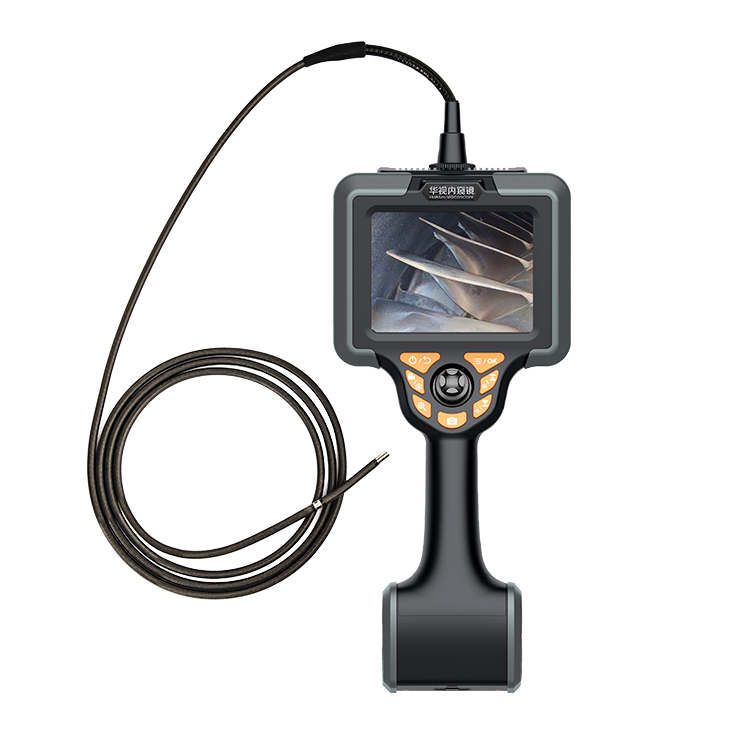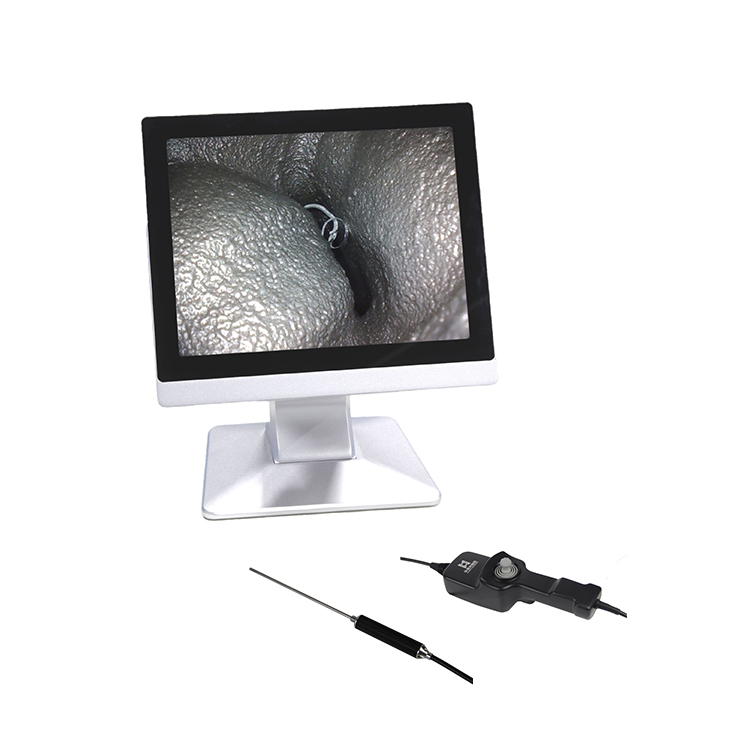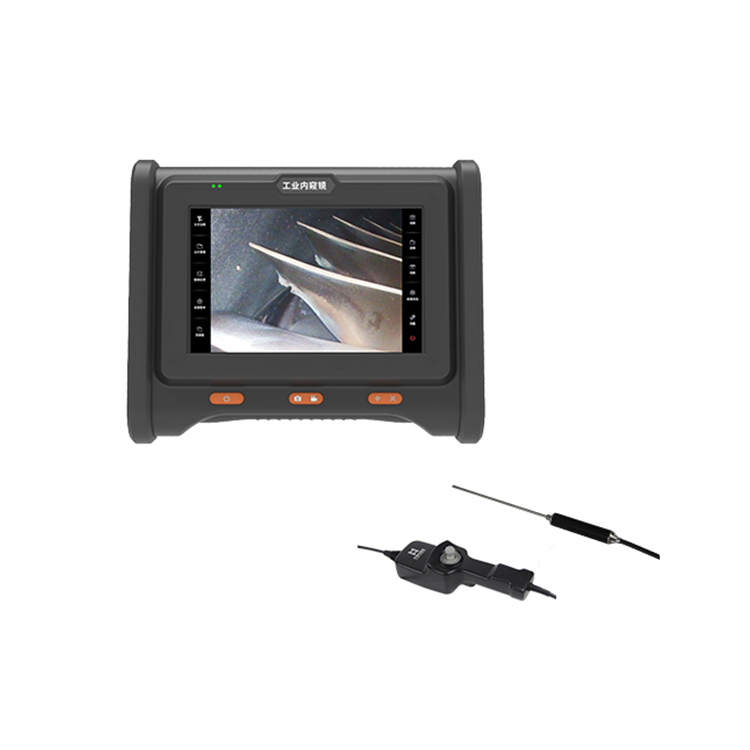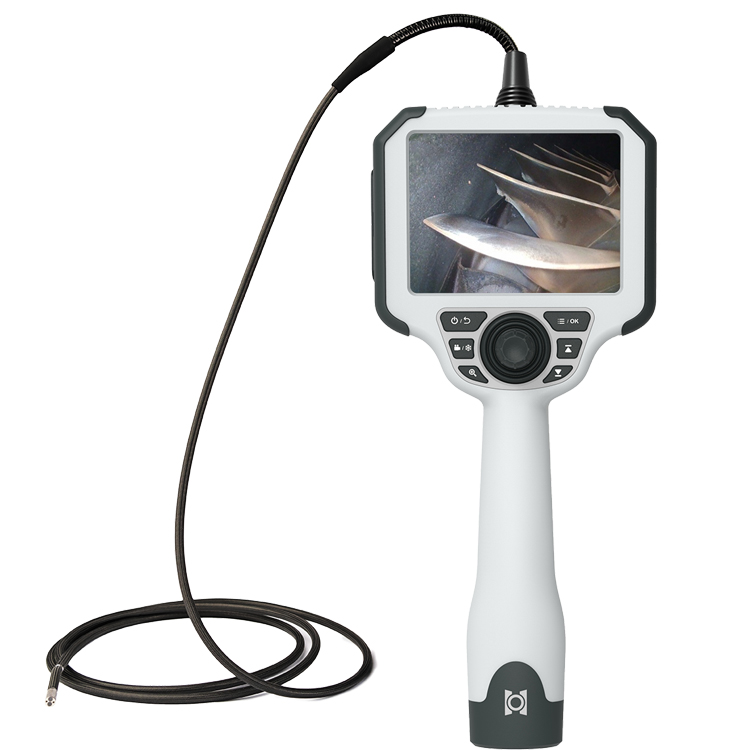

Industrial Borescope Buying Guide: 10 Questions to Ask Before You Buy
Category: News-
On: 2026-09-08
Introduction
When buying an industrial borescope, it is easy to focus too much on specifications such as camera resolution or probe length. However, simply choosing the highest resolution or longest probe does not necessarily result in the best inspection system.
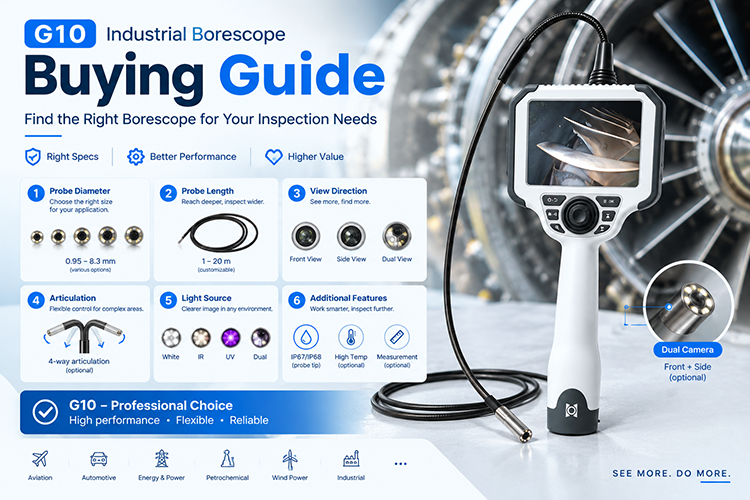
Different applications require very different combinations of probe diameter, probe length, articulation, imaging performance, environmental protection, viewing direction, measurement functions, and data management.
A borescope suitable for routine automotive engine inspection may not be suitable for precision casting with extremely small access holes. Likewise, a general-purpose videoscope may not provide the measurement capabilities required for quantitative defect evaluation.
The key to choosing the right industrial borescope is to start with the actual inspection application and then match the equipment specifications to the working conditions.
This industrial borescope buying guide covers 10 important questions to ask before purchasing a system, helping procurement teams, inspection engineers, and maintenance professionals make a more informed decision.
1. What Are You Inspecting?
The first step in choosing an industrial borescope is not looking at specifications. It is defining the inspection application and target component.
Common industrial borescope applications include:
Power equipment: automotive engines, gas turbines, aerospace components
Transmission equipment: industrial gearboxes, wind turbine gearboxes
General machinery: hydraulic systems, precision machinery, molds, and tooling
Pipes and vessels: industrial piping, pressure vessels, casting cavities
Specialized equipment: power generation equipment, marine machinery, and enclosed mechanical structures
The application directly affects equipment selection.
For example:
Precision casting and small-hole inspection may require an ultra-small-diameter probe.
Large gearboxes and long-distance inspection may require a longer probe and stronger illumination.
Complex turbine or engine inspection may benefit from multi-way articulation.
Quantitative defect evaluation may require a measurement videoscope.
Define the inspection task first. Then select the specifications.
2. What Probe Diameter Do You Need?
Probe diameter is one of the most important industrial borescope specifications because it determines whether the probe can physically access the inspection area.
Industrial borescope probes are available in a wide range of diameters, from very small probes for restricted access to larger probes designed for higher imaging performance and mechanical durability.
The key principle is:
Choose the smallest practical probe diameter that still provides the imaging, illumination, articulation, and durability required for the inspection.
Do not automatically assume that the smallest probe is the best choice.
Small-Diameter Borescope Probes
Advantages
Can pass through smaller inspection ports
Suitable for narrow passages
Useful for compact machinery and precision components
Provides access to areas that larger probes cannot reach
Considerations
The limited physical space inside a small probe can restrict the size of the camera, optics, illumination system, and articulation mechanism.
Depending on the design, this may affect:
Image performance
Illumination
Mechanical durability
Probe length
Articulation capability
Larger-Diameter Borescope Probes
Advantages
A larger probe may provide more space for imaging and illumination components and can offer stronger mechanical construction, depending on the design.
Potential advantages include:
Higher imaging performance
Stronger illumination
More robust probe construction
Better resistance to mechanical wear
Considerations
The main limitation is accessibility. A larger probe cannot enter an inspection port that is too small.
What Should You Check?
Before choosing the diameter, confirm:
Minimum access hole diameter
Internal passage dimensions
Required probe flexibility
Required articulation
Required image quality
Mechanical durability requirements
3. How Long Should the Probe Be?
Probe length determines how far the camera can reach from the inspection entry point.
A common mistake is assuming that longer is always better.
An unnecessarily long probe can make insertion, positioning, handling, and storage more difficult. The ideal length is the shortest practical length that can reliably reach all required inspection areas.
Consider:
Distance from the access point to the farthest target
Internal geometry
Curved or indirect inspection paths
Required working distance
Operator handling
Storage and transportation
Typical Applications
For automotive engines and compact machinery, a relatively short probe may be sufficient.
Large industrial pipes, wind turbine gearboxes, turbines, and other deep inspection applications may require longer probes.
For specialized applications, customized probe lengths can also be considered.
Choose the probe length based on actual reach requirements—not simply the maximum length available.
4. Do You Need 2-Way, 4-Way, or Advanced Articulation?
Probe articulation determines how precisely the operator can position the camera at the distal tip.
For complex internal inspection paths, articulation can significantly improve accessibility and viewing coverage.
However, articulation specifications should be evaluated carefully. Marketing terms such as "360° articulation" do not always describe the same mechanical capability across different products.
2-Way Articulation
A 2-way articulating probe provides directional movement in one articulation plane.
It can be suitable for:
Straight inspection paths
Simple machinery
Basic visual inspection
Applications where extensive directional control is not required
It can also offer a simpler and more economical solution.
4-Way Articulation
A 4-way articulating borescope typically provides:
Up + Down + Left + Right
This is a widely useful configuration for industrial inspection.
It can be particularly helpful for:
Engine interiors
Gearboxes
Turbine components
Curved passages
Complex machinery
Difficult-to-reach inspection points
360° Articulation
Some advanced systems are marketed with 360° articulation or full-range steering.
These systems can provide greater directional freedom, depending on their actual mechanical design.
However, buyers should not evaluate articulation based only on the advertised angle.
Important specifications include:
Actual articulation range
Steering accuracy
Joystick ergonomics
Tip response
Probe stiffness
Minimum bending radius
Centering and return performance
A practical inspection system should provide predictable and precise tip control rather than simply having the largest advertised articulation angle.
5. How Much Camera Resolution Do You Really Need?
Camera resolution is important when identifying small surface indications, but pixel count does not equal overall image quality.
A higher-resolution camera may capture more image detail, but the final inspection image also depends on:
Image sensor performance
Optical quality
Lens design
Illumination
Focus
Working distance
Image processing
Display quality
A high-pixel camera cannot compensate for poor optics or insufficient lighting.
For routine industrial visual inspection, a suitable HD imaging system may be sufficient.
For precision inspection where small cracks, pits, scratches, erosion, or other surface indications must be identified, a higher-performance imaging system may be appropriate.
The better approach is to evaluate the entire imaging system, not just the camera specification.
6. Do You Need Forward View, Side View, or Dual View?
Viewing direction determines which surfaces can be observed efficiently.
The right configuration depends on the inspection geometry and target surface.
Forward-View Borescope
A forward-view camera looks toward the front of the probe.
Viewing Direction: 0°
It is suitable for:
Straight passages
Front-facing inspection areas
Internal cavities
Targets positioned directly ahead of the probe
Side-View Borescope
A side-view camera observes surfaces to the side of the probe.
Viewing Direction: 90°
Side-view inspection can be particularly useful for:
Pipe walls
Cylinder walls
Turbine blade surfaces
Welds
Internal side surfaces
It allows inspectors to observe surfaces that may be difficult to examine with a forward-facing camera.
Dual-View Borescope
A dual-view borescope combines forward and side viewing in one inspection system, depending on the product design.
It can be useful when an inspection requires both:
Forward View + Side View
This configuration can reduce probe repositioning and improve versatility when inspecting components with different surface orientations.
7. Do You Need Measurement Capability?
A basic industrial borescope is primarily used for visual observation and documentation.
If the inspection only requires determining whether visible damage exists, a standard imaging system may be sufficient.
However, some applications require quantitative information for:
Defect evaluation
Maintenance decisions
Quality inspection
Repair assessment
Acceptance decisions
In these cases, a measurement borescope may be appropriate.
Depending on the system, measurement functions can support evaluation of:
Crack length
Defect width
Dent dimensions
Wear area
Component spacing
Other visible geometric features
What Should You Ask the Supplier?
Do not simply ask:
"Does the borescope have measurement?"
Also ask:
What measurement technology is used?
What types of measurements are supported?
What is the stated accuracy?
Under what working conditions is the accuracy specified?
Is calibration required?
What surfaces and viewing conditions are suitable?
Measurement performance depends on the measurement technology, optics, calibration, working distance, surface characteristics, image quality, and software algorithms.
8. What Environmental Conditions Must the Borescope Handle?
Industrial inspection environments can be demanding.
Depending on the application, equipment may encounter:
Dust
Oil
Water
Humidity
High or low temperatures
Chemical exposure
Mechanical impacts
Therefore, environmental compatibility should be considered before purchasing.
Key Environmental Specifications
Operating Temperature
Check the rated temperature range of both the probe and the main unit.
The temperature rating of the probe may differ from that of the display/control unit.
IP Protection
Do not assume that the entire system has the same IP rating.
Check separately:
Main unit protection
Probe protection
Distal tip protection
Connectors
Battery compartment
Chemical and Corrosion Resistance
If the videoscope will be used around oils, chemicals, solvents, or corrosive environments, confirm material compatibility with the manufacturer.
Mechanical Durability
For frequent field inspections, consider:
Probe sheath durability
Wear resistance
Bending resistance
Connector durability
Handle construction
Transport protection
The right environmental specifications depend on the actual inspection site.
9. How Good Is the Illumination?
An excellent camera cannot produce a useful inspection image if the target is poorly illuminated.
Most borescope inspections take place inside enclosed components where there is little or no ambient light.
Illumination directly affects the ability to identify subtle surface indications.
A good illumination system should provide:
Sufficient brightness
Even light distribution
Adjustable intensity
Controlled reflections
Stable performance at different working distances
Metallic surfaces and polished turbine components can produce strong reflections.
Adjustable illumination allows the inspector to balance brightness and reflection, helping reveal surface details without excessive glare.
When evaluating a system, consider:
LED output
Light distribution
Brightness adjustment
Reflection control
Camera sensitivity
Image stability at different working distances
10. Are Recording, Storage, and Reporting Functions Suitable?
Industrial inspection does not end when the inspector sees the image.
Inspection evidence often needs to be:
Recorded
Stored
Reviewed
Transferred
Included in reports
Archived for future comparison
A professional industrial videoscope should therefore provide practical data management functions.
Useful features include:
High-resolution still images
Video recording
Internal storage
Memory card expansion
Image annotation
File management
USB or other data transfer
Inspection notes
Measurement data storage
A well-designed recording workflow can simplify:
Maintenance reports
Defect documentation
Quality audits
Equipment condition monitoring
Historical comparison
For organizations with multiple inspectors or large inspection volumes, file management can be just as important as image quality.
Industrial Borescope Purchasing Checklist
Before contacting a supplier, prepare the following information:
| Requirement | Your Specification |
|---|---|
| Inspection application | Engine / Gearbox / Pipe / Casting / Turbine / Other |
| Minimum access opening | ____ mm |
| Required probe length | ____ m |
| Articulation | 2-Way / 4-Way / Advanced |
| Viewing direction | Forward / Side / Dual View |
| Camera resolution | HD / Higher Resolution |
| Measurement | Required / Not Required |
| Operating temperature | ____ °C |
| Environmental protection | Required IP rating |
| Recording | Photo / Video / Both |
| Storage | ____ GB |
| Display | ____ inch |
| Battery runtime | ____ hours |
| Probe replacement | Required / Not Required |
| Customization | Required / Not Required |
Providing these specifications to a supplier can significantly reduce communication time and help avoid unsuitable quotations.
Professional Industrial Borescope vs. Basic Inspection Camera
Low-cost inspection cameras can be useful for simple visual checks, but they may not provide the control, durability, imaging performance, or documentation functions required for professional industrial inspection.
Basic Inspection Camera
Typical limitations may include:
Limited articulation
Basic imaging
Limited environmental protection
Simple recording functions
Limited measurement capability
Lower mechanical durability
Limited technical support
Professional Industrial Videoscope
A professional industrial videoscope may provide:
High-quality imaging
Flexible multi-way articulation
Interchangeable probes
Multiple viewing configurations
Measurement functions
Industrial environmental protection
More durable probe construction
Comprehensive image and video recording
Professional technical support
The right choice depends on the inspection requirements. A basic camera can be perfectly adequate for simple visual checks, while a professional videoscope becomes more valuable for frequent, demanding, or documented inspections.
Common Industrial Borescope Buying Mistakes
Mistake 1: Choosing the Smallest Probe Possible
Smaller is not always better.
An ultra-small probe may provide access to very restricted areas, but the smaller physical diameter can limit camera, optical, illumination, articulation, and mechanical design options.
If the access opening allows it, consider a probe that provides a better overall balance of accessibility and imaging performance.
Mistake 2: Assuming Higher Resolution Means Better Image Quality
Camera resolution is only one part of the imaging system.
Sensor performance, optics, lighting, focus, working distance, and image processing can all affect the final image.
Evaluate the complete imaging system rather than selecting a videoscope based solely on pixel count.
Mistake 3: Assuming You Always Need 360° Articulation
Not every inspection requires maximum articulation.
A simple inspection path may only require limited steering.
A 4-way articulating borescope can provide a practical balance for many industrial applications, while more advanced steering may be justified for highly complex inspection geometries.
The correct choice depends on the actual path and target location.
Mistake 4: Expecting One Borescope to Handle Every Application
Engines, turbines, gearboxes, pipes, castings, and precision components can have very different inspection requirements.
Probe diameter, length, articulation, viewing direction, environmental protection, imaging, and measurement capabilities may all need to change.
Instead of looking for one "universal" specification, select a system that matches the actual inspection task.
Questions to Ask an Industrial Borescope Supplier
Before placing an order, divide your questions into technical and commercial requirements.
Technical Questions
Ask the supplier about:
Available probe diameters
Available probe lengths
Articulation options
Viewing directions
Camera resolution
Illumination specifications
Measurement capability
Measurement accuracy
Operating temperature
IP protection
Probe durability
Probe replacement
Custom probe configurations
Commercial Questions
Also confirm:
OEM/ODM availability
Logo customization
Minimum order quantity
Lead time
Spare parts availability
Warranty terms
Technical support
Sample testing
Equipment demonstration
After-sales service
A good supplier should be able to help you select the configuration based on your actual inspection requirements rather than simply recommending the most expensive model.
WorldNDT Industrial Borescope Solutions
WorldNDT provides industrial remote visual inspection solutions for a wide range of applications.
Depending on the inspection requirements, WorldNDT industrial videoscopes can be configured with:
Small-diameter inspection probes
Multiple probe lengths
2-way or 4-way articulation
Advanced articulation configurations
Forward-view, side-view, or dual-view imaging
High-resolution imaging
Measurement functions
Touchscreen displays
Photo and video recording
Inspection data storage
These systems can support inspection of turbines, aerospace components, gearboxes, pipes, castings, power generation equipment, marine machinery, and other enclosed components.
WorldNDT can also support customized probe configurations for applications where standard specifications do not meet the required access geometry.
Frequently Asked Questions
How do I choose an industrial borescope?
Start with the inspection application and determine the minimum access opening, required inspection depth, internal geometry, target surface, environmental conditions, and required functions.
Then select the appropriate probe diameter, length, articulation, viewing direction, imaging system, illumination, and measurement capability.
What is the most important industrial borescope specification?
There is no single most important specification for every application.
Probe diameter determines accessibility, probe length determines reach, articulation determines directional control, and imaging/illumination determine how well the target can be observed.
The correct combination is more important than any individual specification.
Is a smaller borescope always better?
No.
A smaller probe can access smaller openings, but a larger probe may offer advantages in imaging, illumination, mechanical durability, and articulation depending on its design.
Choose the smallest practical diameter that still meets the inspection requirements.
Is a longer borescope better?
Not necessarily.
The probe should be long enough to reach the farthest inspection point while remaining manageable.
An unnecessarily long probe can make handling and storage more difficult.
Is 4-way articulation better than 2-way articulation?
For complex industrial inspection, 4-way articulation generally provides greater directional control.
However, 2-way articulation may be sufficient for simple inspection paths and can provide a more economical solution.
Do I need a dual-view borescope?
A dual-view system is useful when both forward and side surfaces need to be inspected.
If the inspection target is always directly in front of the probe, a forward-view system may be sufficient.
Do I need a measurement borescope?
Choose a measurement system when your inspection requires quantitative information about visible defects or component geometry.
For basic visual inspection and documentation, measurement capability may not be necessary.
What should I ask an industrial borescope manufacturer?
Ask about probe diameter, probe length, articulation, viewing direction, camera and illumination performance, measurement capability, environmental ratings, storage, battery life, probe replacement, customization, warranty, spare parts, and technical support.
Conclusion
Choosing an industrial borescope should begin with the inspection application, not with the highest specification or lowest price.
Before purchasing, answer these 10 questions:
What are you inspecting?
What probe diameter can access the inspection area?
How long does the probe need to be?
What level of articulation is required?
What imaging performance is needed?
Do you need forward view, side view, or dual view?
Do you need measurement capabilities?
What environmental conditions must the equipment withstand?
How important are illumination and image quality?
Do the recording, storage, and reporting functions fit your workflow?
The best industrial borescope is not necessarily the one with the highest resolution, longest probe, or most advanced articulation.
It is the system that provides the right balance of accessibility, reach, directional control, imaging performance, illumination, functionality, durability, ergonomics, and technical support for your actual inspection requirements.
If you are comparing industrial borescope suppliers or manufacturers, provide the inspection application, minimum access opening, required inspection depth, internal geometry, and target defects. These details can help determine the most suitable videoscope configuration before you purchase.