
Long-Distance Industrial Borescope: How to Inspect Deep Areas
Category: News-
On: 2026-09-09
Long-Distance Industrial Borescope: How to Inspect Deep Areas
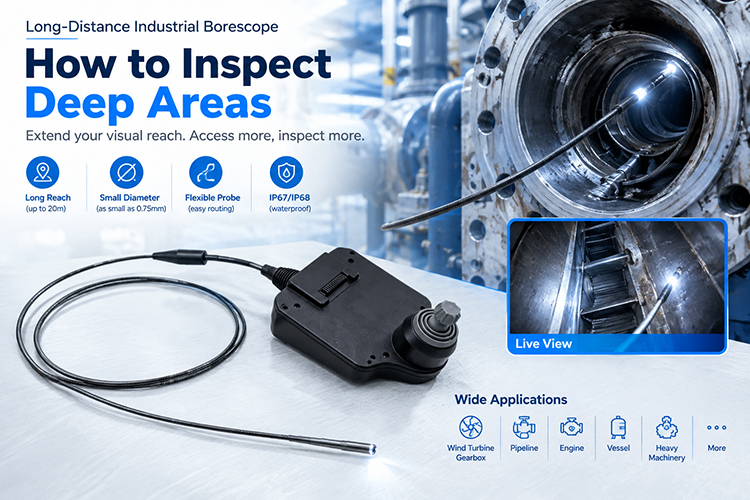
In industrial non-destructive testing (NDT) and remote visual inspection (RVI), access is not the only challenge. Deep inspection areas, long passages, and hard-to-reach internal structures can be equally difficult to inspect.
Many large industrial machines contain critical components deep inside pipelines, housings, chambers, gearboxes, engines, and other structures. A conventional short-probe borescope may simply not have enough reach to access the inspection point. In some cases, this can lead to additional disassembly, access preparation, or inspection through multiple entry points.
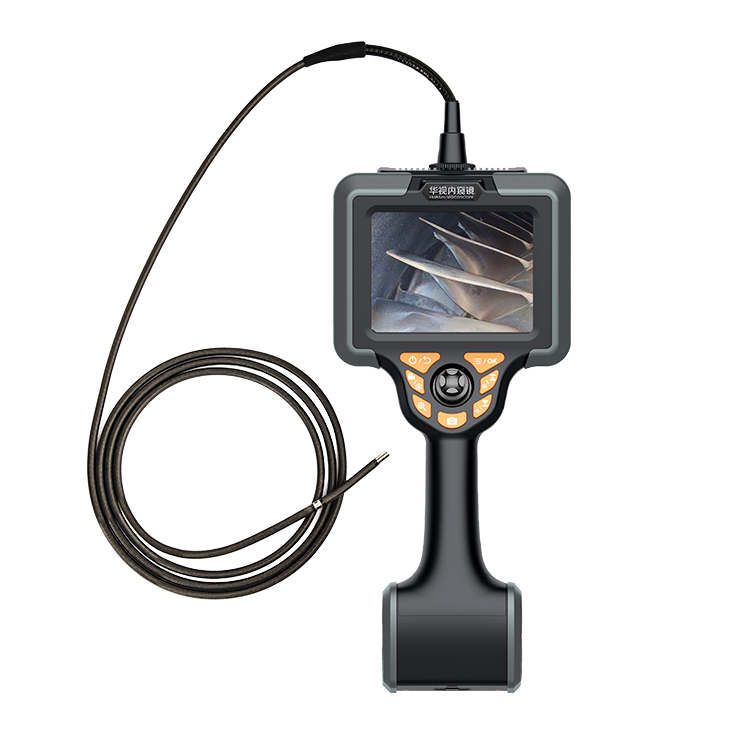
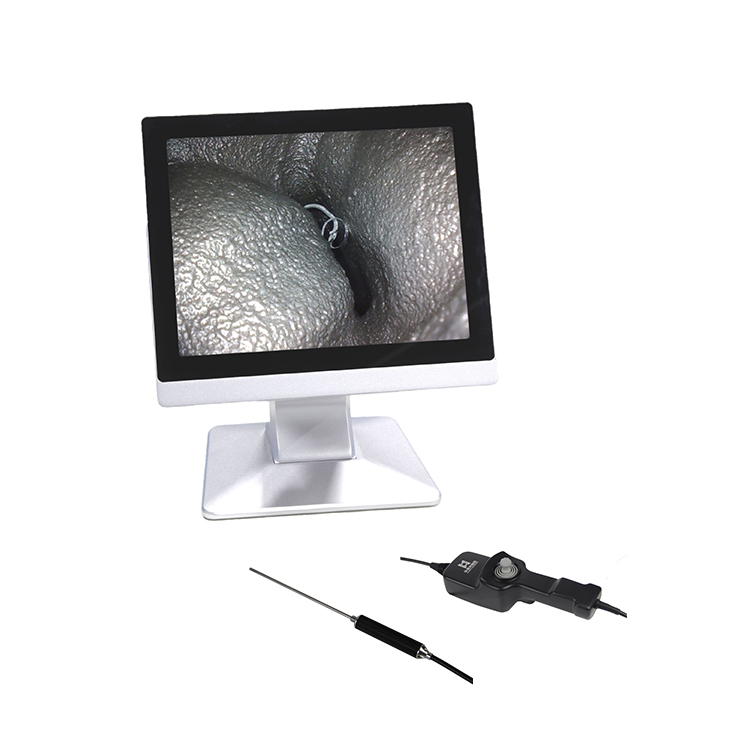
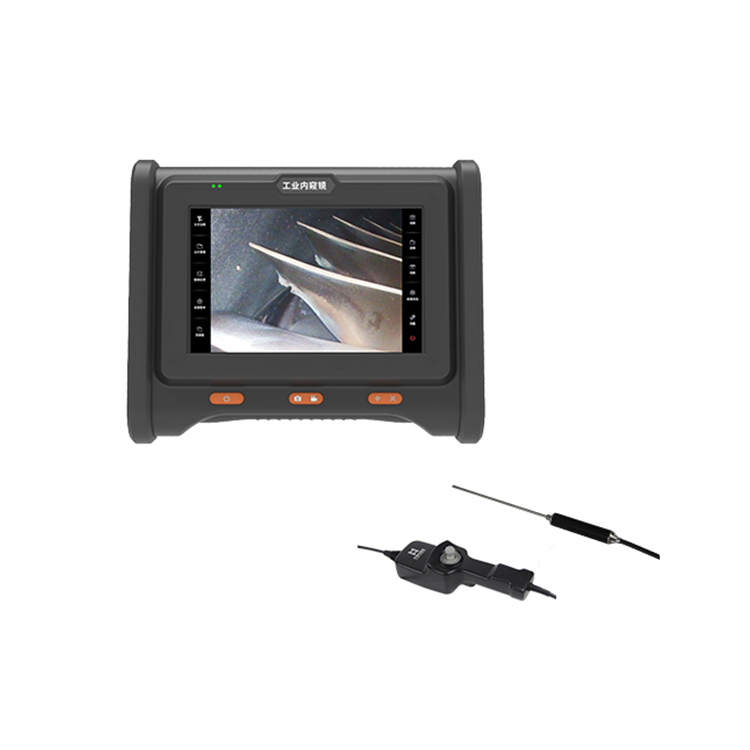
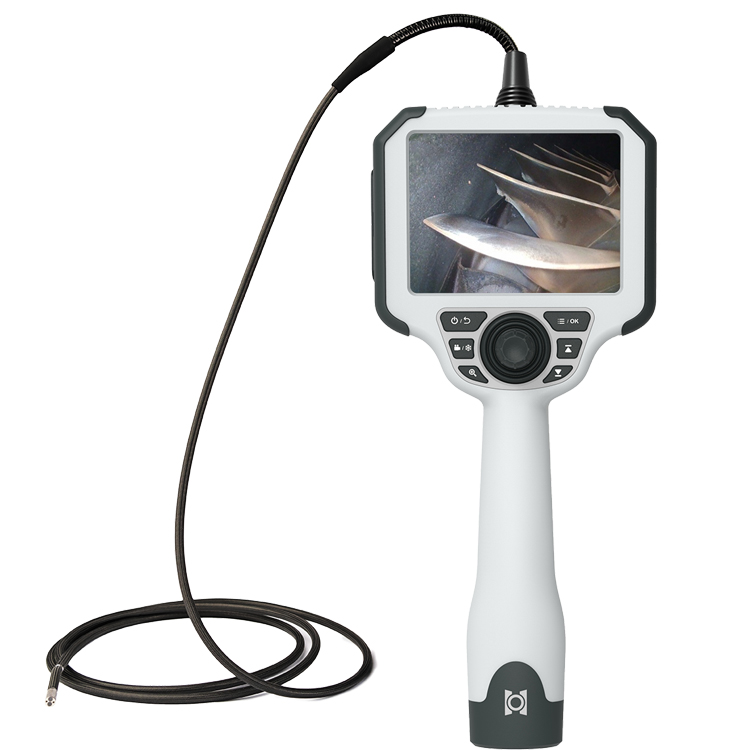
A long-distance industrial borescope is designed for these deep and hard-to-reach inspection applications. With a long flexible insertion probe, the system can reach inspection areas that are far from the access point while providing real-time visual inspection.
Typical applications include long industrial pipelines, wind turbine gearboxes, large diesel and gas engines, industrial vessels, heavy machinery, and complex long internal passages.
1. How to Choose the Right Borescope Probe Length
When selecting a long-distance borescope, longer does not always mean better.
An unnecessarily long probe can be more difficult to handle, store, transport, and control. For this reason, the best approach is to select the shortest probe that can reliably reach the complete inspection area.
A useful planning principle is:
Required Probe Length = Distance to the Farthest Inspection Point + Internal Routing Allowance + Operator Handling Margin
The actual required length depends on the geometry of the equipment and the path that the probe must follow.
Common long-distance configurations include:
Standard extended-length probes
5 m borescopes
10 m borescopes
20 m borescopes
Custom long-probe configurations
For relatively shallow inspection areas, a 1 m or 2 m probe may be sufficient. For large equipment and long internal passages, 10 m or 20 m configurations can provide substantially greater reach.
However, probe length should always be considered together with diameter, flexibility, articulation, image transmission, illumination, and handling characteristics.
2. Key Advantages of a Long-Distance Industrial Borescope
Compared with conventional short-probe systems, professional long-distance borescopes are designed specifically for deep inspection applications.
2.1 Reach Deep and Hard-to-Access Areas
A long flexible probe can travel through extended passages, deep cavities, and remote mechanical structures.
This is particularly useful when the target inspection area is located far from the available access point.
Typical examples include:
Deep gearbox housings
Long pipelines
Large engine chambers
Industrial vessels
Internal machinery passages
Complex structural cavities
The goal is to extend the inspector's visual reach while minimizing unnecessary access work.
2.2 Reduce Disassembly Requirements
When an existing inspection or maintenance opening provides suitable access, a long-distance borescope may allow inspectors to examine internal areas without extensive disassembly.
This can help reduce:
Inspection preparation time
Equipment access work
Unnecessary component removal
Potential reassembly work
Whether disassembly can be avoided depends on the equipment design, access geometry, maintenance procedure, and safety requirements.
2.3 Inspect Long Continuous Passages
Long probes are particularly valuable when the inspection path extends significantly beyond the reach of conventional systems.
For example, a 10 m or 20 m borescope can be configured for applications involving long pipes, large vessels, and extended internal channels.
The ability to inspect from a single suitable access point can simplify the inspection workflow.
2.4 Suitable for Large Industrial Equipment
Large industrial machines often contain multiple internal levels, chambers, and interconnected passages.
A long-distance industrial borescope can provide access to deeper areas of:
Wind turbines
Heavy machinery
Power generation equipment
Industrial vessels
Large engines
Process equipment
This makes long-probe systems useful for preventive maintenance, troubleshooting, and remote visual inspection.
3. Long-Distance vs. Small-Diameter Borescopes
Long-distance inspection and small-hole inspection are two different requirements.
A small-diameter borescope is primarily designed to pass through restricted access openings.
A long-distance borescope, on the other hand, is designed to provide sufficient reach for deep internal inspection.
These requirements can sometimes overlap, but they involve different engineering trade-offs.
| Requirement | Small-Diameter Borescope | Long-Distance Borescope |
|---|---|---|
| Main purpose | Access through small openings | Reach deep inspection areas |
| Key specification | Probe diameter | Probe length |
| Typical challenge | Restricted access | Long internal travel distance |
| Probe design priority | Compact diameter | Reach, flexibility and durability |
| Typical applications | Small holes, precision components | Pipelines, vessels, gearboxes, large machinery |
| Articulation | Depends on model | Particularly important for complex paths |
| Image transmission | Depends on system | Important for long-probe configurations |
A very small probe may provide excellent access through restricted openings, but extremely small diameters can impose limitations on probe length, illumination, durability, articulation, or imaging performance depending on the design.
Therefore, long-distance applications generally require a balanced probe configuration rather than simply choosing the smallest possible diameter or the longest possible probe.
4. Core Applications of Long-Distance Industrial Borescopes
4.1 Long-Distance Pipeline Inspection
Long-distance borescopes can be used to inspect the internal surfaces of industrial pipelines and extended channels.
Typical inspection targets include:
Corrosion
Deposits and scaling
Cracks
Surface damage
Foreign objects
Blockages
Internal contamination
For pipelines with bends or complex geometry, probe flexibility and articulation become especially important.
The actual inspection range depends on pipe diameter, access points, internal geometry, probe configuration, and equipment specifications.
4.2 Wind Turbine and Gearbox Inspection
Wind turbine components can contain deep and difficult-to-access mechanical structures.
A long-distance industrial borescope can support inspection of:
Gear teeth
Bearings
Shafts
Gearbox housings
Lubrication-related deposits
Corrosion
Wear and surface damage
When suitable access is available, a long probe can help inspectors reach areas that would otherwise require more extensive access preparation.
For gearbox inspection, probe articulation is often just as important as probe length, because the inspection target may be located behind gears, shafts, bearings, or other internal components.
4.3 Large Engine Inspection
Large diesel, gas, marine, and industrial engines may contain deep internal cavities that are difficult to inspect from a conventional access point.
Long-probe borescopes can support visual inspection of:
Cylinder areas
Internal surfaces
Carbon deposits
Oil passages
Component surfaces
Signs of wear
Foreign objects or contamination
For engine applications, the appropriate probe diameter, length, viewing direction, articulation, lighting, and environmental rating should be selected according to the engine design and inspection procedure.
4.4 Heavy Machinery and Industrial Vessel Inspection
Large industrial machinery, vessels, tanks, and process equipment can contain deep internal cavities.
A long-distance borescope may allow inspectors to enter through an existing access opening and examine areas farther inside the equipment.
Potential inspection targets include:
Corrosion
Cracks and surface damage
Wear
Deposits
Foreign material
Internal component condition
For confined or hazardous environments, the borescope's environmental and safety specifications must be verified before use.
4.5 Complex Long Internal Passages
Some industrial components contain long, narrow, curved, or multi-level passages.
In these applications, simply having a long probe is not enough.
The system must also provide appropriate:
Probe flexibility
Tip articulation
Steering response
Insertion stability
Illumination
Image transmission
Probe durability
The combination of these characteristics determines whether the inspector can effectively navigate the complete inspection path.
5. Why Articulation Matters in Deep Inspection
For long-distance inspection, the biggest challenge is often not simply reaching the target, but controlling the probe once it is deep inside the equipment.
As probe length increases, the inspector may experience greater resistance, friction, bending, and reduced steering response.
Complex industrial structures can also contain:
Bends
Branches
Corners
Internal obstacles
Shafts and gears
Narrow passages
Hidden surfaces
A non-articulating probe may be adequate for a relatively straight inspection path. However, more complex inspection tasks can benefit significantly from an articulating tip.
4-Way Articulation
A 4-way articulating borescope allows the distal tip to be steered in four directions—typically up, down, left, and right.
This can help the inspector:
Navigate curved internal passages.
Position the camera toward sidewalls.
Inspect around internal components.
Change the viewing direction at the inspection target.
Reduce blind areas caused by fixed camera orientation.
For long-distance applications, articulation should not be evaluated only by the number of directions.
Important specifications include:
Actual articulation angle
Steering range
Tip response
Minimum bending radius
Probe flexibility
Control mechanism
Probe length
Probe diameter
Long probe length provides reach; articulation provides directional control.
Both are important for complex deep inspection.
6. Long-Distance Borescope Selection: Common Mistakes to Avoid
6.1 Do Not Automatically Choose the Longest Probe
A longer probe is not automatically a better probe.
Excessive length can increase:
Handling difficulty
Storage requirements
Probe weight
Insertion resistance
Risk of tangling
Operator fatigue
Select the length based on the actual inspection path.
6.2 Do Not Focus Only on Probe Length
A 20 m probe may sound impressive, but length alone does not determine inspection performance.
A professional long-distance borescope should be evaluated as a complete system, including:
Probe diameter
Probe length
Flexibility
Articulation
Image quality
Illumination
Durability
Recording functions
Environmental protection
6.3 Balance Probe Diameter and Length
Extremely small probes are excellent for restricted access, but they may not always be the best choice for very long inspection distances.
For deep inspection, a slightly larger probe may provide a better balance of:
Image quality
Illumination
Mechanical strength
Articulation
Signal stability
Probe durability
The optimal diameter depends on the access opening and the inspection requirements.
6.4 Pay Attention to Long-Distance Imaging
Image quality can be affected by the entire imaging chain, especially in long-probe configurations.
When evaluating a long-distance borescope, consider:
Camera resolution
Sensor performance
Optical design
Illumination
Signal transmission
Image processing
Display quality
Working distance
Higher resolution alone does not guarantee a better inspection image.
A well-designed illumination system is equally important because internal industrial structures can have dark surfaces, reflective areas, or uneven geometry.
7. What Specifications Should You Check?
Before purchasing a long-distance industrial borescope, compare the following specifications.
| Specification | Why It Matters |
|---|---|
| Probe length | Determines inspection reach |
| Probe diameter | Determines access capability |
| Articulation | Determines directional control |
| Viewing direction | Determines inspection orientation |
| Camera resolution | Affects visible detail |
| Illumination | Important for dark internal areas |
| Probe flexibility | Affects navigation through curves |
| Minimum bending radius | Helps protect the probe |
| Environmental rating | Determines suitable operating conditions |
| Recording | Supports inspection documentation |
| Storage | Determines how much inspection data can be saved |
| Measurement | Useful when quantitative defect evaluation is required |
| Ergonomics | Affects long inspection sessions |
The best configuration is not necessarily the one with the highest specification in every category. It is the one that matches the actual inspection task.
8. Recommended Configuration by Application
A general selection approach can be summarized as follows:
| Application | Typical Priority |
|---|---|
| Long pipeline | Long probe + flexibility + articulation |
| Wind turbine gearbox | Articulation + image quality + suitable probe length |
| Large engine | Appropriate diameter + articulation + illumination |
| Industrial vessel | Long reach + durability + environmental protection |
| Complex internal passage | Long probe + 4-way articulation |
| Restricted deep opening | Small diameter + sufficient length + articulation |
| General deep machinery inspection | Balanced diameter + length + imaging |
These are general guidelines rather than universal specifications. The actual configuration should be confirmed against the equipment geometry and inspection procedure.
9. Long-Distance Industrial Borescope Inspection Workflow
A typical deep inspection workflow includes the following steps:
Step 1: Define the Inspection Area
Identify:
Access opening
Maximum inspection depth
Target components
Internal geometry
Potential obstacles
Step 2: Determine Required Probe Length
Measure or estimate the distance from the access point to the farthest inspection target.
Add an appropriate allowance for internal routing and operator handling.
Step 3: Select Probe Diameter
Choose the smallest practical diameter that still provides the required imaging, illumination, articulation, and durability.
Step 4: Evaluate Articulation
For curved or complex inspection paths, consider a 4-way articulating borescope or another steering configuration appropriate to the application.
Step 5: Check Imaging and Illumination
Make sure the camera and lighting system can clearly visualize the target at the expected working distance.
Step 6: Inspect and Record
Navigate the probe carefully, adjust the viewing direction and illumination, and record images or video of relevant findings.
Step 7: Document the Results
Save inspection images, videos, measurements where applicable, and inspection notes for maintenance or quality records.
10. When Do You Need a 10 m or 20 m Borescope?
A 10 m borescope can be useful when the inspection target is located several meters from the available access point and a conventional 1 m or 2 m probe cannot reach it.
A 20 m borescope may be appropriate for larger equipment, long pipelines, extended internal passages, and other applications requiring substantially greater reach.
However, the decision should not be based on length alone.
Consider:
Access point → inspection path → farthest target → probe routing → required steering → operating environment
If the target can be reliably reached with a shorter probe, the shorter configuration may be easier to handle and operate.
11. Long-Distance Industrial Borescope for Preventive Maintenance
Long-distance borescopes are valuable not only for troubleshooting but also for preventive maintenance.
Regular visual inspection can help maintenance teams monitor changes in accessible internal surfaces over time.
For example, inspectors may record:
Gear wear
Bearing condition
Corrosion development
Deposits
Surface damage
Foreign material
Coating condition
By maintaining inspection records, teams can compare current findings with previous inspections and support condition-based maintenance decisions.
The borescope provides visual evidence; final maintenance decisions should follow the applicable equipment procedures, inspection standards, and acceptance criteria.
12. Long-Distance Industrial Borescope Selection Checklist
Before purchasing, ask the following questions:
Access
What is the available access opening?
What is the required probe diameter?
Are there bends or obstacles?
Reach
What is the distance to the farthest inspection point?
Is 2 m enough?
Is 10 m required?
Would 20 m provide meaningful additional reach?
Steering
Is the inspection path straight or curved?
Do you need 2-way or 4-way articulation?
What is the actual articulation range?
Imaging
What level of image detail is required?
Is the illumination sufficient?
Is the camera resolution appropriate for the target?
Environment
Is the inspection area wet, dusty, oily, or corrosive?
Is temperature a concern?
Are there hazardous-area requirements?
Documentation
Do you need image and video recording?
Is measurement required?
Do you need inspection reports?
FAQ: Long-Distance Industrial Borescope
Q1: How long can an industrial borescope be?
Common long-distance configurations include 10 m and 20 m probes, while some manufacturers can provide customized longer configurations.
The practical maximum depends on probe diameter, construction, articulation, signal transmission, handling requirements, and the intended application.
Q2: Does a longer probe mean worse image quality?
Not necessarily.
Long-probe systems need appropriate camera technology, signal transmission, illumination, optics, and image processing to maintain useful inspection quality over the required working distance.
When comparing products, evaluate the complete imaging system rather than probe length alone.
Q3: Do I need articulation for long-distance inspection?
It depends on the inspection path.
A straight passage may not require sophisticated articulation. However, curved or complex internal structures can benefit significantly from an articulating tip, especially a 4-way articulating configuration.
Q4: How do I choose between a long-probe borescope and a small-diameter borescope?
Choose a small-diameter borescope when the main challenge is restricted access.
Choose a long-distance borescope when the main challenge is inspection depth and reach.
If both access and depth are limited, you need to balance probe diameter, length, articulation, imaging, and durability.
Q5: Can a long-distance borescope inspect deep areas inside a wind turbine gearbox?
Yes. Long-distance industrial borescopes can be used for visual inspection of accessible deep areas inside wind turbine gearboxes, including gears, bearings, shafts, and housing surfaces.
The appropriate probe length, diameter, articulation, viewing direction, and environmental specifications depend on the gearbox design and inspection procedure.
WorldNDT Long-Distance Industrial Borescope Solutions
WorldNDT provides industrial borescope solutions for applications where inspection depth, access, articulation, and image quality are important.
For long-distance inspection, the appropriate configuration can be selected according to:
Probe diameter
Probe length
Articulation
Viewing direction
Camera resolution
Illumination
Environmental requirements
Recording and measurement functions
Whether the application involves long pipelines, wind turbine gearboxes, large engines, industrial vessels, heavy machinery, or complex internal passages, the key is to configure the borescope according to the actual inspection path rather than simply selecting the longest available probe.
For demanding deep-inspection applications, a properly matched long-distance industrial borescope can provide greater reach while maintaining the visibility and control required for reliable remote visual inspection.
Conclusion
A long-distance industrial borescope is designed to address one of the most challenging problems in industrial inspection: reaching deep internal areas that are difficult or costly to access by conventional methods.
The most important selection principle is simple:
Do not choose the longest probe. Choose the most appropriate probe for the actual inspection path.
Probe length determines reach, while diameter determines access. Articulation determines directional control, and imaging and illumination determine how effectively the inspector can see the target.
For complex deep inspection applications, a combination of appropriate probe length, balanced diameter, 4-way articulation, stable imaging, adequate illumination, and durable probe construction can provide a practical solution for remote visual inspection.
The right configuration should always be selected according to equipment geometry, environmental conditions, maintenance procedures, and inspection requirements.