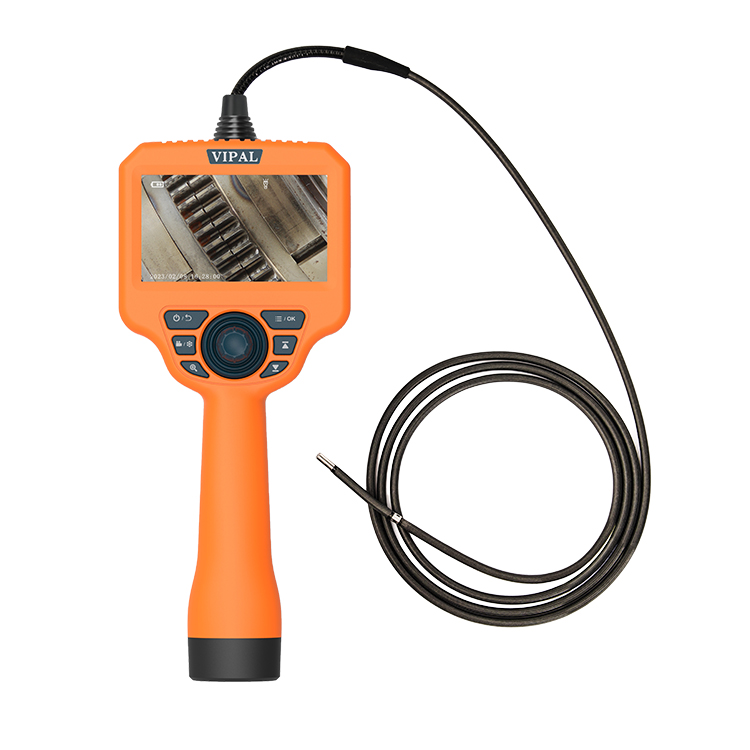

Automotive Engine Borescope Inspection: Applications and Advantages
Category: News-
On: 2026-09-09
Automotive engines contain many critical components inside enclosed spaces, including cylinders, pistons, valves, and combustion chambers. Many internal conditions cannot be properly evaluated through conventional external inspection.
Traditionally, diagnosing certain internal engine problems may require significant disassembly. This can increase labor time, maintenance costs, and the risk of disturbing seals or other components.
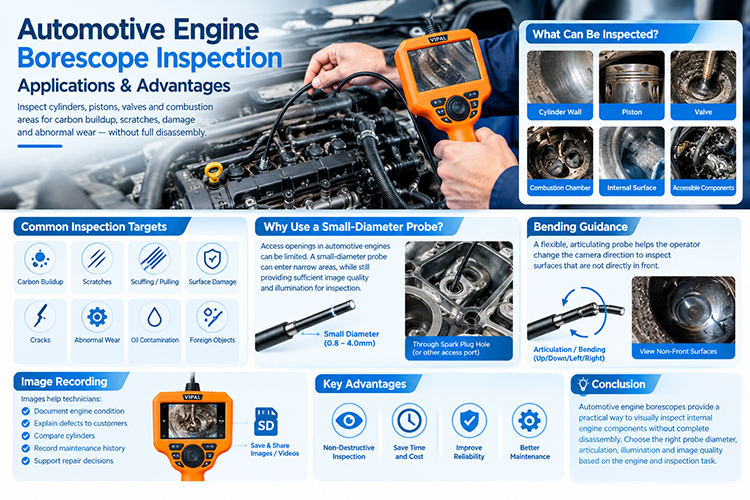
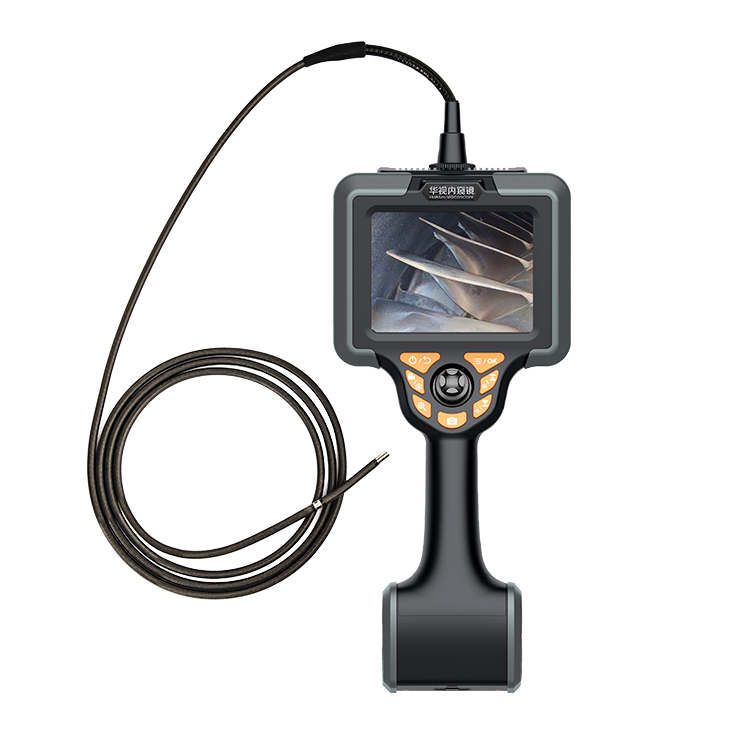
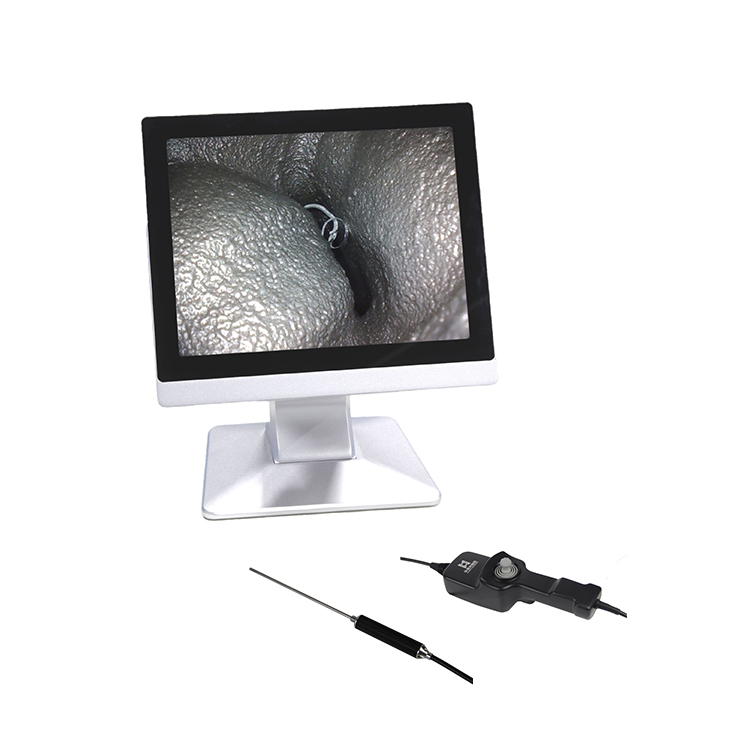
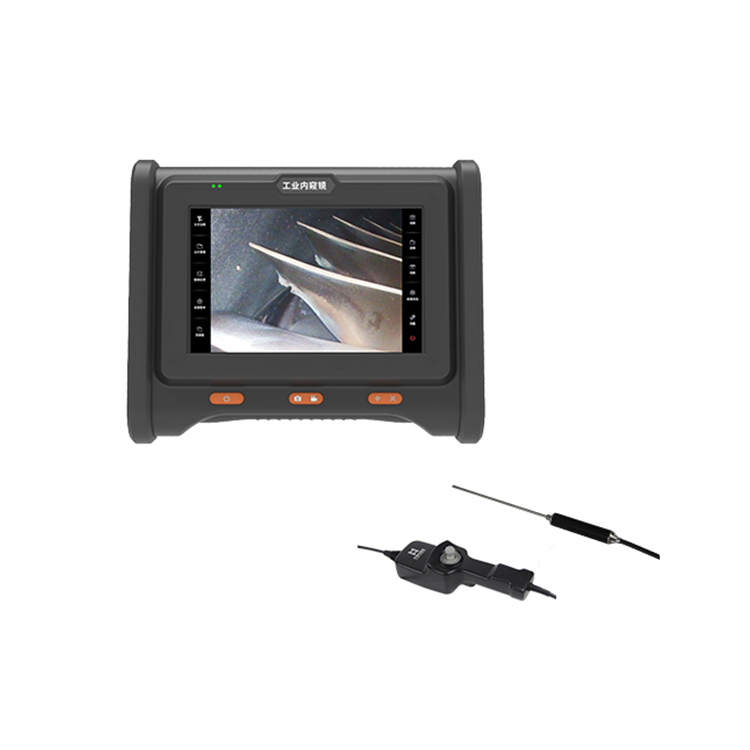
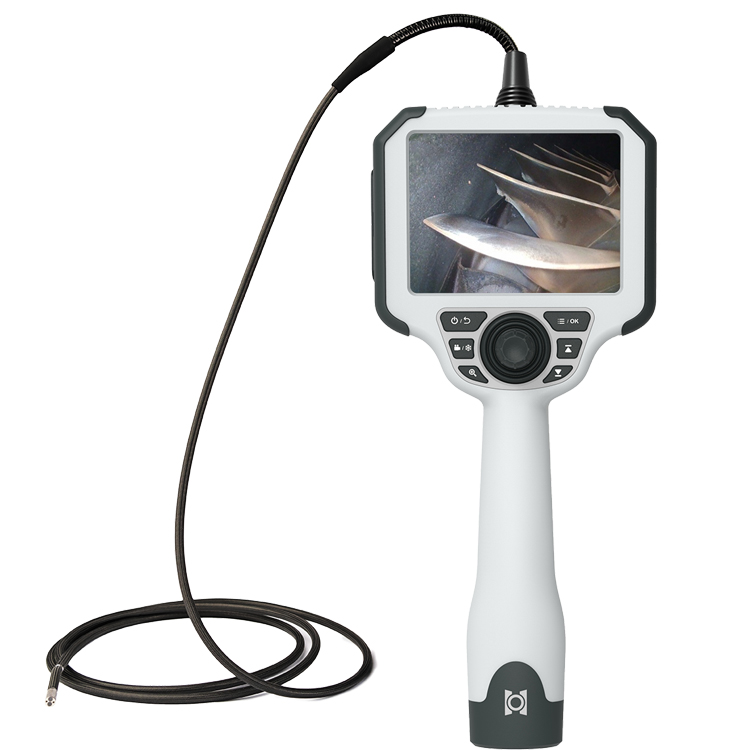
An automotive engine borescope provides a practical Remote Visual Inspection (RVI) method for examining accessible internal engine areas through existing access openings.
Depending on the engine design, a small-diameter flexible probe can be inserted through a spark plug hole, injector opening, inspection port, or another suitable access point.
The inspection can provide real-time visual evidence of conditions such as carbon deposits, cylinder wall scoring, piston damage, corrosion, and other visible abnormalities.
For automotive maintenance, diagnostics, used-vehicle inspection, and engine overhaul verification, a borescope can help technicians gather useful visual evidence before deciding whether further disassembly or additional testing is necessary.
1. What Engine Components Can an Automotive Borescope Inspect?
The main advantage of an automotive borescope is its ability to access confined internal areas through relatively small openings.
Depending on engine design and probe configuration, typical inspection targets include:
Cylinder Walls
A borescope can help inspect visible cylinder wall conditions such as:
Scratches
Scoring
Wear patterns
Rust or corrosion
Surface damage
Abnormal discoloration
Cylinder wall inspection can provide useful visual information when investigating possible piston or cylinder-related problems.
Piston Crown
The piston crown is another important inspection target.
A videoscope can help identify:
Carbon deposits
Burn marks
Surface damage
Abnormal discoloration
Impact marks
Foreign material
Localized surface abnormalities
Comparing multiple cylinders can also help technicians identify differences in combustion-related deposits or visible damage.
Valves and Valve Areas
Depending on the engine configuration and access path, a borescope may be used to inspect visible areas around:
Intake valves
Exhaust valves
Valve seats
Combustion chamber surfaces
Typical findings may include carbon deposits, burning or discoloration, surface damage, and other visible abnormalities.
Combustion Chamber
The combustion chamber can contain important clues about engine operating conditions.
A borescope may reveal:
Carbon deposits
Oil contamination
Burn marks
Foreign objects
Surface damage
Abnormal discoloration
Internal Passages and Accessible Channels
Some engine-related passages and confined areas may also be inspected when the probe can safely reach them.
These may include:
Small internal channels
Accessible passages
Ports and openings
Areas containing oil or process residue
Actual accessibility depends heavily on engine design and the selected probe.
2. What Engine Problems Can a Borescope Help Identify?
An automotive engine borescope does not diagnose every engine problem by itself, but visual inspection can provide valuable evidence for troubleshooting.
Common inspection findings include:
Excessive Carbon Deposits
Carbon accumulation may be visible on:
Piston crowns
Valves
Combustion chamber surfaces
The amount and distribution of deposits can provide useful information for further diagnosis.
However, a borescope image alone should not be used to determine the exact cause of an engine problem.
Cylinder Wall Scoring and Scratches
Visible scoring or deep scratches on a cylinder wall can indicate abnormal wear or mechanical contact.
These findings may be particularly relevant when investigating symptoms such as:
Oil consumption
Reduced compression
Abnormal engine noise
Performance issues
Additional diagnostic testing may still be required.
Piston Damage
A borescope can help identify visible piston abnormalities such as:
Cracks
Burn marks
Impact damage
Surface erosion
Abnormal wear
Foreign-object damage
Valve Deposits and Damage
Inspection around accessible valve areas can help reveal:
Heavy carbon deposits
Burn marks
Surface damage
Abnormal discoloration
Oil Contamination
Visible oil residue or contamination inside the combustion chamber may provide another clue during engine diagnosis.
It should be evaluated together with other diagnostic information rather than used as a standalone diagnosis.
Foreign Objects
A borescope can also help locate foreign material inside accessible engine areas, including:
Broken component fragments
Carbon particles
Metal debris
Maintenance-related objects
3. Why Is a Small-Diameter Probe Important for Engine Inspection?
Engine inspection often involves extremely restricted access points.
Common entry points may include:
Spark plug holes
Injector openings
Inspection ports
Other manufacturer-approved access points
For this reason, small-diameter borescopes are widely used for automotive engine inspection.
Typical configurations may include:
1.2 mm
2 mm
4 mm
The appropriate diameter depends on the access opening and inspection requirements.
Smaller Does Not Always Mean Better
A smaller probe can provide better access, but reducing the probe diameter may also involve trade-offs in:
Camera size
Image resolution
Illumination
Articulation
Mechanical durability
Therefore, the best engine inspection borescope is not necessarily the smallest available model.
A practical selection principle is:
Choose the smallest practical probe diameter that provides sufficient access, image quality, illumination, maneuverability, and durability for the inspection.
4. Why Articulation Matters for Engine Borescope Inspection
Engine components are not always positioned directly in front of the inspection probe.
For example, the technician may need to inspect:
Cylinder walls
Piston edges
Valve areas
Combustion chamber corners
Areas around the cylinder perimeter
A non-articulating probe may provide limited positioning capability.
A flexible borescope with 4-way articulation can provide up/down/left/right tip control, depending on the system design.
This can make it easier to position the camera toward different inspection targets.
Long Probe vs. Articulation
These two specifications solve different problems:
Probe Length → How far the camera can reach
Articulation → Where the camera can be directed
For engine inspection, both should be considered according to the actual inspection geometry.
Articulation does not guarantee complete coverage or eliminate every blind area. The operator still needs to systematically inspect the accessible surfaces.
5. Image Quality and Illumination Are Critical
Engine components often have reflective metal surfaces.
Poor illumination can make it difficult to distinguish:
Fine scratches
Small cracks
Carbon deposits
Surface discoloration
Localized damage
At the same time, excessive or poorly controlled illumination can create strong reflections that reduce image clarity.
A professional engine inspection videoscope should therefore provide a suitable combination of:
Camera resolution
Sensor performance
Optical quality
Adjustable illumination
Working-distance performance
Image processing
Camera Resolution Is Not Everything
A higher pixel count does not automatically guarantee better inspection images.
Actual image quality depends on the complete optical and imaging system.
For engine inspection, the operator should prioritize usable detail under real inspection conditions, rather than selecting a camera based solely on its advertised resolution.
6. Image and Video Recording for Automotive Inspection
Modern automotive videoscopes can provide more than live viewing.
Depending on the model, technicians may be able to capture:
Still images
Inspection videos
Annotations
Inspection records
Cylinder-by-cylinder comparisons
This provides several practical benefits.
Documenting Vehicle Condition
Images can provide visual evidence of the internal engine condition before maintenance.
Customer Communication
Instead of explaining a problem only verbally, technicians can show customers:
Carbon deposits
Cylinder wall scoring
Piston damage
Oil contamination
Other visible findings
This can make technical communication easier and more transparent.
Comparing Multiple Cylinders
Inspection images from different cylinders can be compared to identify differences in:
Carbon accumulation
Surface condition
Visible damage
Combustion-related deposits
Maintenance Records
Inspection images and videos can become part of a vehicle's service documentation.
Supporting Repair Decisions
Visual evidence can help technicians determine whether additional diagnostic testing, cleaning, repair, or disassembly should be considered.
7. Typical Automotive Engine Borescope Inspection Procedure
A structured inspection process helps improve consistency.
Step 1: Confirm the Inspection Objective
Determine why the engine is being inspected.
For example:
Suspected cylinder damage
Excessive oil consumption
Carbon deposit investigation
Engine performance problem
Used-car condition inspection
Post-repair verification
Step 2: Select the Access Point
Identify an appropriate manufacturer-approved access point, such as a spark plug hole or injector opening.
Make sure the engine is prepared according to the applicable service procedure.
Step 3: Select the Probe
Consider:
Probe diameter
Probe length
Articulation
Camera resolution
Illumination
Viewing direction
Step 4: Inspect the Probe
Before insertion, check:
Camera tip
Probe sheath
Articulation controls
Lighting
Display
Battery
Recording/storage functions
Step 5: Insert the Probe Carefully
Insert the probe through the appropriate access opening.
Avoid excessive force and follow the vehicle manufacturer's service procedures.
Step 6: Inspect the Cylinder
Systematically examine accessible areas such as:
Piston crown
Cylinder wall
Combustion chamber
Valve areas
Use articulation where available to reposition the camera.
Step 7: Capture Images and Video
Record relevant findings for later comparison and documentation.
Step 8: Compare and Evaluate
Compare cylinders where appropriate and combine borescope findings with other diagnostic information.
If necessary, perform additional testing or disassembly according to the service procedure.
8. Automotive Engine Borescope Applications
An engine inspection videoscope can be useful in several automotive scenarios.
Routine Maintenance
Inspect internal engine conditions when there is a specific maintenance or diagnostic reason to do so.
Engine Troubleshooting
Visual evidence can support investigations into:
Abnormal oil consumption
Compression-related concerns
Unusual engine noise
Performance problems
Suspected internal damage
Used-Car Inspection
A borescope can provide additional information about internal engine condition during vehicle evaluation.
It should be considered one part of a broader vehicle inspection rather than a standalone assessment.
Engine Overhaul Inspection
Before or after engine repair, visual inspection can help document accessible internal component conditions.
Quality Control and Repair Verification
Repair facilities can use images and videos to document inspection findings and verify accessible areas after maintenance.
9. How to Choose an Automotive Engine Borescope
| Requirement | Recommended Consideration |
|---|---|
| Very small access opening | Small-diameter borescope |
| Cylinder wall inspection | Flexible probe with suitable articulation |
| Piston inspection | Forward-view configuration |
| Side-wall inspection | Side-view or articulating configuration |
| Complex inspection area | 4-way articulating borescope |
| Carbon deposit inspection | Good illumination and image quality |
| Multiple-cylinder comparison | Photo/video recording |
| Routine workshop use | Durable probe and ergonomic controls |
| Detailed visual assessment | Appropriate camera, optics, and lighting |
| Quantitative measurement | Measurement borescope when required |
There is no universal configuration for every engine.
The best choice depends on the access opening, engine architecture, inspection target, required reach, image quality, and working environment.
10. Common Mistakes When Choosing an Engine Inspection Camera
Choosing the Smallest Probe Without Considering Image Quality
Ultra-small probes can access restricted areas, but image performance and illumination may vary.
Always balance access with inspection performance.
Choosing Resolution Only by Pixel Count
A 2 MP camera is not automatically better than every 1 MP or lower-resolution system.
Optics, sensor quality, lighting, processing, and working distance also matter.
Ignoring Articulation
A probe may enter the cylinder but still have difficulty positioning the camera toward the desired inspection surface.
Consider articulation when the inspection requires directional control.
Assuming Every Engine Can Be Inspected the Same Way
Engine architecture varies significantly between vehicles.
Access points and inspection procedures should be determined for the specific engine.
Treating the Borescope as a Complete Diagnostic Tool
A borescope provides visual information.
It should be combined with other diagnostic methods such as compression testing, leak-down testing, scan-tool diagnostics, oil analysis, or other appropriate procedures when necessary.
Automotive Engine Borescope Inspection Checklist
Before performing an inspection, confirm:
☐ Appropriate access point has been identified
☐ Probe diameter is compatible with the opening
☐ Probe length is sufficient
☐ Probe articulation is suitable
☐ Camera image is clear
☐ Illumination is working correctly
☐ Probe sheath and camera tip are undamaged
☐ Engine and access area are prepared according to service procedures
☐ Images/videos can be recorded if required
☐ Cylinder-to-cylinder comparison is possible
☐ Findings can be associated with the correct cylinder/location
☐ Additional diagnostic testing is available when required
WorldNDT Automotive Borescope Solutions
WorldNDT provides industrial borescope and videoscope solutions for confined-space visual inspection, including automotive engine inspection, cylinder inspection, machinery inspection, gearbox inspection, casting inspection, and other industrial applications.
For automotive engine inspection, an appropriate configuration can be selected according to:
Small probe diameter
Probe length
Flexible insertion tube
4-way articulation
Forward or side viewing
Camera resolution
Adjustable illumination
Photo and video recording
Measurement capability where required
For engine applications, probe selection should be based on the actual access opening and inspection target rather than relying on probe diameter alone.
FAQ: Automotive Engine Borescope Inspection
Q1: Does an engine borescope inspection require removing the engine?
Usually, major engine removal is not required for a borescope inspection.
Depending on the engine design, the probe may be inserted through an existing access point such as a spark plug hole or injector opening.
However, the exact procedure depends on the vehicle and engine manufacturer's service requirements.
Q2: What diameter borescope is suitable for engine inspection?
Small-diameter probes such as 1.2 mm, 2 mm, and 4 mm may be used depending on the available access opening.
The smallest probe is not automatically the best choice. Image quality, illumination, articulation, durability, and accessibility should all be considered.
Q3: Can a borescope detect cylinder wall scoring?
Yes. A suitable automotive borescope can provide visual evidence of accessible cylinder wall scratches, scoring, wear patterns, and other surface abnormalities.
Further diagnostic testing may be required to determine the severity and cause of the problem.
Q4: Can an engine borescope inspect carbon deposits?
Yes.
A borescope can visually inspect carbon deposits on accessible piston crowns, valves, and combustion chamber surfaces.
Image quality and illumination are important when evaluating deposit distribution and surface detail.
Q5: Why is articulation useful for engine inspection?
Articulation allows the camera tip to be positioned toward different inspection targets.
This can be particularly useful when inspecting cylinder walls, piston edges, valve areas, and other surfaces that are not directly in front of the probe.
Q6: Can a borescope diagnose an engine problem by itself?
Not always.
A borescope provides valuable visual evidence, but many engine problems require multiple diagnostic methods.
Borescope findings should be evaluated together with symptoms, scan-tool data, compression or leak-down testing, service specifications, and other appropriate diagnostic information.
Q7: Can a borescope inspect every part of an engine?
No.
Inspection coverage depends on engine architecture, access points, probe diameter, probe flexibility, articulation, viewing direction, and the geometry of the internal components.
A borescope is most effective for accessible internal surfaces.
Conclusion
Automotive engine borescope inspection provides technicians with a practical way to visually examine accessible internal engine components without major disassembly.
A suitable engine inspection videoscope can help examine:
Cylinder Walls + Pistons + Valves + Combustion Chambers + Carbon Deposits + Visible Surface Damage
For professional automotive inspection, a useful configuration typically combines a small-diameter flexible probe, appropriate articulation, good illumination, suitable imaging performance, and image/video recording.
The most important selection criteria should be matched to the actual engine and inspection task. Probe diameter determines access, probe length determines reach, articulation improves camera positioning, while optics and illumination determine how effectively visible conditions can be evaluated.
A borescope should be viewed as an important visual diagnostic and documentation tool, rather than a replacement for all engine diagnostic procedures.
When combined with appropriate mechanical and electronic diagnostics, automotive engine borescope inspection can help technicians identify visible internal conditions earlier, reduce unnecessary disassembly, improve customer communication, and support more informed maintenance decisions.