
How to Use an Industrial Videoscope to Inspect Hard-to-Reach Areas
Category: News-
On: 2026-09-09
Many industrial non-destructive testing applications face the same challenge: the inspection area is enclosed within a structure, making it impossible to observe directly with the naked eye, while conventional inspection tools may not be able to reach the target area. The inspection space may be narrow, deep, curved, or located inside large equipment. In some cases, disassembly, cutting, or extensive dismantling of the workpiece is not practical for visual inspection.
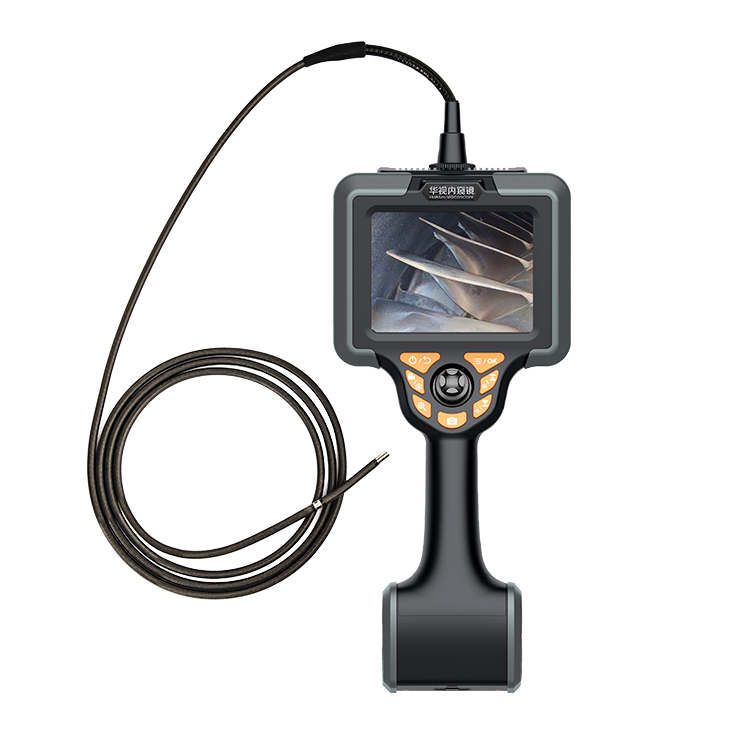
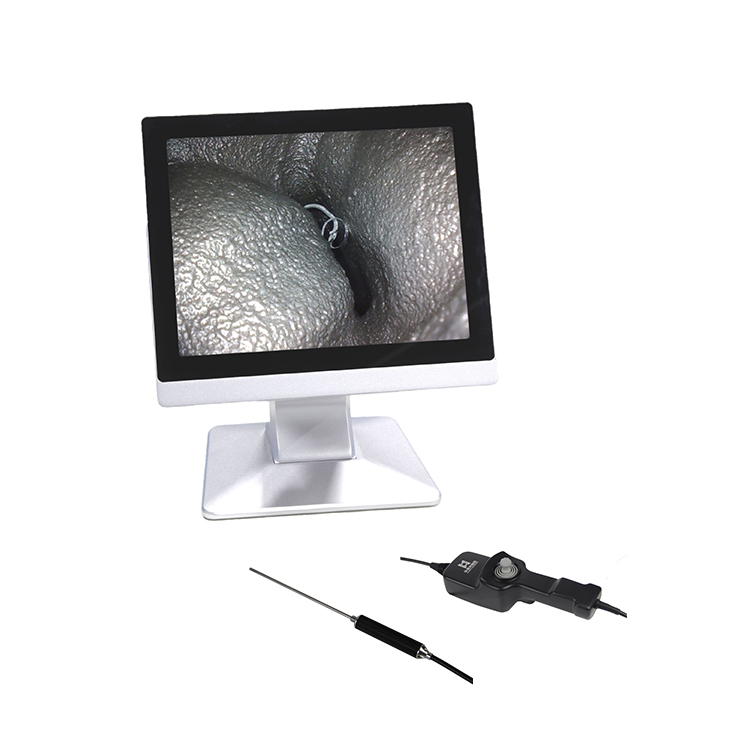
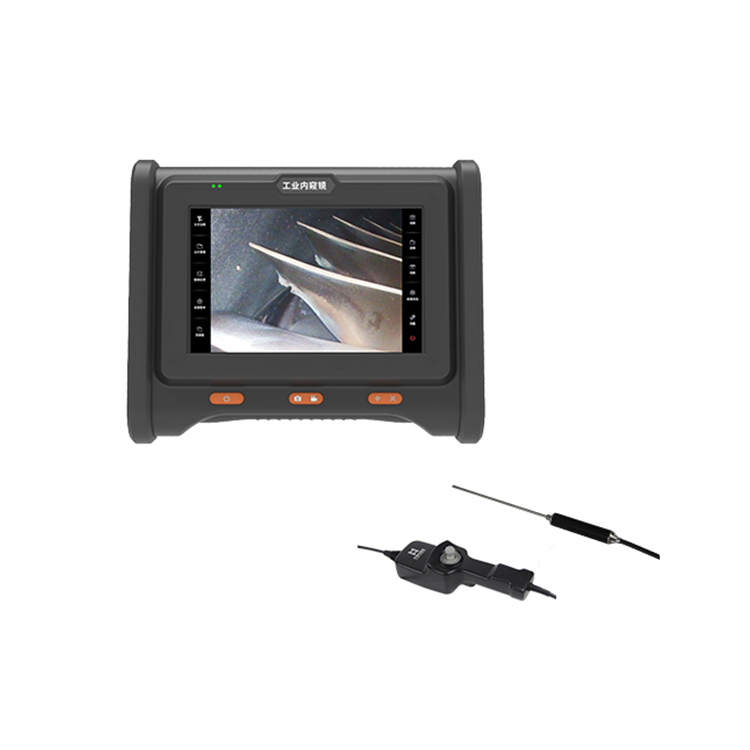
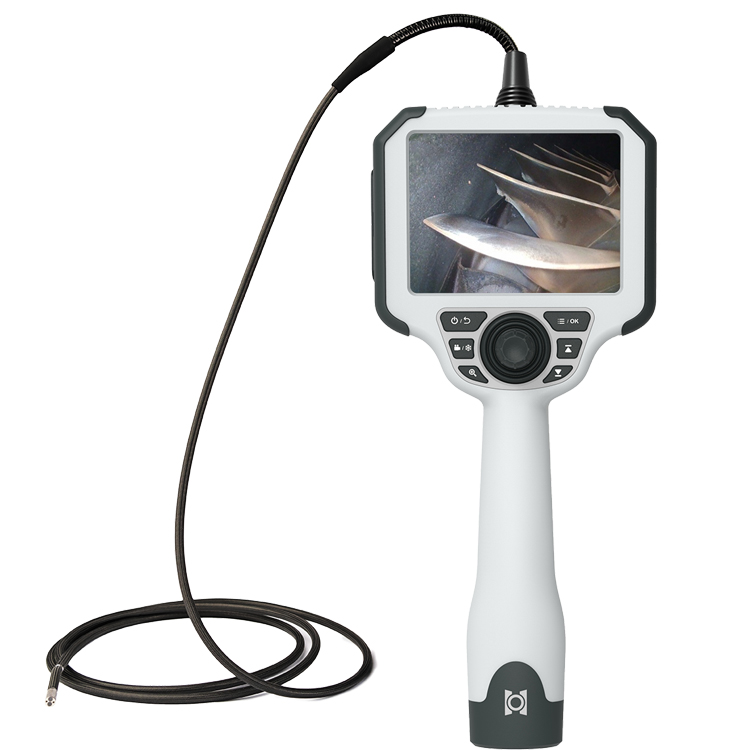
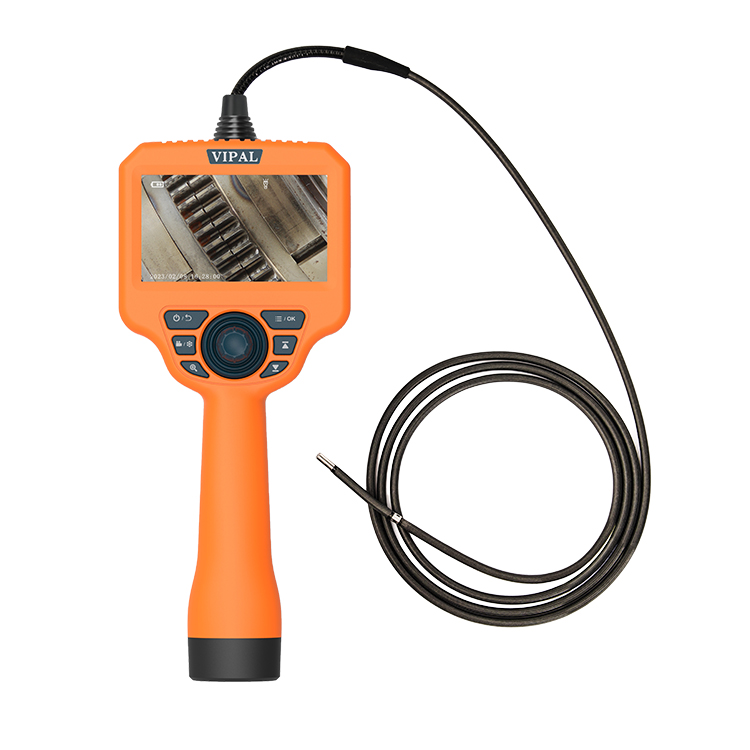
An industrial videoscope is designed to address these inspection challenges. It integrates a miniature camera module into the end of a flexible insertion probe. The probe can pass through small access openings and enter enclosed internal spaces, transmitting real-time images to the display unit for remote visual inspection. Industrial videoscopes are widely used for internal inspection of castings, pipes, engines, turbines, gearboxes, pressure vessels, and other complex equipment.
1. Five Key Borescope Technologies for Improving Accessibility
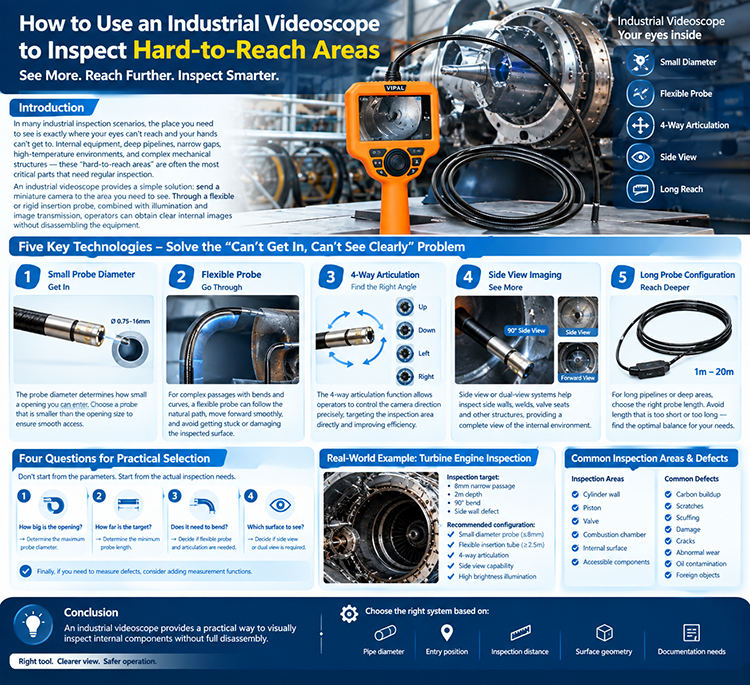
Successfully reaching hard-to-reach inspection areas usually depends on a combination of the following five technologies. They can be selected according to the actual inspection requirements to address limitations caused by access openings, internal passages, and viewing direction.
1. Small Probe Diameter
Restricted openings, small process holes, and narrow passages are among the main obstacles during internal inspection.
A small-diameter probe can pass through relatively small access openings and reach internal areas that larger probes cannot access. For precision inspection applications, probes with diameters such as 1.2 mm, 2 mm, and 4 mm may be selected depending on the available access and inspection requirements.
2. Flexible Probe
Rigid probes are mainly suitable for straight and unobstructed inspection paths.
A flexible insertion tube can follow curved and changing paths inside equipment, allowing the probe to pass through bends, corners, and other complex internal structures. This can significantly expand the accessible inspection area.
3. 4-Way Articulation
Even when the probe can reach the target area, a fixed camera direction may still make it difficult to observe certain surfaces.
A 4-way articulation system allows the distal tip of the probe to be controlled in different directions, typically up, down, left, and right. This helps the inspector adjust the camera toward different surfaces without repeatedly withdrawing or repositioning the entire probe.
It is particularly useful when inspecting corners, side walls, branches, and other complex internal areas.
4. Side-View Imaging
A forward-view camera mainly observes the area directly in front of the probe.
A side-view camera is oriented toward the side of the probe and is useful for inspecting surfaces such as pipe walls and internal cavity walls. A dual-view probe can combine forward and side viewing, allowing the inspector to switch between the two viewing directions according to the inspection target.
5. Long Probe
A long insertion tube is used to reach inspection areas located deep inside equipment or long internal passages. It can be useful for long pipes, deep cavities, and large industrial equipment.
However, a longer probe is not always better. Excessive probe length can make pushing and positioning more difficult. Probe length should therefore be selected by balancing reach, flexibility, handling, and signal stability.
2. How to Select an Industrial Videoscope for Hard-to-Reach Areas
When selecting an industrial videoscope, it is better to start with the physical conditions of the inspection target rather than simply comparing the highest specifications available.
A simple five-step selection process is as follows:
Step 1: Confirm the Access Opening
Measure the smallest available inspection opening. This determines the maximum allowable outside diameter of the probe and is usually the first selection requirement.
Step 2: Confirm the Inspection Depth
Measure the distance from the access point to the target inspection area. This helps determine the required effective working length of the probe.
Step 3: Determine Whether the Inspection Path Requires Bending
If the inspection path contains bends, branches, or curved sections, a flexible insertion tube combined with articulation may be appropriate.
For simple, straight inspection paths, a rigid or non-articulating probe may be sufficient.
Step 4: Identify the Required Viewing Direction
If the target surface is directly in front of the probe, a forward-view configuration may be suitable.
If the target is located on a side wall or around a circumferential surface, a side-view or dual-view probe may be more appropriate.
Step 5: Determine Whether Measurement Is Required
For visual inspection only, image and video recording may be sufficient.
If the inspection requires quantitative measurement of cracks, corrosion, pits, or other visible indications, a measurement borescope with an appropriate measurement function can be considered.
3. Example Configuration for Hard-to-Reach Inspection Areas
Consider an inspection scenario where an inspector needs to examine a narrow internal passage. The passage contains bends, and the target area is located deep inside the cavity on a side wall.
A suitable configuration may include:
Small-diameter probe to fit through the restricted access opening
Flexible insertion tube to pass through curved internal passages
4-way articulation to adjust the camera direction after reaching the target area
Bright and uniform illumination to improve visibility inside dark areas
Probe length matched to the required inspection depth
Side-view or dual-view imaging when the inspection target is mainly located on the side wall
The exact configuration should be selected according to the actual access opening, inspection depth, internal geometry, and inspection requirements.
Conclusion
For industrial visual inspection of hard-to-reach areas, the key is to combine probe accessibility, navigation capability, image quality, and viewing direction according to the actual inspection conditions.
The selection process should not simply focus on choosing the highest specifications. Instead, first identify the physical limitations of the inspection site, including the access opening, inspection depth, internal bends, target surface direction, and measurement requirements.
Based on these conditions, the appropriate probe diameter, flexibility, articulation, viewing direction, and length can be selected to support efficient visual inspection of narrow and enclosed internal areas.
FAQ: Frequently Asked Questions
Q1: What is Remote Visual Inspection?
Remote Visual Inspection (RVI) is a method of using an industrial videoscope to insert a miniature camera into enclosed, narrow, or deep areas that cannot be directly accessed by the human eye.
The internal surfaces can then be observed remotely through the display unit. RVI is commonly used as part of visual testing (VT) in non-destructive testing (NDT).
Q2: What is the difference between a flexible probe and 4-way articulation?
A flexible probe refers to the ability of the insertion tube itself to bend and follow curved inspection paths.
4-way articulation refers to the controlled movement of the distal tip in multiple directions, typically up, down, left, and right.
The flexible insertion tube helps the probe pass through curved paths, while articulation helps adjust the camera's viewing direction. The two functions are often used together.
Q3: Is a long probe suitable for all deep inspections?
No. An excessively long probe can increase pushing resistance and make handling more difficult. Depending on the system design, signal transmission and illumination may also become more challenging over longer distances.
In general, the probe should be long enough to reach the inspection target while maintaining practical handling and image performance.
Q4: What are the advantages of a side-view camera for hard-to-reach inspection areas?
A forward-view camera mainly observes the area in front of the probe.
A side-view camera looks toward the side and is useful for inspecting surrounding cavity walls, pipe walls, internal bores, and other side-facing surfaces. It can be particularly useful when the inspection target is not directly in front of the probe.
Q5: Do all narrow cavities require the smallest possible probe diameter?
No.
As long as the probe can safely and effectively enter the inspection area, a slightly larger probe may provide advantages such as improved illumination, image quality, and mechanical durability, depending on the probe design.