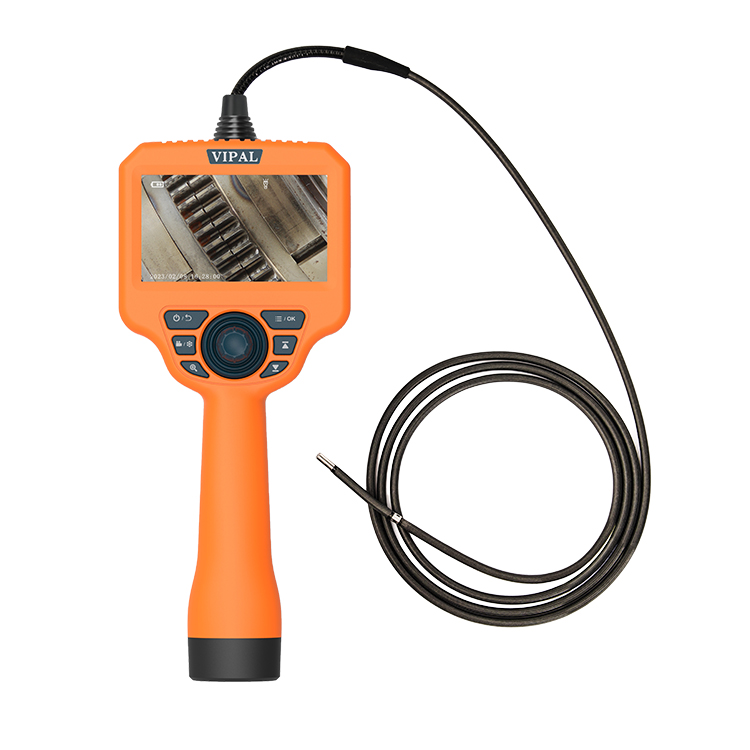

Industrial Borescope Manufacturer vs. Supplier: How to Choose the Right One
Category: News-
On: 2026-09-09
When purchasing an industrial borescope, companies generally have two main types of suppliers to choose from: original equipment manufacturers (OEMs) and distributors or trading suppliers.
Both models have their own advantages. The right choice depends on the inspection application, purchase quantity, customization requirements, budget, and expected level of after-sales support.
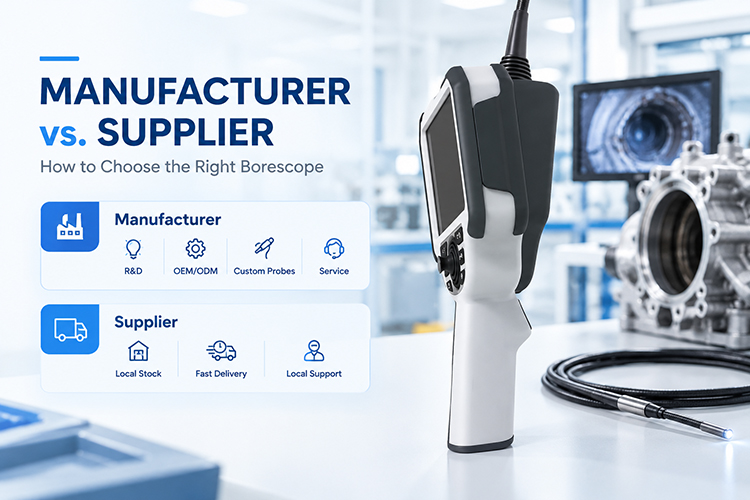
For standard, off-the-shelf equipment, a local distributor can often be more convenient, offering faster delivery and local service support. However, when the project involves OEM, ODM, non-standard probe customization, private labeling, or specialized inspection requirements, working directly with an industrial borescope manufacturer can provide more direct engineering communication and customization support.
1. What Does an Industrial Borescope Manufacturer Do?
An original borescope manufacturer is involved in the product throughout its development and production lifecycle and typically has its own R&D and manufacturing capabilities.
Its core activities may include:
Complete borescope and probe design
Hardware circuit and optical module development
Insertion probe development and manufacturing
Miniature camera integration and testing
Software and image processing development
Equipment assembly, calibration, and performance testing
Production quality control
Manufacturer-level technical support and repair services
Working directly with a manufacturer allows customers to communicate technical requirements with engineering and R&D teams. For complex inspection conditions, the manufacturer can evaluate the application and develop a more suitable inspection configuration with a shorter technical communication chain.
2. Key Advantages of Working Directly with a Borescope Manufacturer
OEM and ODM Customization
Original manufacturers can support different customization requirements according to project needs, including:
Equipment logo and private-label branding
Probe length and probe diameter customization
Viewing direction customization, including forward view, side view, and dual view
Addition or removal of functional modules, such as measurement, image storage, and software functions
Customized packaging and user manuals
More Efficient Technical Communication
When inspection conditions are specialized and standard products cannot fully meet the requirements, communicating directly with the manufacturer's engineering team makes it easier to evaluate technical feasibility and develop a suitable inspection solution.
This can also reduce information loss or misunderstanding that may occur when technical requirements are passed through multiple intermediaries.
Non-Standard Probe Development
Many industrial inspection applications involve non-standard access openings or special internal geometries that require probes with specific diameters or bending characteristics.
A manufacturer with its own development capabilities can evaluate the feasibility, development time, and cost of a customized probe. This type of development may not be available from a standard distributor.
Spare Parts, Repair, and Long-Term Support
Establishing a direct relationship with the original manufacturer can simplify communication for probe replacement, equipment repair, spare parts, technical consultation, and firmware updates.
This can be useful for long-term projects that require continued equipment maintenance and technical support.
3. When Is a Distributor or Supplier a Better Choice?
A local distributor or trading supplier may be a better option in the following situations:
Local on-site service and localized technical support are priorities
The supplier maintains local inventory for faster delivery
Local-language communication and nearby service are required
You are purchasing standard, off-the-shelf borescopes without customization requirements
For many buyers, the decision ultimately comes down to balancing fast local service and delivery against direct manufacturer support and customization capabilities.
4. Key Questions to Ask an Industrial Borescope Manufacturer Before Purchasing
During the supplier evaluation and product selection process, the following questions can help you quickly assess a manufacturer's capabilities:
Where is the equipment manufactured? Does the company have its own production facility and manufacturing line?
Does the manufacturer support customized probe development?
What probe diameters are currently available?
What probe lengths are available?
Does the company provide OEM and ODM private-label services?
Can replacement probes be purchased separately?
What type of technical support is provided—remote or on-site?
What are the warranty policies for the main unit and probe?
Can the manufacturer provide a sample unit for testing and on-site inspection verification?
These questions can help buyers understand not only the product specifications but also the manufacturer's ability to support the project throughout its lifecycle.
5. How WorldNDT Supports Industrial Visual Inspection Customers
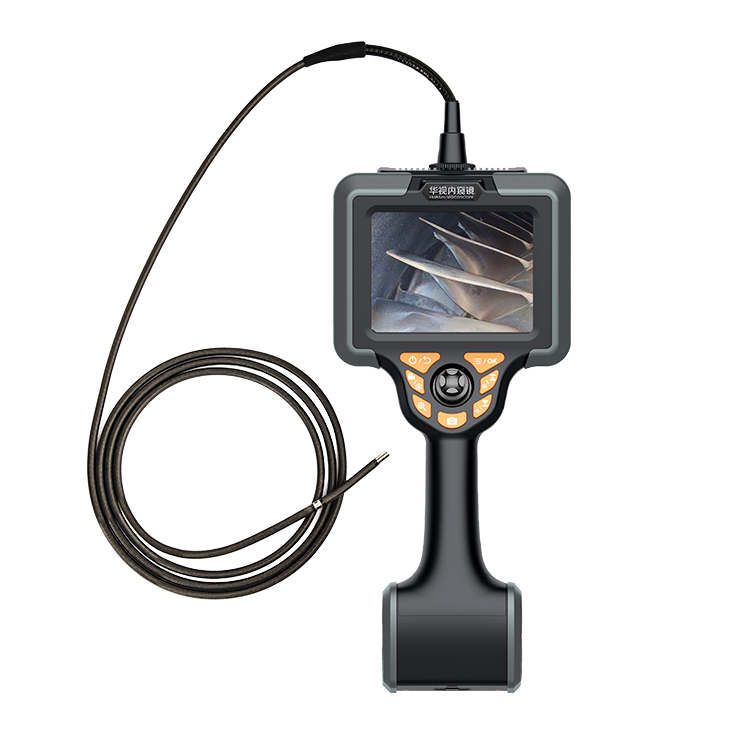
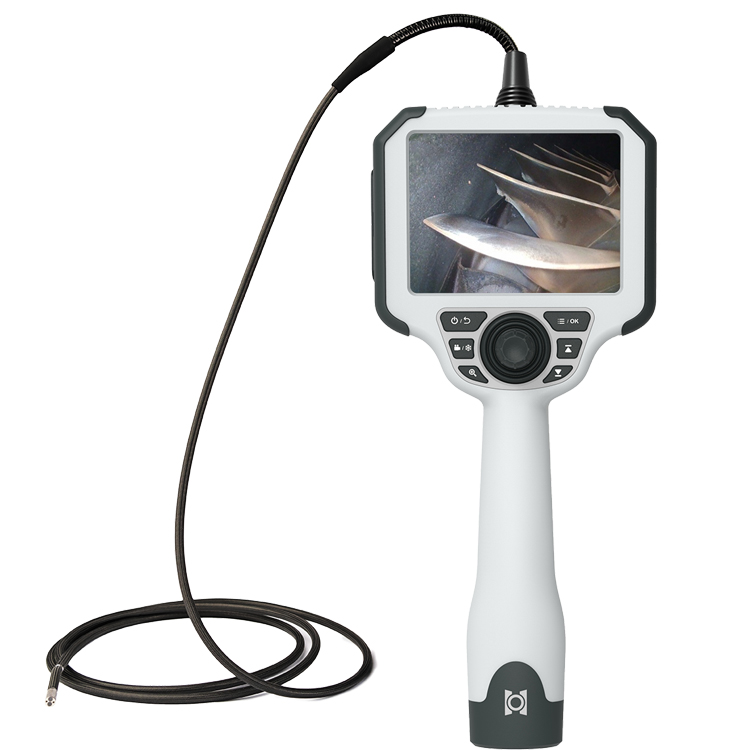
WorldNDT focuses on Remote Visual Inspection (RVI) and provides industrial borescope and videoscope solutions for different inspection applications.
Its product solutions include:
Small-diameter and ultra-small probe inspection solutions
Flexible probes with 4-way articulation
Forward-view, side-view, and dual-view imaging systems
Models with image measurement capabilities
Portable handheld industrial videoscopes
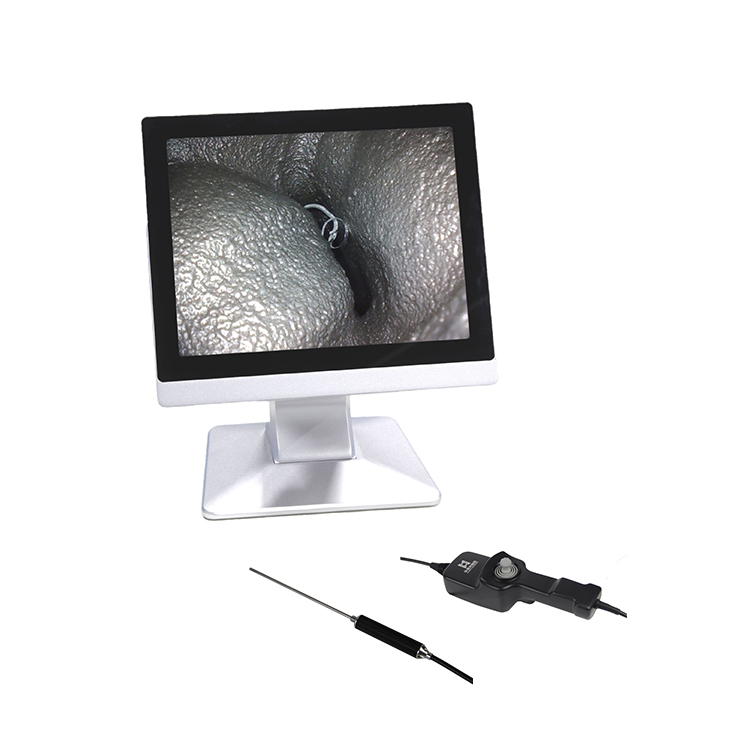
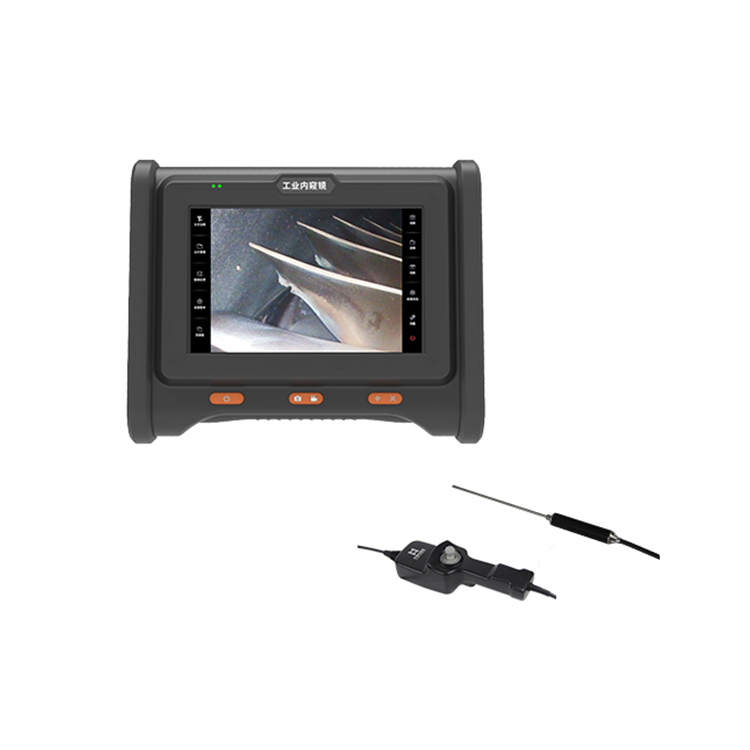
Modular industrial borescope systems
OEM/ODM customization services
Customers can provide basic inspection requirements, such as the minimum access opening, required probe length, operating environment, and required functions, to help determine a suitable industrial borescope configuration.
6. How to Evaluate a Reliable Industrial Borescope Manufacturer
A reliable borescope manufacturer should offer more than a product catalog. Buyers should evaluate its overall capabilities across several areas:
Independent product R&D and product development capabilities
In-house manufacturing, assembly, and quality control
Complete technical documentation, inspection reports, and calibration information
Stable product specifications and consistent batch quality
Reliable after-sales service and continued spare parts availability
Practical capability to develop and deliver customized probes
The most important question is whether the manufacturer can understand your actual inspection conditions and provide an inspection solution that matches your application, rather than simply recommending a standard product from a catalog.
Conclusion
When purchasing an industrial borescope, the choice between a manufacturer and a supplier ultimately depends on your purchasing requirements.
For standard off-the-shelf equipment, where fast local delivery and nearby service are priorities, a distributor may be more convenient.
For OEM/ODM private labeling, non-standard probe development, large-volume purchasing, private-label projects, and long-term technical cooperation, working directly with an original borescope manufacturer can provide significant advantages.
When comparing suppliers, do not focus only on the equipment price. It is also important to evaluate the supplier's technical solution capabilities, customization capabilities, repair and spare parts support, and long-term technical service.
A comprehensive evaluation can help reduce potential risks during long-term equipment use and project implementation.
FAQ: Frequently Asked Questions
Q1: What is the difference between an industrial borescope manufacturer and a supplier?
A manufacturer is the original source responsible for product development, manufacturing, and assembly.
A supplier or distributor mainly sells finished products through a distribution channel and may have limited capabilities for hardware development, probe customization, or product engineering.
Q2: What applications are suitable for industrial borescope OEM or private labeling?
Brand distributors, system integrators, engineering companies, and other businesses that require their own logo, customized appearance or packaging, and larger-volume purchases may benefit from working directly with an original manufacturer for OEM or ODM services.
Q3: Does a customized probe usually require a longer development time?
Yes.
A non-standard probe may require additional development and verification of the optical system, insertion tube, articulation mechanism, and other components. Therefore, its delivery time is generally longer than that of a standard off-the-shelf probe.
Project schedules should be planned accordingly.
Q4: Can replacement probes be purchased separately?
Established original manufacturers generally provide replacement probes separately, making equipment maintenance easier and potentially reducing the need to replace the complete system.
Some distributors, however, may primarily sell complete equipment packages, which can make spare probe purchasing more limited.
Q5: Is sample testing important before purchasing?
Yes.
For narrow and complex internal inspection applications, specifications alone may not fully indicate actual image quality, probe accessibility, or inspection performance.
Testing a sample unit under actual or representative conditions can help verify whether the proposed configuration is suitable before making a larger purchase.